...

By Newsweek Editors
0
Share
Newsweek is a Trust Project member
See more of our trusted coverage when you search.Prefer Newsweek on Googleto see more of our trusted coverage when you search.
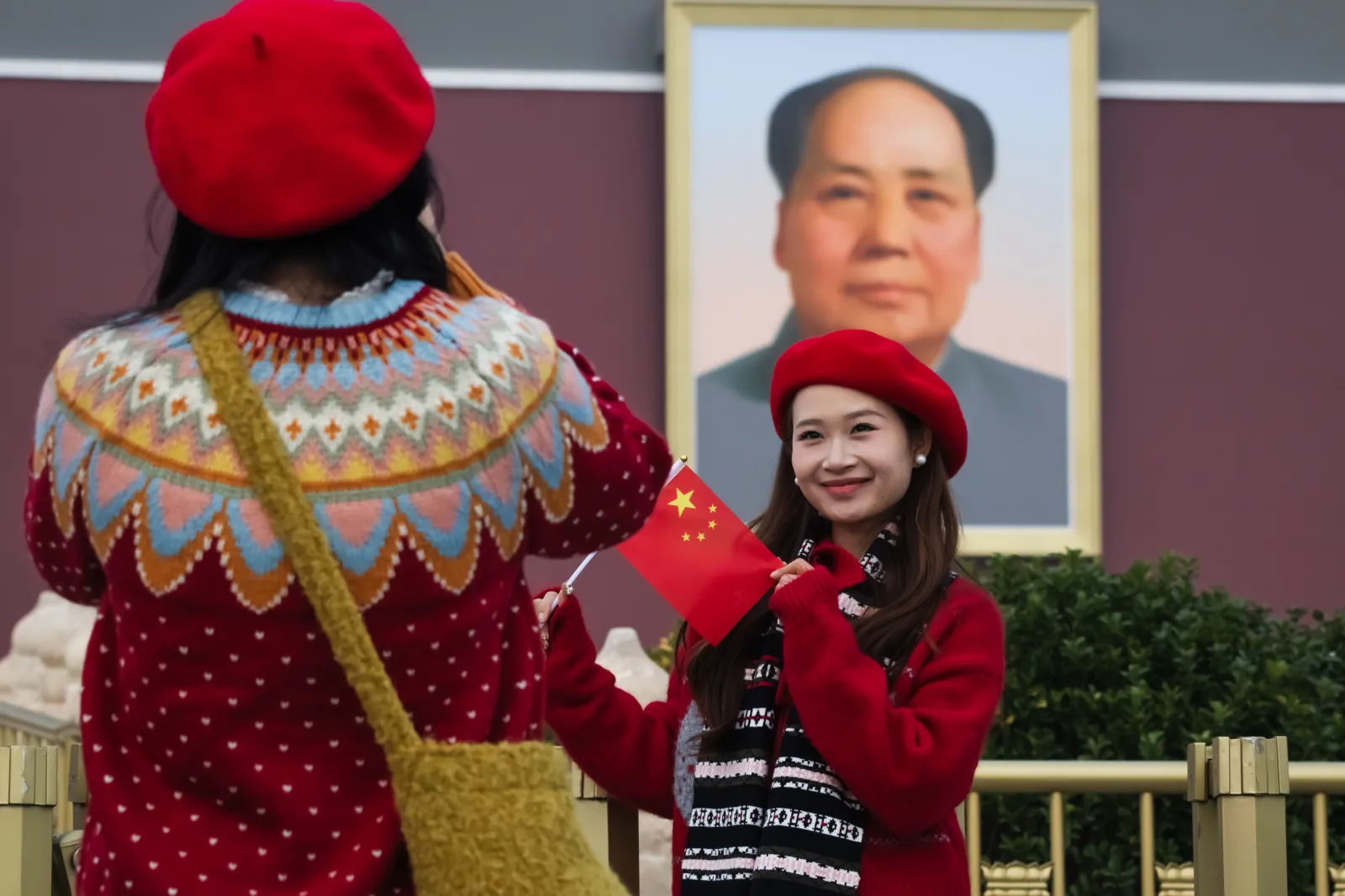
"You met me at a very Chinese time in my life." In the TikTok era, that's the credo of a new type of performative politics. “Chinamaxxing"—a Gen Z coinage based on taking something to an extreme—has become shorthand for the appreciation, adoption, or playful portrayal of “Chinese" habits online.
In practice, it means hot water instead of iced coffee, house slippers, tai chi in the kitchen, and “Chinese longevity biohacks," and it became particularly prevalent in the run-up to Lunar New Year. It makes China an abstraction onto which Americans can project their anxieties about their own country.
Daniel Ahmad, director of research & insights at Niko Partners, said: “Chinamaxxing is one of the many ways that Gen Z and millennial populations in the West, primarily the U.S., are lamenting worsening material conditions and state capacity, while viewing China's ongoing development and ascent through a part aesthetic, part orientalist lens. Almost a coping mechanism."
Read More on News
It’s tempting to treat the whole thing as another disposable meme. Here’s the twist: on the other side of the Pacific, a different online subculture has been running the same experiment, at epic length. A sprawling Chinese web novel, Illumine Lingao (The Morning Star of Lingao), imagines modern technically trained Chinese people traveling back to the late Ming dynasty to force an industrial revolution, compress history, and “win modernity" before the West does. It is, among other things, a nationalist fantasy, akin to a religious text.
But the “Century of Humiliation"—the Chinese nationalist frame for the period from 1839 to 1949, marked by foreign domination, unequal treaties, and war—doesn’t only generate grievance. In a Stanford-linked survey experiment of 1,890 Chinese netizens, simply evoking a victimization narrative increased not just feelings of humiliation, but suspicion of foreigners and feelings of national superiority—and it boosted support for China’s political system.
Common Knowledge
On the American side of the debate, “Chinamaxxing" is seen as a signal about collapsing faith in U.S. competence. TIME notes that observers see the meme as reflecting “a desire for an alternative model to the U.S." amid disillusionment with American politics and governance. In that reading, the meme is not so much “pro-China" as anti-dysfunction: a way for young Americans to say that they’ve noticed who builds the trains. It said that China’s Foreign Ministry endorsed the “becoming Chinese" trend, with spokesperson Lin Jian pointing to increased flights to China for the New Year period. WIRED quoted influencer Chao Ban, who jokes that Americans are “scrolling on this Chinese app," on a “Chinese made phone," wearing clothes “made in China."
The New York Post was blunter. “America is out. China, of all things, is in." In its view, it’s a political posture that “romanticize[s] living in a Communist society." “They’re aesthetically, morally and politically defecting to another superpower," it warns, pointing at influencers who praise China while “denigrating America." Official Shanghai messaging goes further, defining Chinamaxxing as a foreign youth craze and even noting that “even conservative outlets such as the New York Post" have “had to admit" the trend’s popularity.
GQ describes U.S. streamers “Chinamaxxing" in a more literal sense: testing China’s walled-off internet as the next frontier for revenue. “There are over a billion internet users in China," it notes, and it recounts how visiting creators face a digital ecosystem where major U.S. platforms are blocked. Left-wing influencer Hasan Piker told the outlet: “Our generation and younger are so tapped into China…There are spots that they want to go to."
Uncommon Knowledge
The online culture war about Chinamaxxing is noisy. But it's not the most revealing part of the trend.
Illumine Lingao is much more than a meme; it is a simulation. It began publishing online in 2009 (after originating in a 2006 online discussion) and follows more than 500 modern people who travel back, via a wormhole, to late Ming China in 1628, settling in Lingao County on Hainan to build an industrial society and change the course of history. Thousands of authors have contributed to its millions of words and more than 2,000 chapters via online forums.
If the American meme is “I’m Chinese now because I like trains," the Chinese novel is “we will become the future because we can build trains in the past." It plugs into modern Chinese political psychology: national redemption through production.
That's why reversing the “Century of Humiliation" through an immense crowdsourced novel is significant. Victimhood is not merely a story people tell about the past. It can measurably change what people demand in the present. The Stanford Center on China’s Economy and Institutions working paper reports survey-experiment results in China showing that priming respondents with “historical victimization" increased “feelings of national superiority" and raised support for coercive or military actions in territorial disputes. A related Stanford summary of replication work likewise describes evidence that invoking historical humiliation can shift attitudes toward greater assertiveness.
This has real effects. For example, in the nationalist view of Australia. An entire volume of Illumine Lingao chronicles the story of "New Australia," a territorial claim justified elsewhere through pseudohistory and selective artifacts. One of those artifacts is a contentious small bronze Buddha statue found in Western Australia’s Shark Bay region. It gets drafted into “proof" of ancient Chinese presence.
The final chapter in the volume ends with a crowd-pleasing speech from a Chinese protagonist. "Comrades, I won't enumerate again the great victories we've won on sea and land. For us, this is still only the beginning. Our regime is still a tiny power in this world. The tasks before us are glorious and arduous. To accomplish them, we must exert great effort. After this period of trials, I believe no difficulty, no enemy, can crush us."
According to an essay by the Lowy Institute, an Australian think tank, claims of Chinese sovereignty over Australia gained more than 20 million hits on Zhihu, a Chinese social media app. One online lawyer framed Australia as a “front line" of racial struggle and invoking historical discrimination like the White Australia Policy (dismantled in 1973) as moral justification for punishment.
Chinamaxxing is neither a harmless TikTok trend or a reflection of Chinese propaganda. It’s more interesting than that. In America, it’s a meme built from American youth anxiety. In China, its epic reflection in Illumine Lingao shows how historical memory can be engineered into entitlement.
If you’re enjoying Uncommon Knowledge, please share. If you have suggestions for future editions or feedback, email subscriber.feedback@newsweek.com. We want to hear your voice.
View 0 Comments
Submit Correction
View Editorial & AI Guidelines