...

By Steve Mollman
News Editor
0
Share
Newsweek is a Trust Project member
See more of our trusted coverage when you search.Prefer Newsweek on Googleto see more of our trusted coverage when you search.
China warned against further disruptions to global energy supplies after the United States moved to enforce a new naval blockade on Iranian ports following the breakdown of U.S-Iran peace talks this weekend.
The reaction comes as President Donald Trump seeks to use the blockade to pressure Tehran amid tensions elevated by the Iran war, which spread across the Middle East. The move will affect international shipping, move oil markets and could strain relations with other major powers with direct economic and security interests in the region.
Why It Matters
The blockade targets Iranian maritime trade and places new strain on the Strait of Hormuz, through which a significant portion of the world’s crude oil and liquified natural gas supply normally flows. Even limited restrictions on Iran's ports could disrupt tanker movements, drive up prices and further unsettle global energy markets.
Read More on World
China’s response highlights concerns that escalation could impact not only Iran, but other end users too. Beijing relies heavily on oil supplies from the Persian Gulf and reportedly pressured Tehran into ceasefire talks with the United States.
...
Separately this week, Trump warned that countries supplying Iran with weapons could face tariffs as high as 50 percent. China denied it was considering arm Iran's military with shoulder-fired air defense systems.
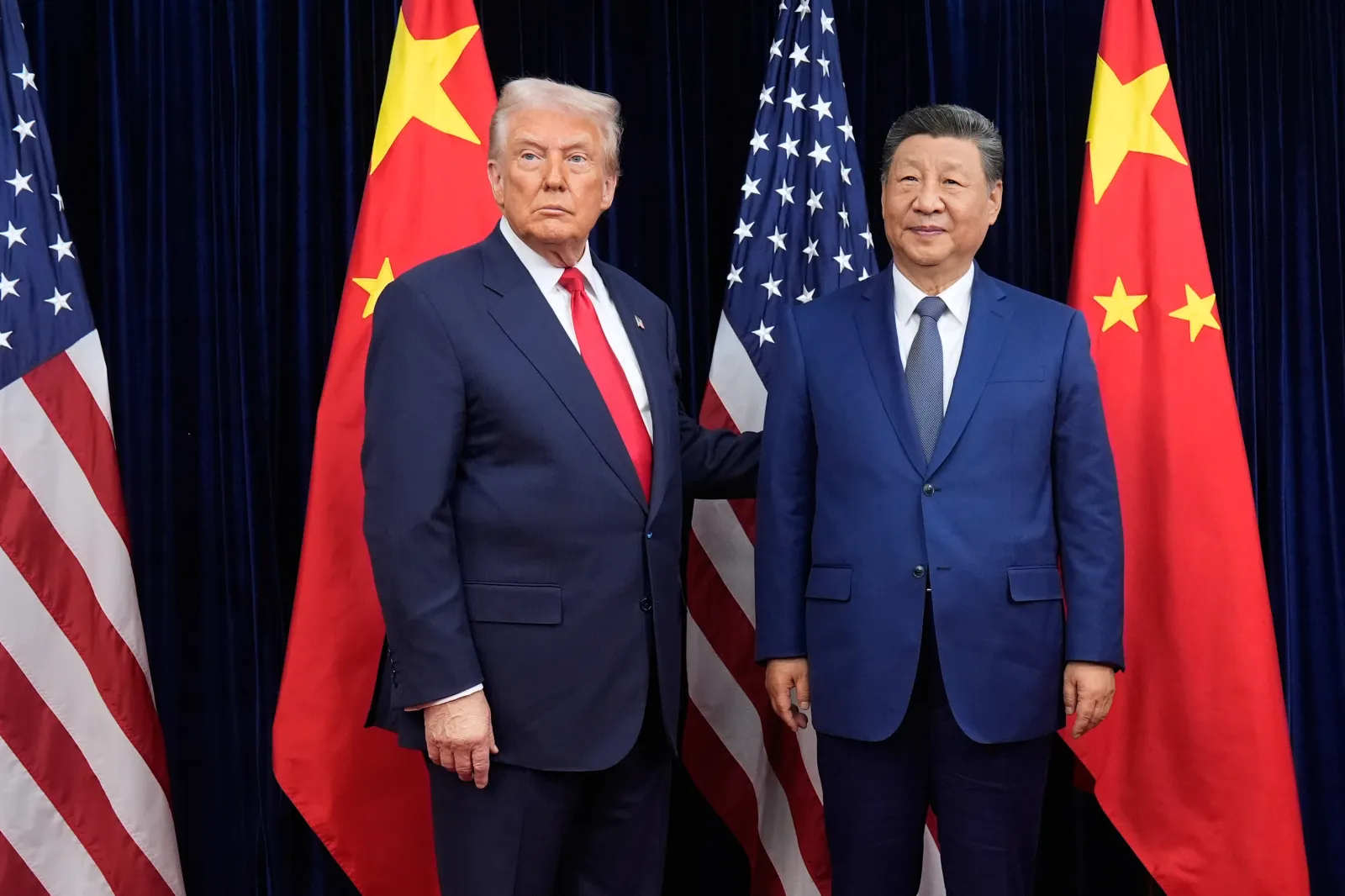
Chinese President Xi Jinping “would like to see” the Middle East war end, Trump told reporters at the White House on Monday. Trump is scheduled to visit China in the middle of May.
What To Know
China imports around 50 percent of its crude oil from the Persian Gulf, including around 10 percent of undeclared product from Iran, transshipped via third countries. The Chinese government has prepared a sizable energy cushion, but its long-term dependence raises its stake in the U.S. enforcement against Iranian exports.
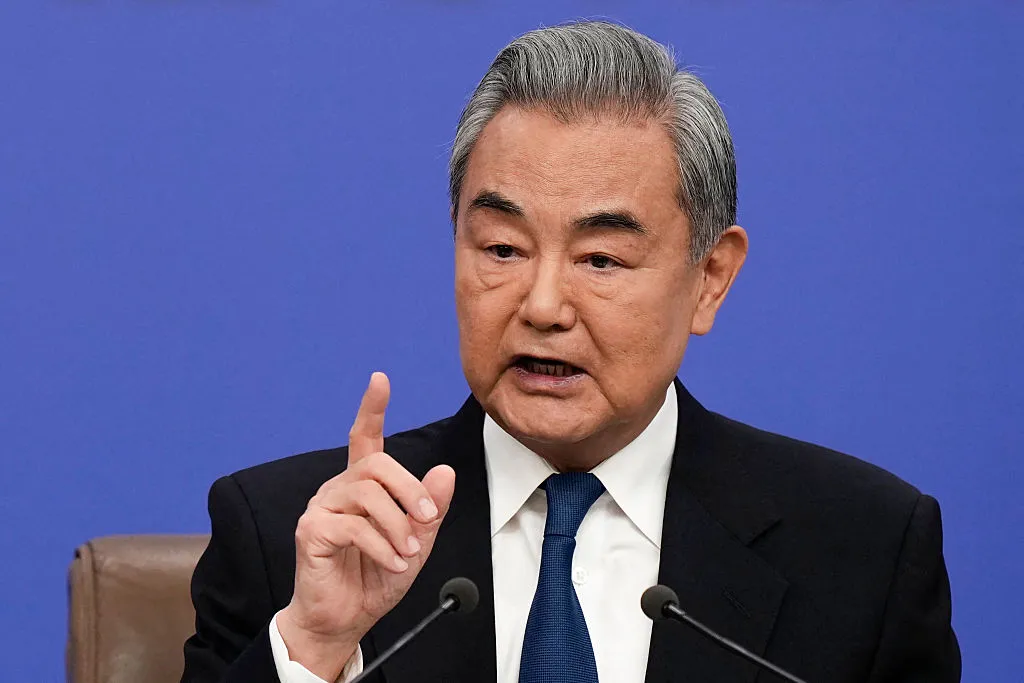
"The Strait of Hormuz is an important international trade route for goods and energy. Keeping the area safe and stable and ensuring unimpeded passage serves the common interest of the international community," China's Foreign Ministry spokesperson Guo Jiakun told reporters at a regular press briefing in Beijing on Monday.
"The root cause of the disruption at the Strait of Hormuz is the military conflict. To solve the issue, the conflict must stop as soon as possible. All parties need to remain calm and exercise restraint. China will continue playing a constructive role," Guo said.
Trump recently encouraged Beijing to source its oil from the United States—a major producer—and from Venezuela, whose supply is being managed from Washington since the capture of former President Nicolas Maduro in a January raid by American special operations forces.
Guo said China was prepared to work with others stabilize global energy supply chains. "Venezuela is a sovereign state and has full permanent sovereignty over all its natural resources and economic activities. It has the right to choose its own partners of cooperation. Other countries have no right to dictate to it," he said.
The U.S. blockade of Iranian ports began at 10 a.m. ET on Monday. The U.S. Central Command said the operation would be aimed at vessels entering or leaving Iranian ports and coastal areas, not a full closure of the Strait of Hormuz, and that ships transiting to or from non‑Iranian destinations would not be blocked.
Trump has framed the move as exerting leverage after the U.S. and Iranian delegations left Pakistan on Sunday having failed to secure an agreement on free shipping through the strait, among other issues at the center of longstanding tensions between the two governments.
Iran's Revolutionary Guards have declared the traditional sea lanes in the strait unsafe, warning of possible sea mines, and are requesting that all vessels transit the waterway via a corridor that crosses into its territorial waters.
Security analysts have warned that the greatest risk may come from encounters at sea with unpredictable outcomes. Cedric Leighton, a retired U.S. Air Force colonel and former deputy director of the National Security Agency, said in an interview with Times Radio Breakfast that it was “very possible” a Chinese tanker could encounter the U.S. Navy during enforcement operations, adding that such an incident could lead to “major escalation” if not handled properly.
Leighton cautioned that the rules of engagement remained unclear and that turning back—or boarding—a foreign-linked vessel could trigger severe diplomatic repercussions, particularly with a state like China, where commercial shipping is closely tied to the government.
“There doesn't seem to a mechanism to deescalate,” he added, “and that is, I think, one of the major flaws in this.”
What Happens Next
Attention is likely to shift toward whether diplomatic efforts resume, including whether China seeks to pressure Iran back toward negotiations or presses for limits on enforcement to protect shipping flows.
Meanwhile, naval activity in the Strait of Hormuz, shifts in oil markets and China’s next diplomatic or economic move will be closely watched for signs the standoff is stabilizing—or escalating.
Correction 4/14/2026, 6:30 a.m. ET: A previous version of this article erroneously reported quotes which were attributed to China's Defense Minister Dong Jun. There is no record of such statements. Newsweek regrets the error.
View 0 Comments
Submit Correction
View Editorial & AI Guidelines