...

By Shane Croucher
Senior Editor
0
Share
Newsweek is a Trust Project member
See more of our trusted coverage when you search.Prefer Newsweek on Googleto see more of our trusted coverage when you search.
China said it had "lodged serious protests" with the U.S. after the Trump administration restricted visas for Central American nationals who it believed were working to subvert the rule of law on behalf of the Chinese Communist Party (CCP).
The State Department tightened the visa rules in September, saying it was "countering China's corrupt influence in Central America" and that affected "individuals and their immediate family members will be generally ineligible for entry" into the U.S.
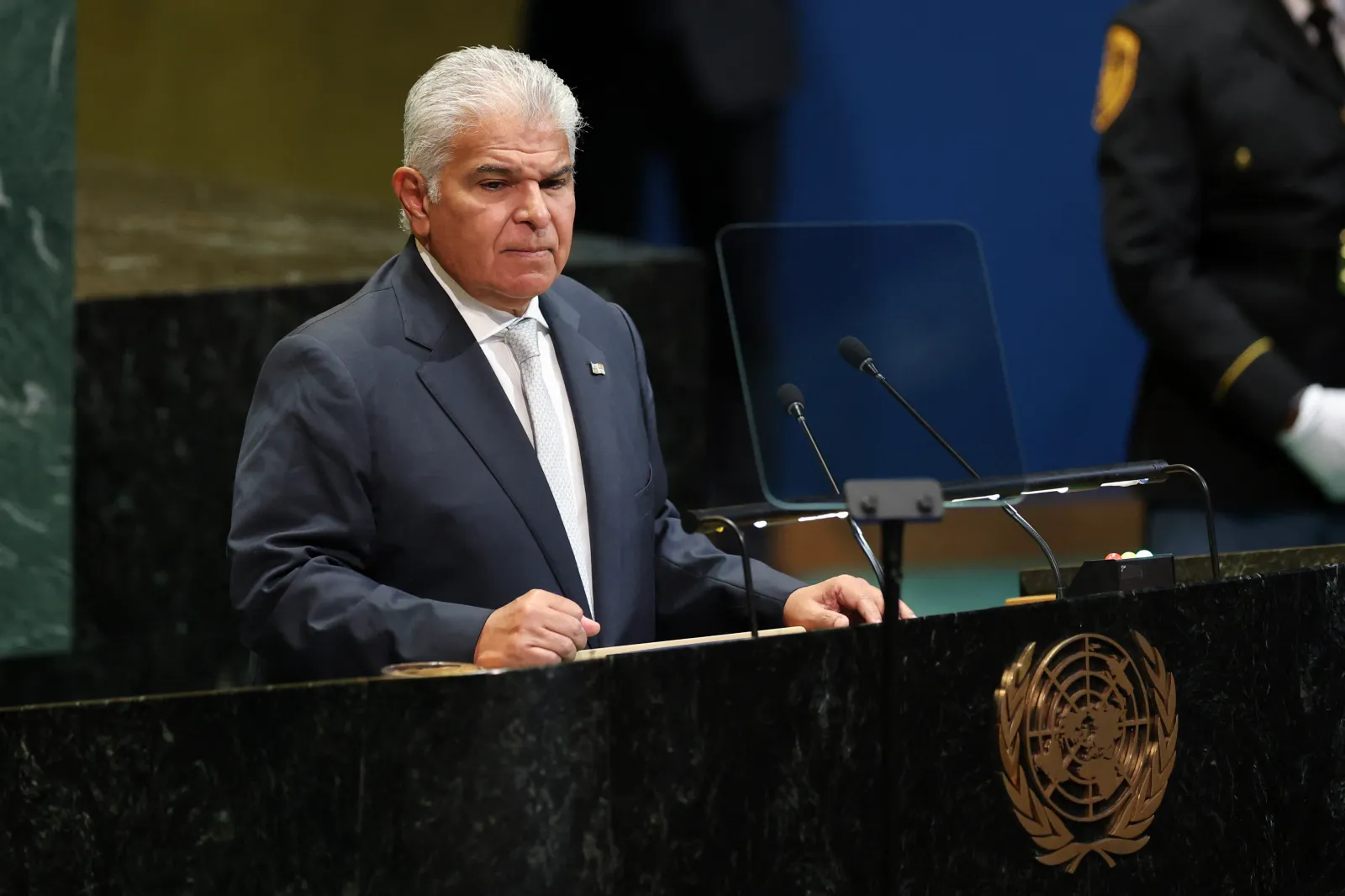
Earlier this week, Panamanian President José Raúl Mulino accused the local U.S. embassy of threatening to cancel his officials' visas. U.S. Ambassador to Panama Kevin Marino Cabrera said in response that a visa is a "privilege, not a right" and cited the State Department's tightened rules.
Read More on World
A spokesperson for the Chinese Ministry of Foreign Affairs called the visa move "politically-motivated and an act of economic coercion" in a Tuesday post on X. "The U.S. is once again putting domestic law above international law and its international obligation," the spokesperson said.
"This is yet another example of U.S. bullyism. Weaponizing visas will not intimidate those supporting the right cause. Nor will it hold back the flourishing ties between China and Central American countries," the spokesperson continued.
Panama Canal at Center of US-China Tensions
...
China has been deepening its ties with states in Central and South America and has developed important strategic relationships with Brazil, Venezuela and Peru.
But Panama has become especially sensitive to the U.S.-China tensions because of the strategically important Panama Canal, a maritime link between the Pacific Ocean and the Caribbean Sea that cuts shipping times for the cargo that passes through.
U.S. Secretary of State Marco Rubio visited Panama in February on his first foreign trip as the top U.S. diplomat and called for Panama to immediately reduce China's influence over the canal.
While Panama has strongly denied Chinese influence over canal operations, it has gone along with U.S. pressure for the Hong Kong-based company operating ports on both ends of the canal to sell its concession to a U.S. consortium.
Mulino has said that Panama will maintain the canal's neutrality.
"They're free to give and take a visa to anyone they want, but not threatening that if you don't do something, I'll take the visa," Mulino said on Thursday. He added that the underlying issue—the conflict between the U.S. and China—"doesn't involve Panama."
This article includes reporting by the Associated Press.
Update 10/21/25, 6:02 a.m. ET: This article was updated with more information.
View 0 Comments
Submit Correction
View Editorial & AI Guidelines