...

By Daniel Orton
News Editor
0
Share
Newsweek is a Trust Project member
See more of our trusted coverage when you search.Prefer Newsweek on Googleto see more of our trusted coverage when you search.
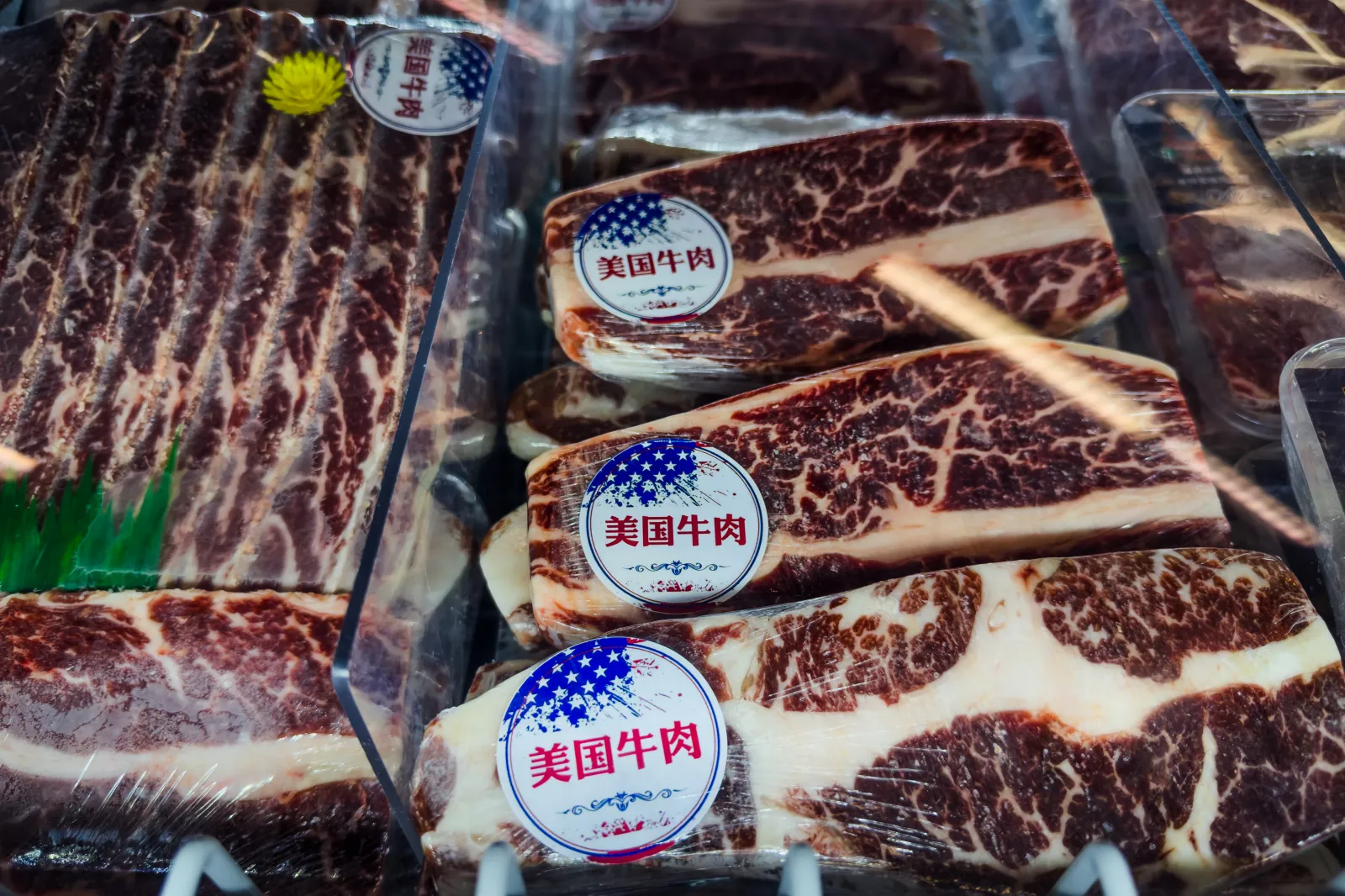
China will slap steep new tariffs on beef imports starting next year, hitting shipments from the United States and other major suppliers with a 55 percent surcharge once annual quotas are exceeded, the country's commerce ministry announced Wednesday.
The safeguard measure, set to begin January 1, 2026, will run for three years. Under the ruling, country-specific quotas will cap duty-free shipments—164,000 tons for U.S. beef in the first year—and any imports beyond those limits will incur the additional tariff on top of existing duties.
Why It Matters
The new beef tariffs come as the U.S.–China trade dispute has escalated sharply in 2025 following President Donald Trump’s return to office. Washington has moved to expand restrictions and tariff pressure on key Chinese industries, including electric vehicles and clean-energy supply chains, framing the measures as a response to unfair trade practices and national security risks.
Read More on News
Beijing has retaliated with higher tariffs on U.S. exports—particularly agricultural products—while also signaling tighter controls over the export of strategically important materials.
The renewed tit-for-tat has heightened uncertainty for businesses and global markets, raising concerns about supply-chain disruption and marking a major intensification of tensions first unleashed during the 2018 trade war.
...
What To Know
In addition to the U.S., the quotas and extra tariffs will affect countries such as Brazil, Australia and Argentina.
They reflect China’s assertion that rising foreign beef imports have "seriously damaged China's domestic industry." The measure stems from an investigation launched in December 2024 into import volume and its effects on Chinese producers.
According to Reuters, total Chinese beef import quotas for 2026 across covered countries are set at 2.7 million metric tons, nearly matching the volume recorded in 2024. Any shipments above quota, including from the U.S., will incur the 55 percent duty. Tariffs will be gradually relaxed over the three-year period. The policy excludes developing nations whose import volumes fall below specified thresholds.
Chinese beef imports have been falling, with official customs data showing a 0.3 percent year-on-year decline for the first 11 months of 2025. The U.S. accounted for 138,112 tons of beef imports to China in 2024, Reuters reported.
What People Are Saying
The Chinese Ministry of Commerce said in a statement: "The investigating authority ruled that the increase in the amount of imported beef had seriously damaged China's domestic industry, and that there was a causal relationship between the increase in the number of imported products and the serious damage."
**Hongzhi Xu, a senior analyst at Beijing Orient Agribusiness Consultants, told Reuters: “**China's beef-cattle farming is not competitive compared with countries such as Brazil and Argentina. This cannot be reversed in the short term through technological advancements or institutional reforms."
Mark Thomas, chair of the Western Beef Association in Australia, said**:** "There's plenty of other countries that will take our product."
What Happens Next
U.S. beef producers and exporters must now grapple with higher costs and more limited market access, while the wider agricultural trade between the countries faces renewed pressure.
View 0 Comments
Submit Correction
View Editorial & AI Guidelines