...

By Micah McCartney
Reporter
0
Share
Newsweek is a Trust Project member
See more of our trusted coverage when you search.Prefer Newsweek on Googleto see more of our trusted coverage when you search.
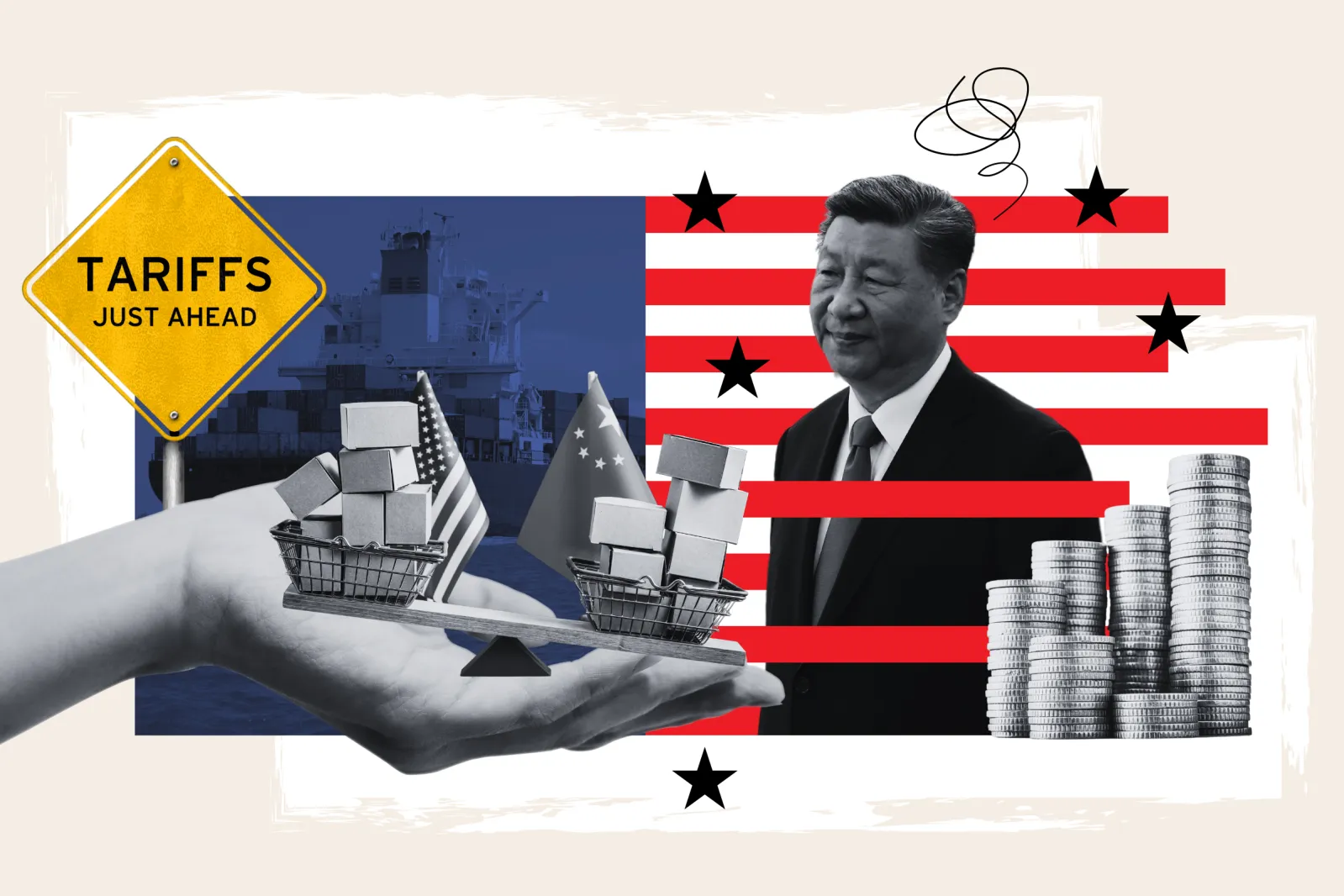
The U.S.'s steep tariff hikes on Chinese goods took effect on Friday after Beijing criticized the move as mutually destructive protectionism.
The Biden administration announced in May that it was upholding tariffs on $300 billion worth of Trump administration tariffs after a four-year review. The final decision to move forward with the tariff hikes, initially expected in late August, was delayed until September 13. Newsweek reached out to the U.S. Treasury with an emailed request for comment.
China-made solar cells, semiconductors, and medical supplies such as masks and surgical gloves are now subject to 50 percent tariffs, up from 25. Tariffs on lithium-ion batteries have been raised from 7.5 percent to 25 percent.
Read More on World
Duties on Chinese electric vehicles, a sector China now dominates but has a negligible market share in the U.S., have been quadrupled from 25 percent to 100 percent,
"Today's finalized tariff increases will target the harmful policies and practices of the People's Republic of China that continue to impact American workers and businesses," said U.S. Trade Representative Katherine Tai in the statement confirming the move.
...
Liu Pengyu, spokesperson for the Chinese embassy in the U.S., reiterated Beijing's opposition to the Section 301 tariffs, telling Newsweek that they constitute "unilateralism and protectionism."
Section 301 of the U.S. Trade Act of 1974 that allows the United States to investigate and respond to foreign trade practices deemed unfair or harmful to U.S. interests.
Liu said that a World Trade Organization dispute settlement panel had ruled the then-Trump administration's additional tariffs on $234 billion worth of Chinese imports violated the most-favored-nation principle. This requires equal tariffs for all WTO members, and the tariffs exceeded the maximum levels the U.S. had previously agreed to.
The spokesperson added that the measures have failed to narrow the U.S.'s trade deficit with China or boost employment, but instead "distorted market supply and demand" and harmed the global supply chain. He called on the U.S. Trade Representative to cancel the tariffs immediately.
The Office of the U.S. Trade Representative (USTR) in its September 13 statement cited economic analyses as saying the Section 301 duties have had "positive impacts on U.S. production in the 10 sectors most directly affected by the tariffs."
Meanwhile, China's retaliatory tariffs imposed over the course of the trade war on $185 billion U.S. products have had "minimal impacts" on jobs and prices in the country, the USTR added.

...
Some analysts suggest the tariff hikes are more about scoring political points ahead of the election than inflicting real economic pain.
"Overall, the latest round on China tariffs seems symbolic and politically motivated, and is unlikely to have a strong economic impact," Vincent Deluard, director of Global Macro Strategy at financial services company StoneX Group Inc., told Newsweek.
Deluard pointed out the limited scope of the tariff hikes, levied on only $18 billion worth of products compared to the $300 billion first targeted under former President Donald Trump. Moreover, there is little to be gained in slapping 100 percent duties on products not being imported into the U.S., such as Chinese EVs and steel.
"These tariffs were designed to look tough in politically sensitive sectors ahead of the election but will not matter all that much—as evidenced by the fact that China has not seriously retaliated," Deluard added. "The big news for China is the larger-than-expected stimulus, the equity rally, and a potential confidence shock after three years of missed expectations."
Trade tensions between China have escalated this year, with Beijing retaliating through protectionist measures amid concerns that low-cost Chinese goods are undermining local markets.
The European Union, historically more reluctant than the U.S. to resort to tariffs in its relations with Beijing, took stronger action against alleged Chinese overcapacity this summer.
Major Chinese automakers such as BYD now face duties of 17.4 percent, while Geely and SAIC Motor are subject to tariffs of 19.3 percent and the maximum rate of 36.3 percent, respectively. Non-cooperating manufacturers could face tariffs as high as 38.1 percent.
This drew condemnation from Beijing, which accused the EU of politicizing trade and using environmental goals as a pretext for protectionism.
China has responded to recent Western tariffs with antidumping measures of its own.
In May, Beijing's Commerce Ministry launched one such probe into polyoxymethylene (POM) copolymers imported from the U.S., EU, Japan, and Taiwan.
Earlier this month, it kicked off a tit-for-tat investigation into Canadian conola products shortly after Canada announced new tariffs on Chinese EVs, aluminum, and steel goods.
Countries concerned over the abundance of low-cost Chinese exports have driven nations in other regions to respond with measures to safeguard local industries, including Thailand, Indonesia, Turkey, Mexico, and Brazil.
Update 9/28/24, 6 a.m. ET: This article has been updated with a comment from Vincent Deluard.
View 0 Comments
Submit Correction
View Editorial & AI Guidelines