...

By John Feng
China Editor
0
Share
Newsweek is a Trust Project member
See more of our trusted coverage when you search.Prefer Newsweek on Googleto see more of our trusted coverage when you search.
China's top diplomat appeared to subtly reject a public call by Tehran to forge a new alliance as Iran looks to recover from months of war with the United States and Israel.
Foreign Minister Wang Yi said in a call with Iranian counterpart Abbas Araghchi on Wednesday that China would continue to back Iran's sovereignty and security and had "worked in China's own way to end hostilities."
"China supports Iran's efforts to improve relations with regional countries and explore the joint development of a regional security architecture," Wang said, stopping short of endorsing Tehran's push for a formal Iran-China alliance.
Read More
China’s Spies Surge Worldwide, but Some are Getting Caught7 min read

US Blockade Over? Iranian Ships Sail Out of Strait of Hormuz3 min read

Trump and Carney’s Hot Mic Moment Reveals Chinese Car Limit3 min read

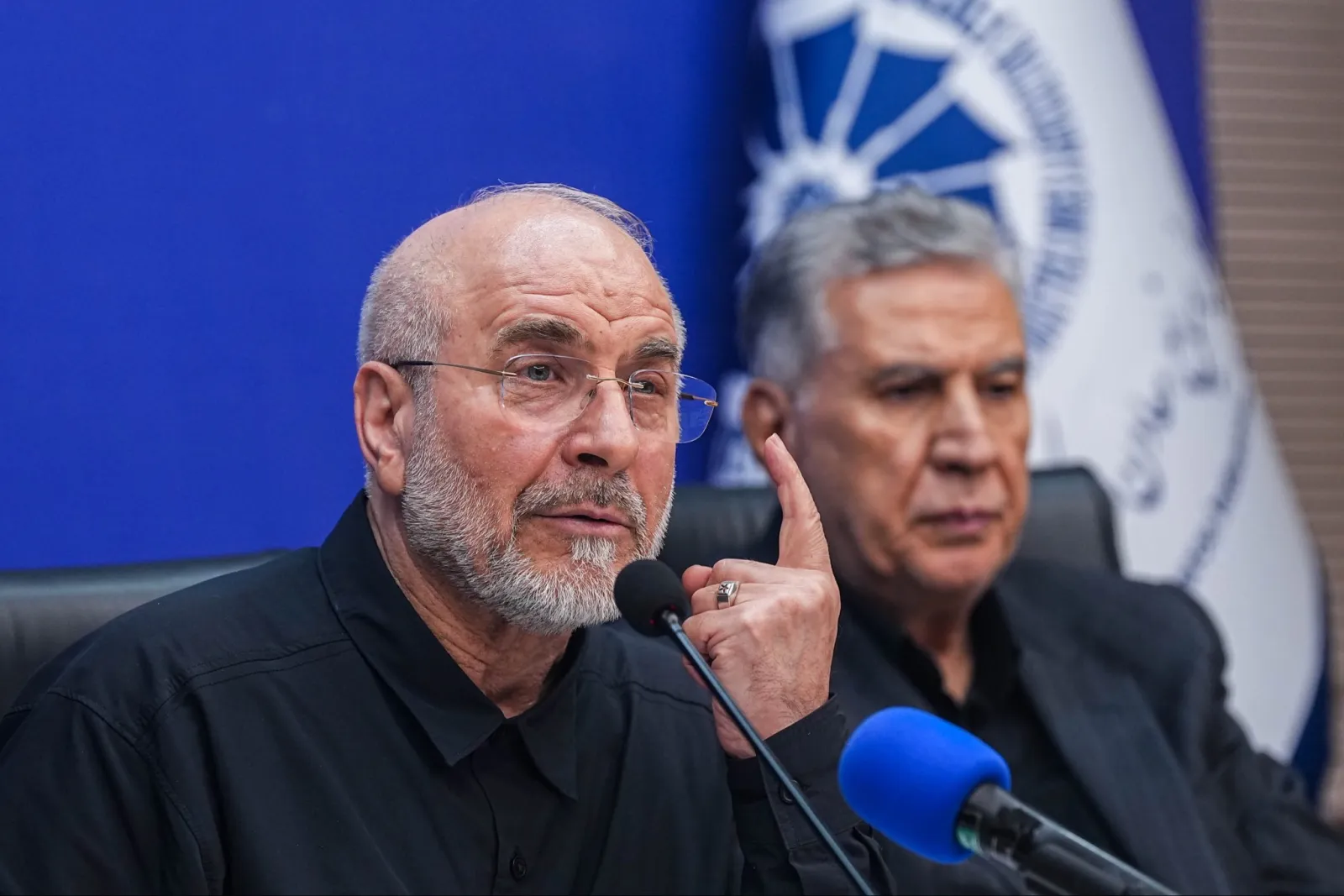
In the hours prior to Wang's comments, Iran's parliament speaker—Mohammad Bagher Ghalibaf, who is also its top China policy official—told Iranian business leaders that Tehran should persuade Beijing to join a new bloc.
...
China's Economic Stake in the Gulf
Beijing frequently rails against U.S.-led coalitions on its periphery in Asia—including the likes of the Quad with nonmilitary mandates—and rarely if ever enters into formal alliances.
Its back-room interventions in the early days of the Iran war were born out of economic self-interest, observers said, given its heavy dependence on the Persian Gulf for nearly half its annual energy imports.
China was the biggest buyer of sanctioned Iranian crude oil before the war.
The conflict in the Middle East has caused a global surge in energy costs, which are expected to remain higher than prewar levels for the rest of the year, according to commodities analysts.
The spike was linked to market uncertainty over ship safety in the Strait of Hormuz, which as of this week was seeing a gradual resumption of vessel traffic—including of those belonging to Iran—after simultaneous blockades by Iranian forces since February 28 and by the U.S. Navy since April 13.
Wang told Araghchi that "navigation through the Strait of Hormuz needs to be properly addressed," according to a readout of the phone call, which China said was requested by the Iranian side.
Araghchi "expressed sincere gratitude to China for its positive role in advancing the negotiations and concluding the agreement," the readout said.
The U.S.-Iran memorandum of understanding, which began a 60-day window of peace negotiations, was signed electronically on Wednesday by U.S. President Donald Trump and Iranian President Masoud Pezeshkian.
Tehran Calls for Deeper Ties With Beijing
Ghalibaf told a meeting of the Iranian Chamber of Commerce that the country needed to build "in all sectors" with the help of China, according to the state-owned Mehr News Agency.
"It is we who China must believe—and it will believe—that we are not just a customer or a trading partner, rather we are truly a partner with China in every sense of the word," he was quoted as saying.
"We need blocs; I am making it clear that these blocs must be formed and have been formed to some extent," the semiofficial Iranian Students' News Agency quoted him as saying.
"In any bloc that emerges, there are two definitive and irreplaceable countries in all areas: China and Iran," Ghalibaf said, per the outlet.
He added that the two countries should align technologically, economically and politically.
At the start of the Iran war, when Iran's Revolutionary Guard shut the Strait of Hormuz and Iranian missiles and drones rained down on the capitals of Gulf states, longtime China watchers said Beijing's partnership and patience with a disruptive Tehran would be tested.
Tehran now faces the task of stabilizing its society, economy and political establishment to regain international legitimacy, a status that could persuade China to substantially deepen official trade and investment in Iran as one of the strongest candidates to help rebuild the country.
View 0 Comments
Submit Correction
View Editorial & AI Guidelines