
10
Loading video...

By Micah McCartney
Reporter
0
Share
Newsweek is a Trust Project member
See more of our trusted coverage when you search.Prefer Newsweek on Googleto see more of our trusted coverage when you search.
A Chinese company is set to supply Iran with hundreds of portable anti-air missile systems as the Islamic Republic seeks to rebuild air defenses devastated by United States and Israeli strikes, according to Reuters. The report comes just days after U.S. President Donald Trump reiterated that Chinese leader Xi Jinping had assured him Chinese firms would not arm Tehran.
While China is a close political ally of the Iranian government and has repeatedly condemned the U.S.-Israeli strikes since they began on February 28, Beijing has limited its direct involvement in the conflict, instead engaging in behind-the-scenes diplomacy and, according to Reuters and other media reports, providing Iran with satellite imagery of U.S. military targets around the Gulf.
Delivery Within Weeks: Report
Iran and Zhongqing Baoshang International Investment have signed a $60-70 million deal for 300-400 shoulder-fired man-portable air defense (MANPAD) systems, Reuters cited sources familiar with the matter who spoke anonymously because of the sensitivity of the sale.
Read More
Iran’s Yemen Ally Warns Saudi Arabia of ‘Devastating Strikes’ as War Widens6 min read

At the Sharp Edge of the U.S.-China Rivalry, the Philippines Holds the Line8 min read

China Protests Trump’s Latest Tariffs3 min read

The Hong Kong-based company was said to be serving as an intermediary for the Chinese supplier. The shipment would include Chinese-made FN-16 and QW-12 shoulder-mounted missile systems.
Beijing-based Zhong Qing Bao Shang Group, the parent company of Zhongqing Baoshang International Investment, did not immediately respond to Newsweek's emailed request for comment.
Newsweek also reached out to the Chinese and Iranian foreign ministries via email for comment.
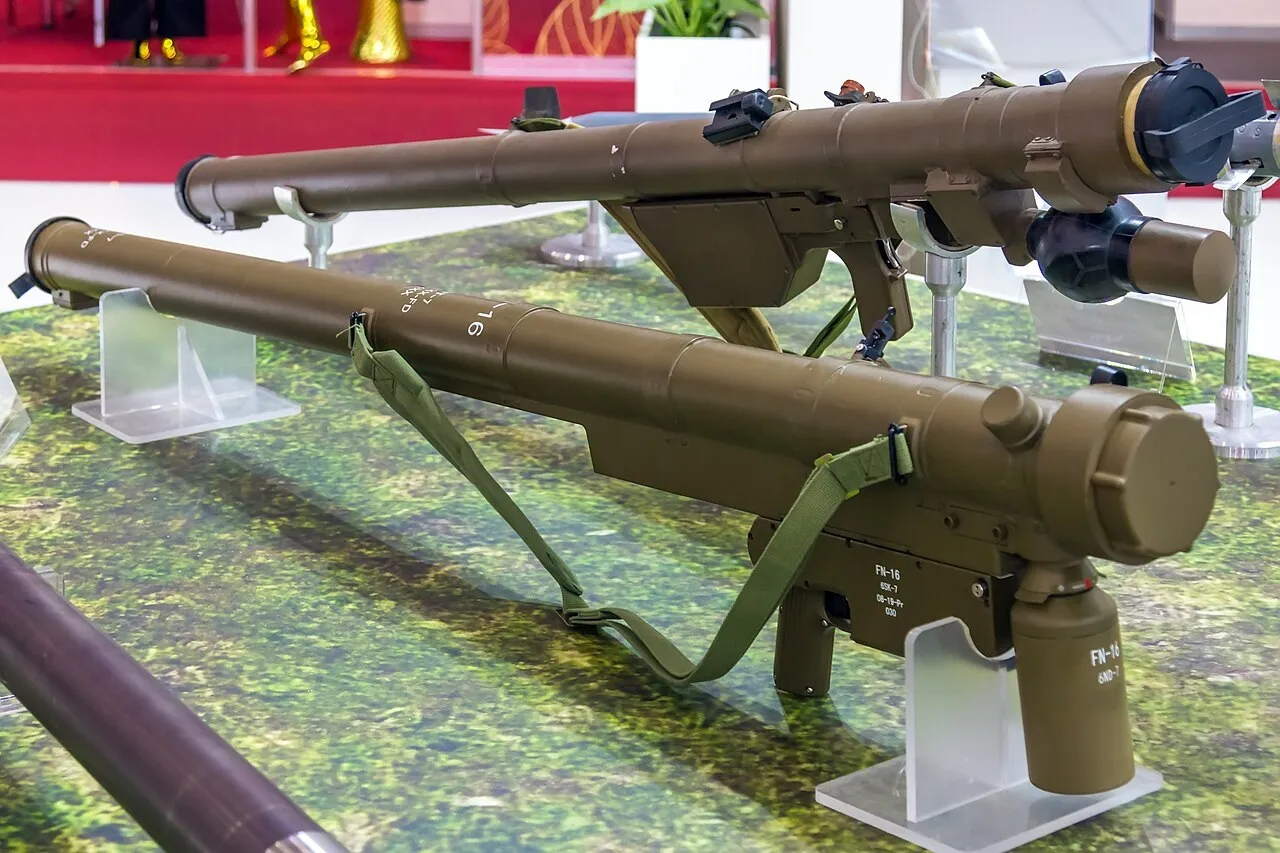
...
According to the plan approved by the parties, the weapons would first be flown from Urumqi, in western China's Xinjiang region, to Pakistan and then transported to Iran, the sources told Reuters. They did not clarify whether the second leg of the journey would be by air or road. The exact quantities, delivery schedule and other details remain subject to change, the sources said.
China's Foreign Ministry dismissed the report as "completely groundless," Reuters said. The public relations wing of Pakistan's military called it "absolutely concocted and false."
"As the president stated, nothing that any outside actor is doing to help Iran is in any way increasing their ability to target Americans," a White House official told Newsweek.
Trump Says Xi Promised No Weapons
During Trump's state visit to Beijing in May, Xi told him he would not, "under any circumstances," give or sell weapons to the Islamic Republic of Iran.
"And that statement included Chinese companies," the U.S. president wrote in a Truth Social post on July 24, adding that Russian President Vladimir Putin had also assured him Moscow was not supplying Tehran with weapons.
Related Story
China Protests Trump’s Latest Tariffs
The U.S. again suspended its aerial campaign against Iran on Saturday, local time, to allow space for diplomacy after 13 days of strikes launched in response to Iranian attacks on commercial shipping in the Strait of Hormuz and U.S.-associated targets across the Gulf.
The two countries declared a ceasefire on April 8 and, under a memorandum of understanding brokered by Pakistan in June, agreed to work toward a lasting peace agreement over a 60-day period.
Chinese-made systems such as the C-802 anti-ship cruise missile, and Iranian derivatives based on its design, have been used by Iran and supplied to its proxy, the Yemen-based Houthis, who in recent days have fired rockets at Saudi oil tankers as part of a blockade they declared in the Red Sea over the kingdom's military strikes in Yemen.
In February, shortly before the U.S. and Israel launched their offensive, Reuters reported Iran was nearing a deal to acquire China's CM-302 supersonic anti-ship missile.
Contact Newsweek editors on this story: John Feng and Sam Wilson.
View 0 Comments
Submit Correction
View Editorial & AI Guidelines