...


By Micah McCartney and Matthew Tostevin
0
Share
Newsweek is a Trust Project member
See more of our trusted coverage when you search.Prefer Newsweek on Googleto see more of our trusted coverage when you search.
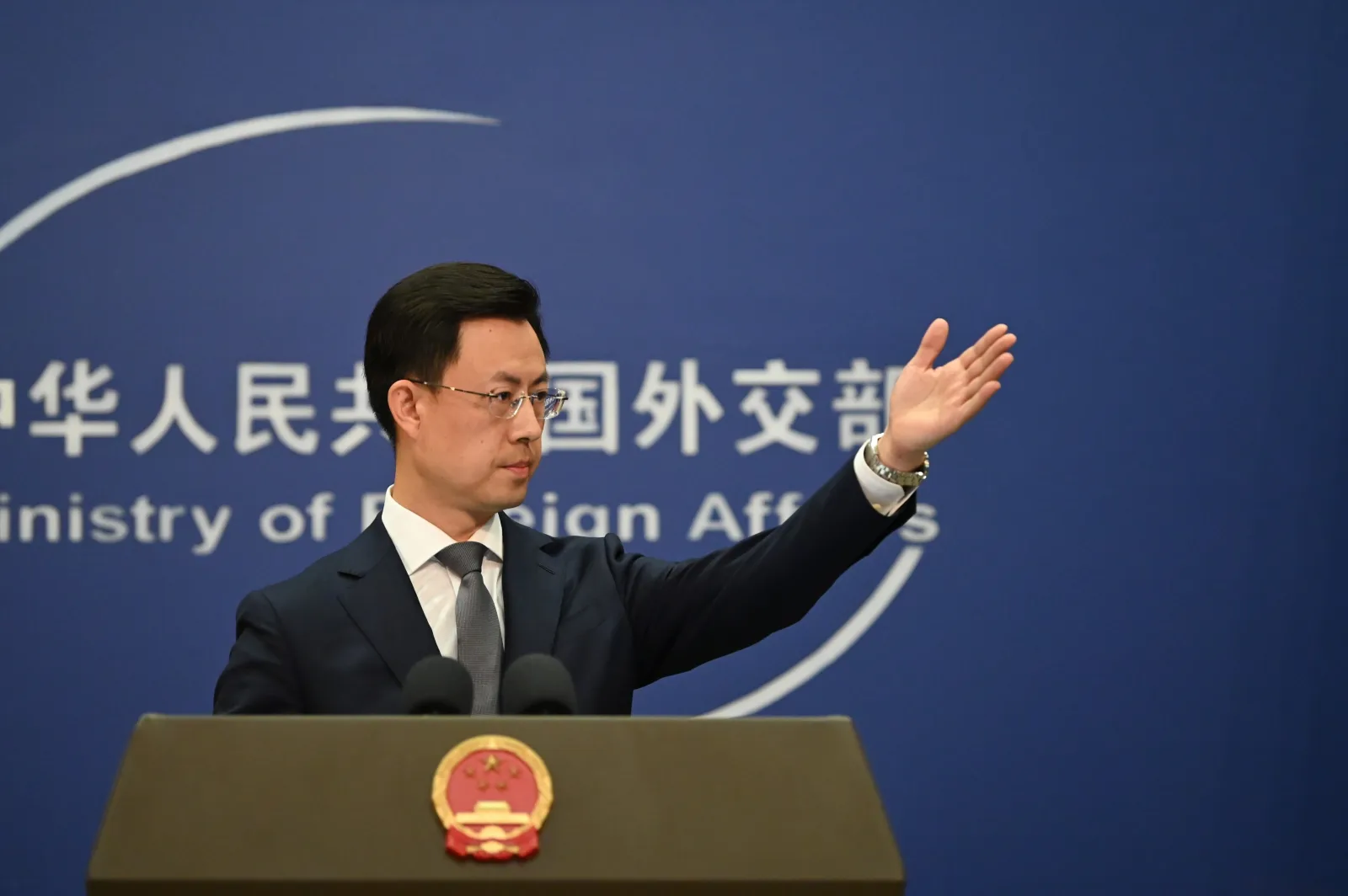
Win-win cooperation is the only viable way forward for relations between China and the United States, a spokesperson for China's Foreign Ministry said Monday when asked to weigh in on the U.S.' latest national security strategy (NSS).
"China stands ready to work with the U.S. to maintain the steady development of the bilateral relationship and at the same time will firmly defend our sovereignty, security, and development interests," Guo Jiakun told reporters.
Newsweek has reached out to the White House by email with a request for comment.
Read More on World
Why It Matters
Released on Friday, the NSS lays out the economic and security priorities for President Donald Trump's second administration. China, the world’s second-largest economy and a rising military power, was the most-mentioned country in the report.
The document followed Trump’s October 30 meeting with Chinese counterpart Xi Jinping on the sidelines of the Asia-Pacific Economic Cooperation summit in South Korea.
...
What To Know
"China always believes that China and the U.S. stand to gain from cooperation and lose from confrontation," Guo said. "The principle of mutual respect, peaceful coexistence, and win-win cooperation is the right way for the two countries to get along and is the only realistic choice."
The spokesperson also addressed Taiwan, which was listed in the Trump administration document as a major security priority, and reiterated China's sovereignty claim over the self-ruled island, a semiconductor hub, and major recipient of U.S. weapons sales.
"The Taiwan question is at the core of China's core interests and is the first red line that cannot be crossed in China-U. S. relations," he said. Guo called on Washington to "stop conniving with and supporting Taiwan independence forces."
The U.S. officially opposes unilateral changes to the status quo in the Taiwan Strait but maintains a longstanding policy of "strategic ambiguity," leaving it unclear whether Washington would come to Taiwan's aid in the event of an attack.
Deterring an invasion of Taiwan remains a major priority. The island plays a critical role in tech supply chains and its strategic location in the First Island Chain is vital, according to the national security strategy, which calls for the U.S. to work with regional partners "to deny any attempt to seize Taiwan or achieve a balance of forces so unfavorable to us as to make defending that island impossible."
What People Are Saying
Speaking with Newsweek, Henry Huiyao Wang, founder and president of the Center for China and Globalization think tank, said the new national security strategy was notably less global in scope than the 2017 edition published during Trump's first term, when he relied more on national security advisers for setting the policy agenda. The 2025 strategy also puts a stronger emphasis on defense spending among U.S. allies in Europe and beyond, with a desire that they shoulder more of the burden of regional defense.
"I think if the U.S. is having this grand strategy of concentrating more on its backyard, more on solving its own problems, from immigration, smuggling, drug issues, all those compelling domestic issues, infrastructure and property and things like that […] so that's probably a better approach, rather than spread too far, too thin, too wide, and then, you know, lose the domestic focus," Wang said.
What Happens Next
Trump and Xi secured concessions that lowered the temperature of U.S.-China ties after months of tit-for-tat trade tensions. Yet the two sides remain at odds over a number of structural differences, including a military rivalry in the Asia-Pacific region.
Trump is expected to travel to China in April at Xi's invitation for another round of face-to-face talks.
Update 12/8/2025, 09:53 a.m. ET: This article has been updated with additional information and a comment from Henry Wang.
View 0 Comments
Submit Correction
View Editorial & AI Guidelines