
By Theo Burman
Live News Reporter
0
Share
Newsweek is a Trust Project member
See more of our trusted coverage when you search.Prefer Newsweek on Googleto see more of our trusted coverage when you search.
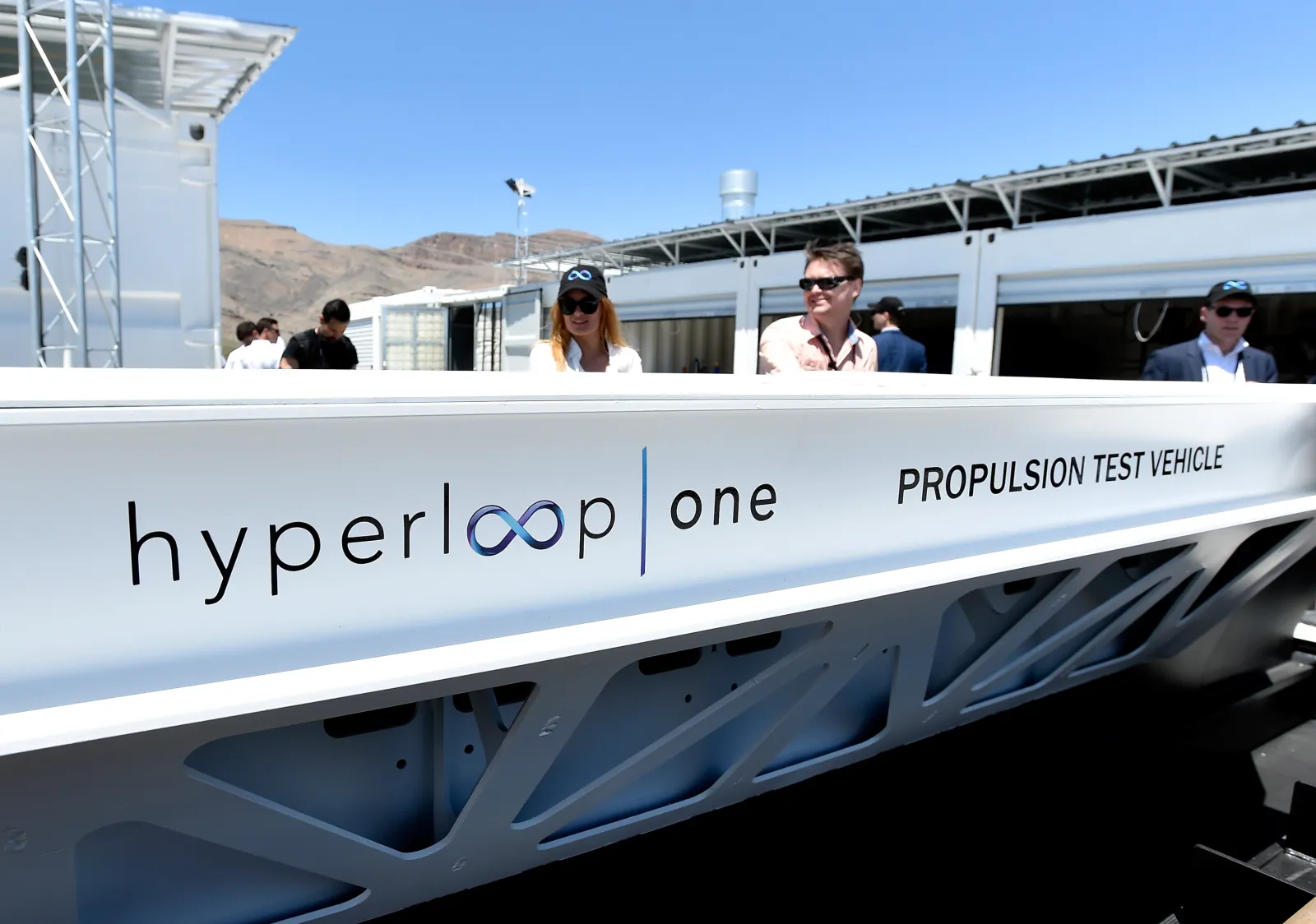
Chinese researchers have announced breakthroughs that may resolve the most persistent engineering flaw in vacuum-tube maglev systems, an issue that has stumped Elon Musk and other developers.
Scientists in Shanxi province, working at the country's first full-scale maglev vacuum test facility, say they've developed a suspension system that dramatically reduces the intense vibrations that plagued earlier Hyperloop prototypes.
Why It Matters
Hyperloop technology has the potential to get passengers from point A to point B at record speeds. It uses magnetic levitation through vacuums, which means there is no air resistance on the front of the vehicle, allowing transport tubes to move at speeds of up to 200 miles per hour. The technology has been tested across the world, including India and Italy.
Read More on News
What To Know
However, current versions of the technology often produce intense vibrations that would make travel very difficult for passengers inside the tubes.
These turbulent oscillations, especially at speeds exceeding 373 mph, previously rendered the passenger experience physically intolerable, even "unbearable," according to some engineers.
However, Chinese researchers have now developed an AI-guided suspension system that counters the worst of these vibrations.
Scientists at the China Aerospace Science and Industry Corporation said that their suspension system reduced vertical vibrations by 45.6 percent and achieved comfort scores below the Sperling Index threshold of 2.5, a scale for assessing ride comfort and quality in rail vehicles.
...
The engineers combined two different approaches to neutralize disruptive motion in near-vacuum conditions.
The first simulates an invisible, stabilizing tether that is "hooked to the sky," adjusting to vehicle motion dynamically. The second uses a tuning algorithm to adapt to changing environmental inputs and correct deviations in real-time.
This approach is managed by an artificial intelligence module trained through genetic algorithms to control the suspension system.
Testing with a scale model vehicle was conducted using a motion simulator based in Shanxi.
What People Are Saying
A spokesperson for HyperloopTT, the Los Angeles-based company delivering Italy's hyperloop project, told Newsweek: "We're witnessing the transition from hyperloop as a futuristic concept to an imminent reality.
"Hyperloop is a system that moves people and goods safely, efficiently, and sustainably by bringing airplane speeds to the ground."
At a Boring Company launch event, Elon Musk said: "The Loop is a stepping stone toward Hyperloop. The Loop is for transport within a city. Hyperloop is for transport between cities, and that would go much faster than 150 mph."
What Happens Next
The scale model tests will evolve into full-scale tests in China while other projects across the world continue to advance.
View 0 Comments
Submit Correction
View Editorial & AI Guidelines