
...

By Jesus Mesa
Reporter
0
Share
Newsweek is a Trust Project member
See more of our trusted coverage when you search.Prefer Newsweek on Googleto see more of our trusted coverage when you search.
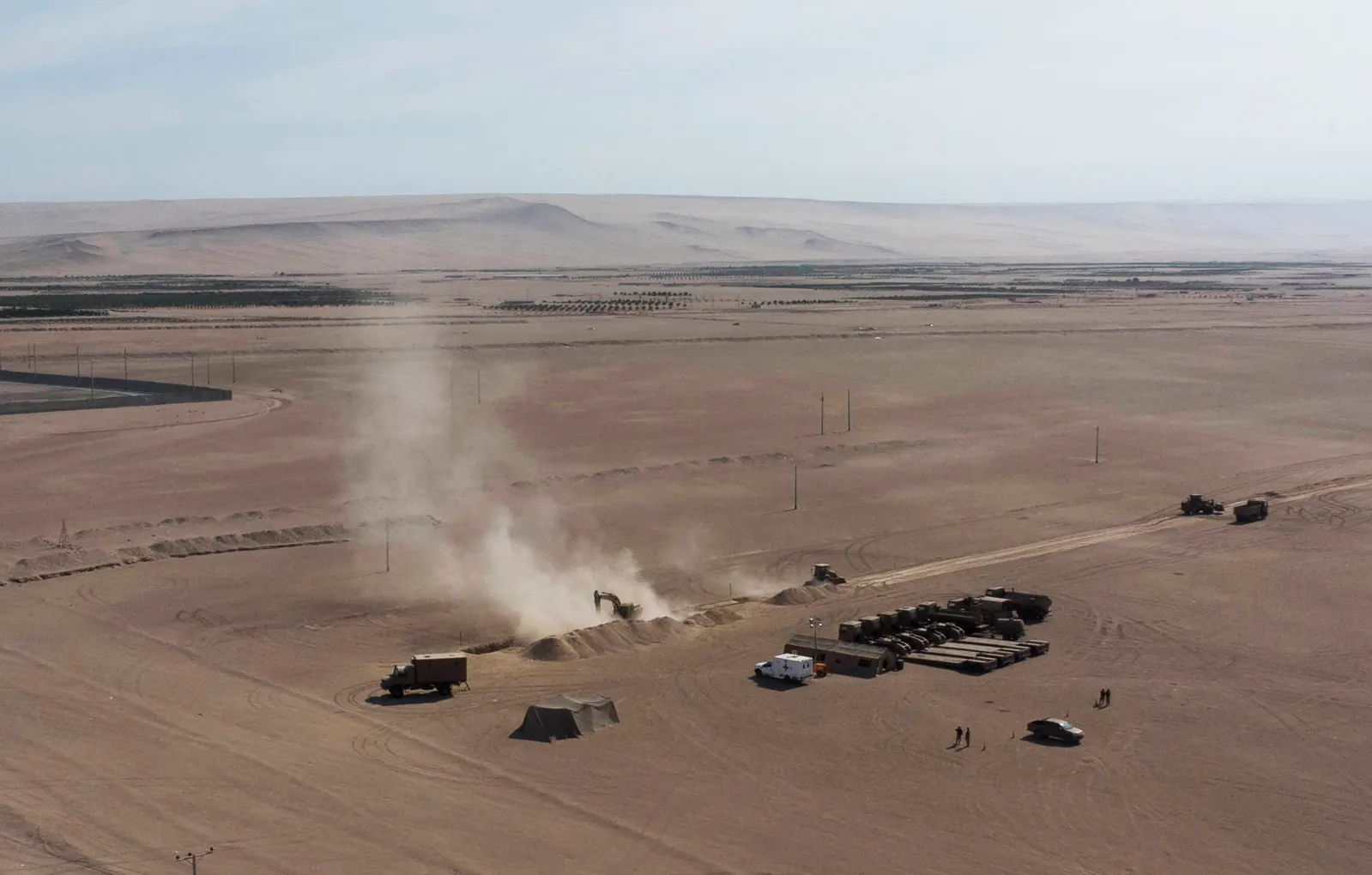
Chile's military has begun digging a 3-meter-deep trench along the Bolivian border to block vehicles and build adjacent walls up to 5 meters high to deter migrants.
President José Antonio Kast signed the orders on his first day in office Wednesday, targeting what his government calls a national emergency. He traveled to the frontier area of Chacalluta to oversee construction.
“We have made clear and concrete decisions to close our border to illegal immigration, drug trafficking, organized crime,” Kast told reporters in Arica on Monday. “We want to warn them that Chile will confront them with the full force of the state, with the full force of the law, so there is no doubt that this will change and that we will restore security in our nation.”
Read More on World
Why It Matters
Kast, 60, assumed office Wednesday as Chile's most right-wing leader since Augusto Pinochet's 1973-1990 dictatorship. He won December's runoff with nearly 60 percent of the vote running on an anti-immigration platform modeled after U.S. President Donald Trump's agenda.
His victory reversed the 2021 election result, when voters rejected him in favor of leftist Gabriel Boric, whose pro-immigration stance failed to quell public concerns over crime, housing costs and strain on social services.
What To Know
The "Border Shield" plan promises to create a 3,000-strong force to "take absolute control of the northern border" and includes walls, watchtowers, autonomous drones and trenches. It will also equip border zones with drones, thermal cameras, biometric systems and fences up to 5 meters high across the Arica, Tarapacá and Antofagasta regions.
"We are already showing that people won't be able to cross illegally through the border area," Cristián Sayes, Kast's delegate for Arica and Parinacota, said on Friday, according to Bloomberg.
...
Beyond physical fortifications, Kast's administration will pursue international agreements forcing countries of origin to accept expelled citizens, with economic and diplomatic retaliation if they refuse. The plan also targets organizations that obstruct deportations or encourage irregular migration.
On migrants already in Chile, the government will prohibit remittance transfers and ban hiring or renting to undocumented foreigners. As of 2023, an estimated 336,000 people were living in the South American country without regular status, many settling in informal housing in areas with poor infrastructure and limited access to essential services.
A poll published Sunday by the firm Cadem showed Kast with 57 percent approval, the highest for any Chilean president in the first week in office since 2010. The survey also found that 80 percent agreed with implementation of the border plan.
Kast's victory is part of a broader rightward shift sweeping Latin America. He joins a growing group of conservative leaders including Paraguay's Santiago Peña, Ecuador's Daniel Noboa, Argentina's Javier Milei and El Salvador's Nayib Bukele.
What People Are Saying
Kast, from the balcony at La Moneda Palace last week: "And those who have entered by violating our borders to commit crimes, exploit others or turn our land into a no-man's-land are also adversaries of Chile."
Sayes, according to Bloomberg: "What we want is for entry into and exit from the country to finally happen in an orderly and legal way, with people complying with all required background checks and documents."
The U.S. State Department, in a December press release following the Chilean presidential election: "The United States congratulates President-Elect José Antonio Kast of Chile on his electoral victory. Under his leadership, we are confident Chile will advance shared priorities to include strengthening public security, ending illegal immigration, and revitalizing our commercial relationship. The United States looks forward to working closely with his administration to deepen our partnership and promote shared prosperity in our hemisphere."
What Happens Next
Kast faces a divided Congress that will complicate his aggressive immigration agenda. His coalition controls 76 of 155 seats in the lower house and 25 of 50 in the Senate—both short of majorities. The centrist Party of the People, with 14 pivotal votes in the lower house, will likely demand concessions before backing his border wall and deportation plans.
View 0 Comments
Submit Correction
View Editorial & AI Guidelines