...

By Dan Gooding
Associate News Editor
0
Share
Newsweek is a Trust Project member
See more of our trusted coverage when you search.Prefer Newsweek on Googleto see more of our trusted coverage when you search.
The American flag got booed again during FIFA World Cup festivities.
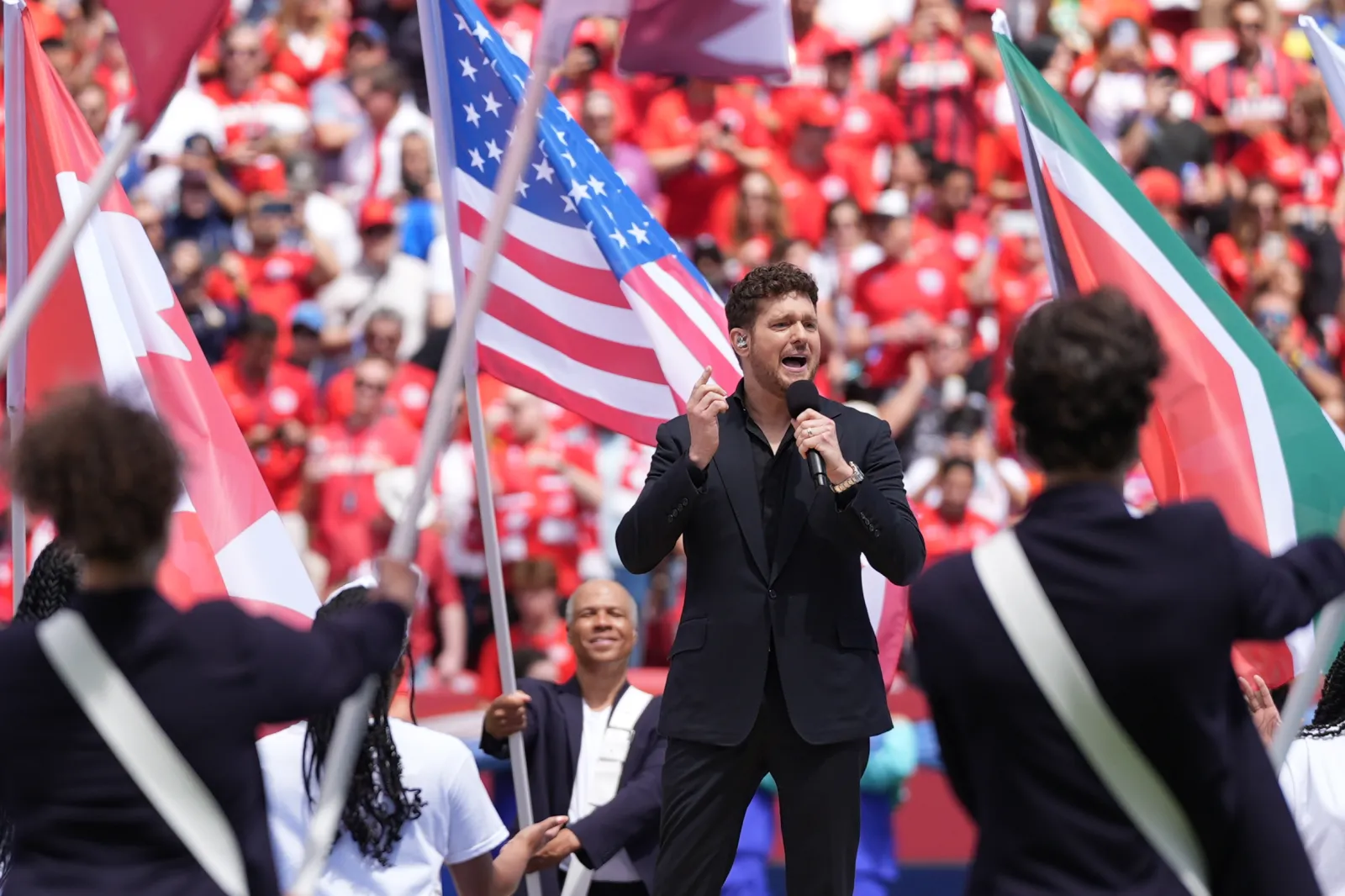
This time, fans at the FIFA World Cup opening ceremony in Toronto, Canada, could be heard booing as the United States' flag was presented Friday afternoon.
The change in mood was noticeable after cheers were heard for the Canadian flag during the ceremony, and came after some boos could be heard by those in the stadium in Mexico during Thursday's opening ceremony.
Read More on News
Canadians were also heard booing the U.S. on Thursday, during the FIFA Fan Festival in Toronto, where spectators watching the live broadcast from Mexico also broke into boos when the U.S. was introduced as one of the three host nations.
The competition is set to take place across the three countries over the next few weeks, with the U.S. having drawn criticism for its approach to immigration, as well as its ongoing conflict with Iran in the Middle East.
What Happened in Toronto?
As was the case in Mexico, flags of the 48 participating countries were brought out onto the pitch as part of the ceremony before the Group B match between Canada and Bosnia and Herzegovina at Toronto Stadium.
The flags of Canada, Mexico, and the U.S. were brought out together, with the first two nations receiving applause while the U.S. received some boos from the crowd. This was immediately followed by a performance by singer Michael Bublé.
Canada then went on to earn their first point of the competition, and first on home soil, after rallying for a 1-1 draw against Bosnia-Herzegovina.
Why the U.S. Was Booed: The Context Behind the Moment
...
The reaction may reflect more than simple sporting rivalry, which often leads to jeers and chanting from fans of opposing teams.
The buildup to the 2026 World Cup has been marked by controversies involving the U.S. and President Donald Trump, including U.S. military strikes on Iran, one of the participating teams.
Over the past year, tensions have also been felt between the U.S. and its northern neighbor, over the Trump administration's tariffs, immigration enforcement, and speculation that Canada could become the 51st state.
That dynamic has fueled resentment among supporters who feel the tournament’s identity has tilted heavily toward the U.S.
By the Numbers: 2026 World Cup
Fans have also expressed frustration over the hosting imbalance, with the U.S. staging far more than Mexico or Canada.
- 48 teams competing in the expanded tournament
- 3 host nations: United States, Canada, Mexico
- 78 matches scheduled to be played in the United States
- 26 matches combined in Canada and Mexico
This Isn’t an Isolated Moment
Experts say moments like these are part of a broader pattern in global sport, where international competitions can mirror political tensions between countries.
In a recent analysis, the Center for Strategic and International Studies (CSIS) noted that major events like the World Cup are “intimately tied to global affairs,” with national teams and symbols often reflecting underlying diplomatic disputes and rivalries.
The think tank added that sporting events can act as a “prism” for international conflict, meaning tensions between countries can surface in crowd reactions, even during ceremonial moments.
What Happens Next
The early reaction to the U.S. flag has already become one of the first viral flashpoints of the tournament, raising questions about how fans across North America will respond as matches continue.
Attention will now turn to upcoming games involving the United States, where crowd reactions—both at home and abroad—could shape the atmosphere in the early stages of the competition.
With matches set to be played across three countries, organizers are likely to keep a close eye on fan behavior as the tournament progresses, particularly in high-profile fixtures where tensions could be amplified.
View 0 Comments
Submit Correction
View Editorial & AI Guidelines