
...

By Anders Anglesey
U.S. News Reporter
0
Share
Newsweek is a Trust Project member
See more of our trusted coverage when you search.Prefer Newsweek on Googleto see more of our trusted coverage when you search.
A photo of a camouflaged venomous snake in a South Carolina swamp has got the internet stumped.
In the image shared to the Rare Encounters Photography group on Facebook, photographer Jeremy Ginn asked people if they could spot a snake among the leaves and fallen branches in a swampy area of Hampton County.
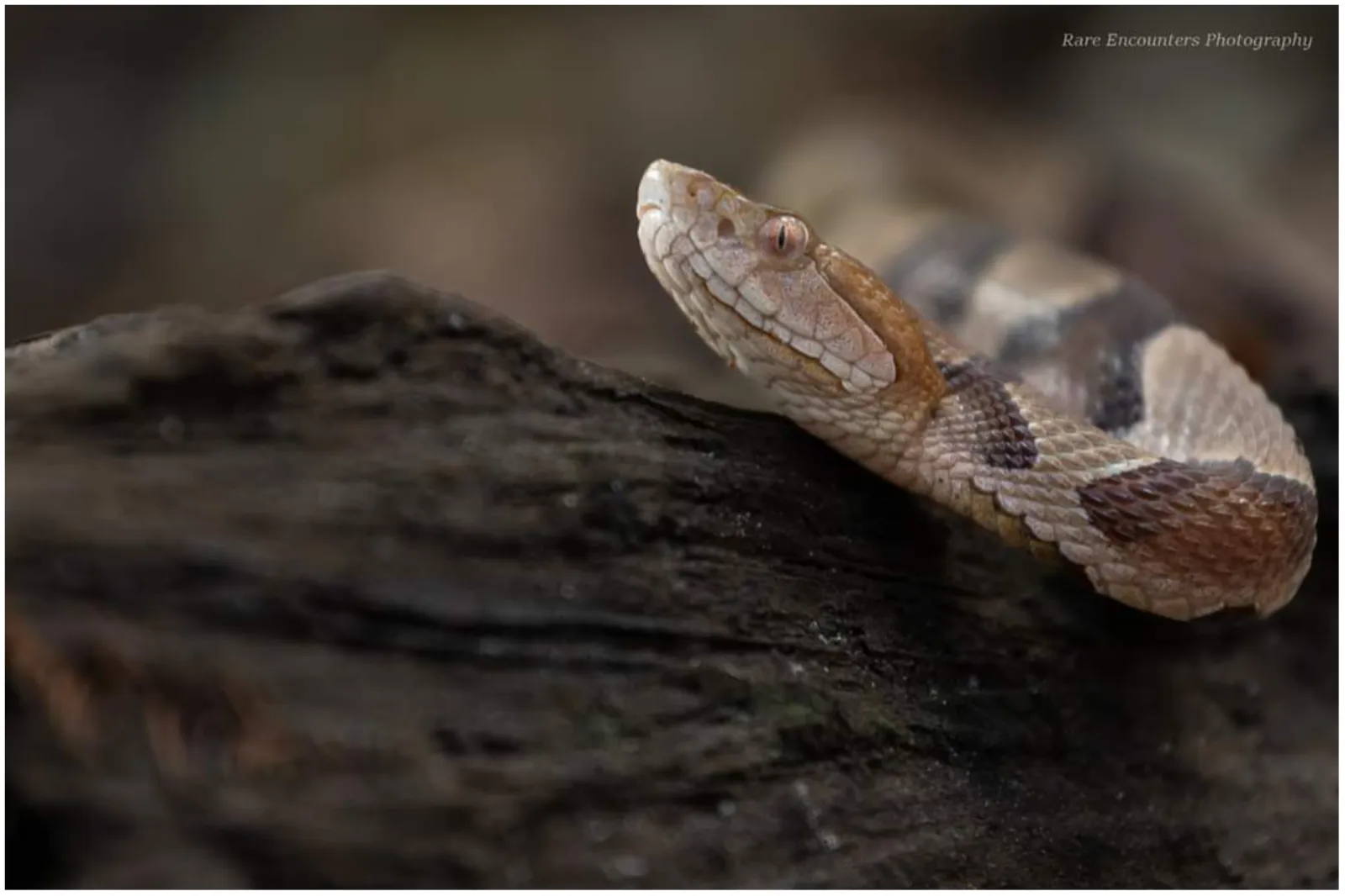
Ginn told Newsweek: "As you can see in the photo, copperheads are well camouflaged in leaf litter. As a defensive measure, this species tends to freeze into place, relying on this camouflage to not be seen.
Read More
What Happens to Your House if You Don’t Turn the Heating On?7 min read

Dog ‘Real Hyped’ to Leave Boarding Facility for McDonald’s Delights Viewers3 min read

Man Caught Breaking Through Ice To Save Trapped Dog: ‘Total Respect’3 min read

"They see humans as a large predator, and would prefer no interaction with us if at all possible."
...
His Facebook post, dated October 19, was captioned: "This one is pretty easy for many of you but it shows how well snakes can blend in. If you weren't actively paying attention, you could easily walk right by it."
He later revealed that the snake—which can be seen slithering under one of the branches near the center of the image, with its tail curling to the left—was a venomous copperhead.
Ginn, who is from the Lowcountry region of South Carolina, added that the snake was about 2ft 5in long, which is average for the species.
Copperheads are the cause of many snakebites each year, according to the Smithsonian's National Zoo and Conservation Biology Institute, but the bites are rarely fatal.

...
The institute added that bites "typically occur when someone accidentally touches or steps on a snake that is well camouflaged within its surroundings. When touched, the copperhead may quickly strike or remain quiet and try to slither away."
Ginn has been fascinated with snakes from an early age, he told Newsweek, though he has no formal qualifications in herpetology, the branch of zoology that studies reptiles and amphibians.
He shares his knowledge of snakes on Facebook groups such as Rare Encounters Photography and has identified snakes in the U.S. and overseas.
Ginn said: "Seeing snakes, especially in settings such as this photo, can be difficult for the normal person and even for experienced 'herpers' at times.
"As copperheads have a distinctive pattern and are the most common venomous snake in this area, I'm typically able to discern the pattern from so much repetition."
Ginn added that he tries not to handle any snakes "unless it's absolutely necessary" but has been bitten in the past.
"I've been bitten countless times from harmless species, but thankfully I've never received a bite from a venomous species. In the U.S. we have many more harmless species than venomous species. A bite from a species that's considered harmless in the U.S. is similar to being scratched by branches," he said.

...
What To Do if a Copperhead Snake Bites You
The Centers for Disease Control and Prevention states that between 7,000 and 8,000 people are bitten by venomous snakes in the U.S. every year. Of that total, about five people die.
Venomous snake species found in the United States include rattlesnakes, cottonmouths/water moccasins and coral snakes, as well as copperheads.
...
The CDC advises anyone who has been bitten by a snake to:
- Seek medical attention as soon as possible and dial 911. This is because antivenom is the treatment for serious bites and the sooner it can be given, the sooner irreversible damage can be stopped.
- Not drive yourself to the hospital as you could become dizzy or pass out.
- Take a photograph of the snake if possible as it will help with the treatment.
- Keep calm.
- Apply first aid while waiting for EMS staff to get you to the hospital.
- Lay or sit down with the bite in a neutral position of comfort.
- Remove rings and watches before swelling starts.
- Wash the bite with soap and water.
- Cover the bite with a clean, dry dressing.
- Mark the leading edge of tenderness/swelling on the skin and write the time alongside it.
View 0 Comments
Submit Correction
View Editorial & AI Guidelines