10
Loading video...

By Amanda Castro
Associate News Editor
0
Share
Newsweek is a Trust Project member
See more of our trusted coverage when you search.Prefer Newsweek on Googleto see more of our trusted coverage when you search.
A solo sailor from California who vanished in the Pacific Ocean for nearly a month has been found alive after a cargo ship spotted his battered vessel drifting toward Hawaii.
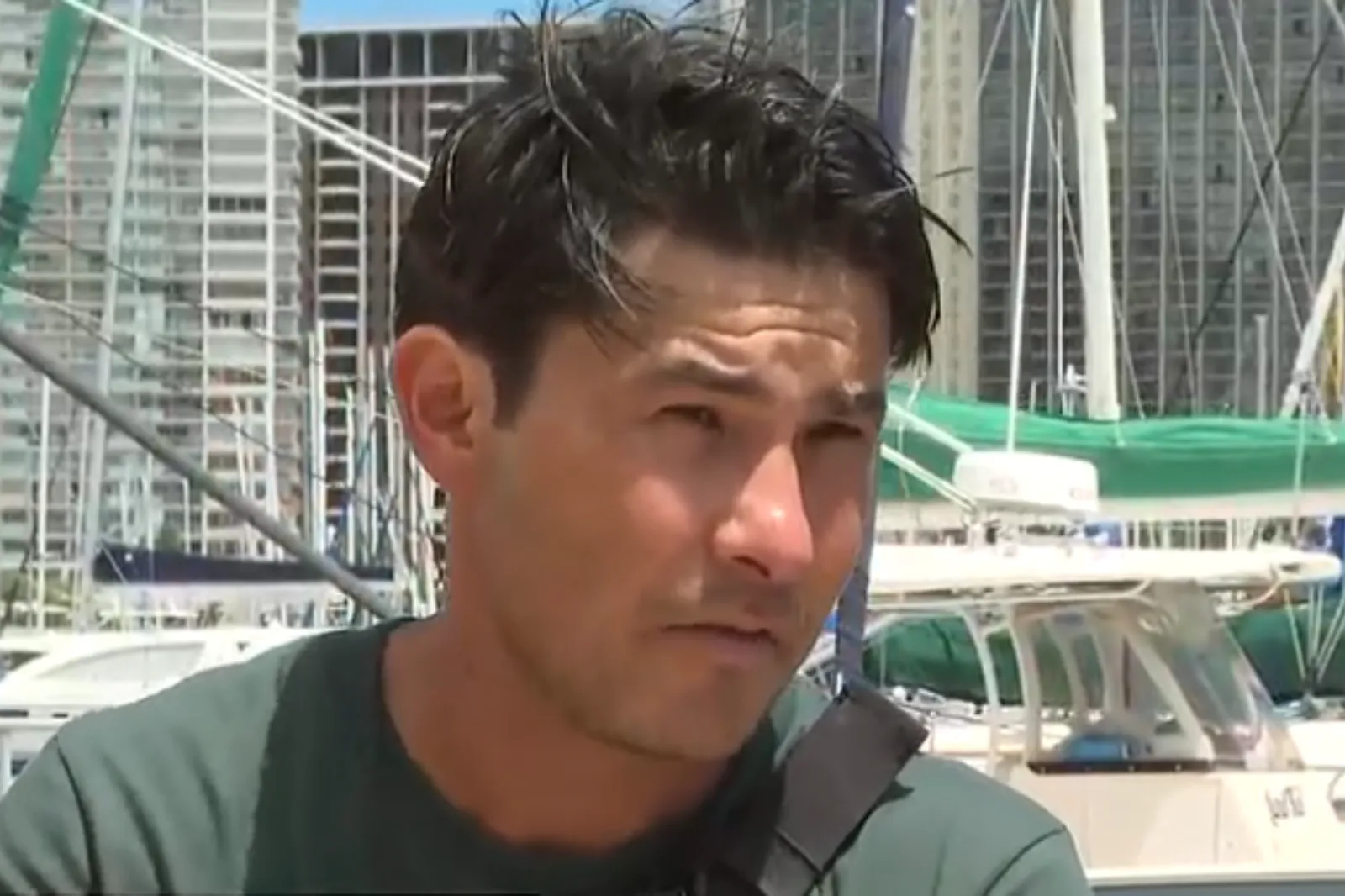
Kai Sato told HawaiiNewsNow that he spent days in despair after losing his mast, fuel and phone, leaving him unable to steer or call for help.
Newsweek was unable to reach Sato for comment.
Read More on U.S.
...
California Man, Kai Sato, Rescued After a Month at Sea
A Pasha Hawaii container ship located Sato, 39, earlier this week after his sailboat drifted hundreds of miles off its intended route. The crew made repeated attempts to get him aboard before providing him with food, water, clothing and a place to recover.
Sato had set off from the Catalina Islands on June 7 for what he hoped would be his first solo Pacific crossing, HawaiiNewsNow reported. Roughly two weeks into the voyage, the mast failed, eliminating his ability to sail. When he tried to rely on his motor, he ran out of fuel, leaving him adrift outside major shipping lanes.
With his phone no longer functioning after getting wet, Sato told reporters he felt completely cut off from any chance of rescue.
“I was literally like a sitting duck, just getting taken south by the current going way off course,” Sato told HawaiiNewsNow.
...
Pasha Hawaii Details 1.5‑Hour Rescue Operation
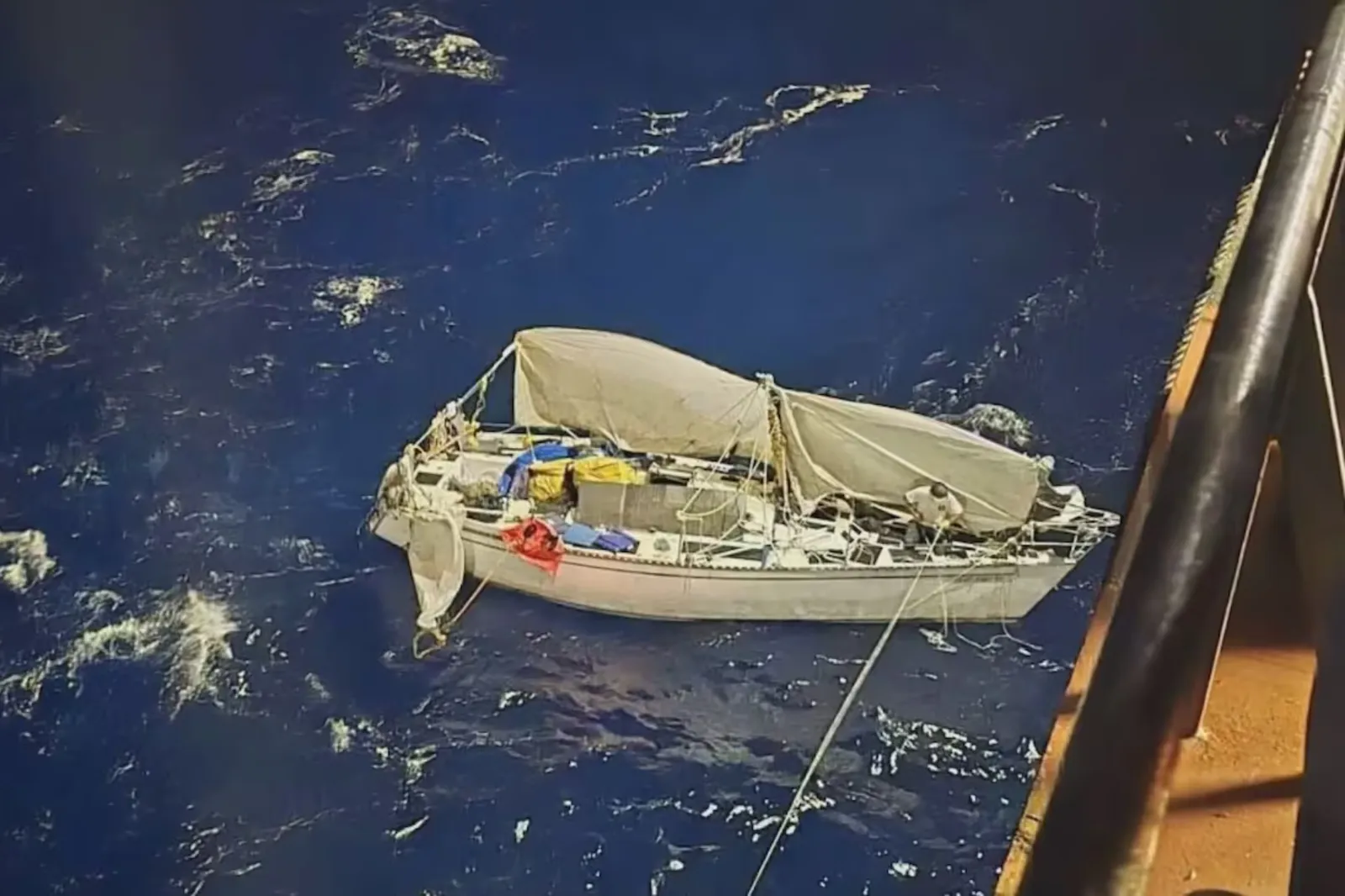
In a statement shared with Newsweek, Pasha Hawaii said the rescue unfolded around 3 a.m. local time on July 21, when the crew of the M/V George III heard a distress call over VHF radio and spotted a de‑masted sailboat roughly 750 miles off Hawaii. Third Mate Omar D’Abreu was the first to identify the vessel, prompting an all‑hands response as the crew prepared to recover the stranded sailor.
According to the company, Captain Eric Veloni and the bridge team maneuvered the 775‑foot containership toward Sato’s 32‑foot sailboat while engineers adjusted the engines for close‑quarters handling. Deck crews rigged a pilot ladder, life rings, messenger lines and a line‑throwing apparatus to bring Sato safely alongside.
Once the ship was close enough, the crew deployed the line‑throwing device, allowing Sato to secure a messenger line to his stern. The George III’s crew then pulled the disabled sailboat toward the pilot ladder, where Sato was able to step off and climb aboard. The ship’s medical officer treated him, and the crew provided food, fresh clothing and a stateroom for rest.
Pasha Hawaii said Sato told the crew he had departed Long Beach on June 7 and lost his mast in strong winds on June 22. By July 11, he had run out of drinking water and was cooking food in seawater while relying on rainwater to stay hydrated. He expressed “thanks and gratitude to the entire crew of George III for saving his life,” the company said.
The rescue—from sighting to recovery—took about 1.5 hours.
“We were blessed to come upon Mr. Sato, and we are so proud of our professional mariners who were able to successfully complete the rescue,” said George Pasha IV, chairman and CEO of The Pasha Group. “Bringing a 775‑foot vessel alongside a drifting 32‑foot sailboat takes exemplary skill and training.”

...

...

...
1 of 3
What We Know About Kai Sato
Sato told HawaiiNewsNow that he spent several days overwhelmed before deciding to attempt makeshift repairs. He used PVC pipes and kayak paddles to stabilize the boat and slowly work his way back toward a busy shipping corridor—a process that took nearly a month.
Food was limited to leftover oatmeal and whatever sea creatures landed aboard. When his fresh water ran out on July 11, he improvised a condensation system using buckets and plastic bags to collect small amounts of drinkable moisture, HawaiiNewsNow reported.
He described meditating, talking to the wind and waves, and drawing strength from memories of an uncle who had once sailed the same route with him as a child.
By the time the Pasha Hawaii ship appeared, Sato’s vessel showed extensive damage, with torn sails and a broken mast. Footage he recorded shows waves pounding the small boat as he tried to stay afloat.
Now recovering with relatives in Hawaii, Sato told HawaiiNewsNow that he hopes to attempt another long-distance voyage—this time to the Philippines—on a larger boat.
Related Video

01:15
One Dead, Three Missing After Boat Sinks Near Alcatraz
How Commercial Ships Handle Rescues of Disabled Vessels
Kenneth G. Engerrand, adjunct professor of Maritime Law at the University of Houston Law Center, told Newsweek that global maritime rules have long been structured to actively encourage ships to assist vessels in peril.
“For thousands of years, maritime law has protected and rewarded the salvor,” Engerrand said, noting that crews who voluntarily save property at sea are entitled to a reward. “That reward is shared by the crew who perform the salvage and by the owner whose vessel was involved in the salvage,” he said. “The greater the effort that is expended, the larger the reward.”
Engerrand added that modern statutes and international conventions now allow life salvors to share in property‑salvage rewards—a shift from older maritime rules that did not compensate the saving of life alone.
“Life salvors are entitled to part of the reward,” he said. “The reward is to be liberally granted to encourage salvage efforts.”
He also emphasized that maritime law shields rescuers from liability for delays or incidental damage that may occur during the rescue, provided they do not act negligently.
“As long as the salvor does not act negligently, there is no liability for delays suffered by passengers or cargoes or for damage to the salvaged vessel that was not made worse by the salvor,” Engerrand said.
Those protections and incentives help explain why the Pasha Hawaii crew was able to respond quickly when they spotted Sato’s damaged sailboat, and why commercial ships remain a critical lifeline for mariners who lose communication or drift outside major shipping lanes.
Safety Planning and Redundancy Could Have Changed the Outcome
Sato’s month adrift also raises questions about the safety planning and equipment standards recreational sailors should have in place before attempting long offshore passages. Mark Lopez‑Trigo, a Florida trial attorney who handles catastrophic injury and wrongful death cases stemming from transportation incidents, told Newsweek that the difference between a survivable emergency and a fatal one often comes down to preparation made long before a vessel leaves the dock.
“I work backward from the worst outcome and ask what a reasonable person should have put in place before they ever left the dock,” Lopez‑Trigo said. He pointed to three critical elements: multiple independent communication devices, a documented float plan filed with someone onshore, and provisioning for a far longer voyage than intended. “If one device is your entire link to the outside world, you don’t have a safety plan; you have a single point of failure,” he said.
Lopez‑Trigo added that equipment failures—such as a snapped mast or dead communication device—are not inherently negligence. “A mast snapping or fuel being lost is, on its own, usually just misfortune,” he said. “Where it turns into a liability question is one step earlier: was the failure foreseeable and preventable?” He noted that failing to maintain critical systems or relying on outdated safety gear can shift an incident from accident to negligence, especially when passengers, charter operators, or third‑party contractors are involved.
He also highlighted common decision‑making mistakes in high‑stress emergencies, including waiting too long to act. “People don’t fail because they panic. They fail because they wait,” he said. “By the time it’s undeniably that bad, the good options are gone.”
Lopez‑Trigo said Sato’s sequence of failures—loss of rig, fuel, and communication—illustrates how quickly a situation can escalate when emergency signals aren’t activated early.
Contact Newsweek editors on this story: Jenna deJong and Sam Wilson.
View 0 Comments
Submit Correction
View Editorial & AI Guidelines