...

By Joe Edwards
Reporter
0
Share
Newsweek is a Trust Project member
See more of our trusted coverage when you search.Prefer Newsweek on Googleto see more of our trusted coverage when you search.
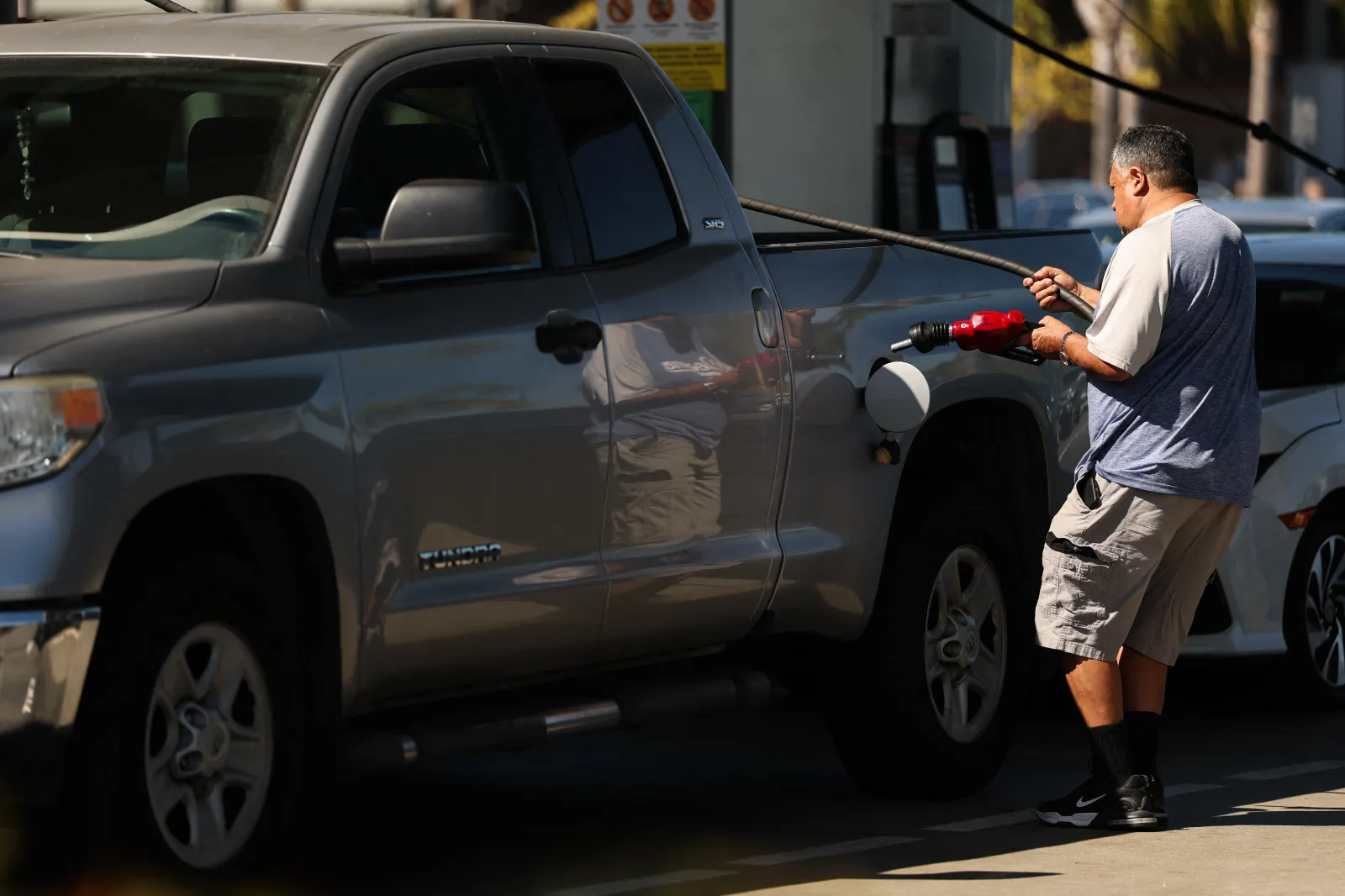
Officials in California say they are investigating after reports of “extraordinarily high prices” being charged at some gas stations in the Golden State amid the Iran war.
Why It Matters
Late last month, the United States and Israel targeted key military targets in Iran and killed Supreme Leader Ayatollah Ali Khamenei and other government leaders. Iran responded by launching missiles and drones targeting Israel and several Gulf Arab states that host U.S. armed forces.
Read More on News
Shipping through the Strait of Hormuz remains heavily disrupted, though Iran has said some vessels from countries not involved in attacks on the Islamic Republic may be allowed to transit.
The Strait of Hormuz is a narrow, yet incredibly strategically important waterway connecting the Persian Gulf to the Gulf of Oman and the Arabian Sea. Around 20 percent of global oil trade passes through the strait, with any disruption often spiking global prices.
As Newsweek reported previously, several states are now averaging over $4 a gallon for regular gasoline as the war with Iran disrupts global oil markets.
The conflict has pushed fuel costs higher across the nation, according to recent data from the American Automobile Association (AAA).
...
What To Know
In a news release last week, the Division of Petroleum Market Oversight (DPMO)—an independent agency within the California Energy Commission that oversees, investigates, analyzes economic trends, and issues policy recommendations related to the transportation fuels market—announced it had issued an enforcement notice “in light of the Middle East conflict and rising gas prices throughout the country."
“DPMO is aware of public reports of a limited number of California retail gasoline stations charging above $7 or even $8 per gallon. These extraordinarily high prices are not supported by current crude oil prices or gasoline futures,” it said in the release.
DPMO said it is closely tracking refinery, wholesale, and retail fuel markets to ensure firms do not “opportunistically” raise prices “in a manner that is disproportionate to changes in their own input costs.” The agency warned reports of price gouging "will be taken seriously" and said it is already engaging with gasoline retailers whose prices may not be justified by cost increases.
It also issued a consumer advisory encouraging Californians to seek out cheaper gasoline, noting “significant” price gaps—sometimes exceeding $1 per gallon—between branded and unbranded fuel in parts of the state.
“Consumers can be confident in fuel quality because all gasoline sold in California must meet stringent standards, which are the strongest in the nation and require an effective detergent or cleaning additive to protect engine performance,” the advisory said.
No public studies have shown that gasoline with brand-name additives is any better for vehicles than unbranded California gasoline.
What Happens Next
The enforcement bulletin warned that “market participants that engage in unfair or anticompetitive conduct will face scrutiny and any illegal conduct will be referred for prosecution, including attempts to artificially raise prices.”
In a polarized era, the center is dismissed as bland. At Newsweek, ours is different: The Courageous Center—it's not "both sides," it's sharp, challenging and alive with ideas. We follow facts, not factions. If that sounds like the kind of journalism you want to see thrive, we need you.
When you become a Newsweek Member, you support a mission to keep the center strong and vibrant. Members enjoy: Ad-free browsing, exclusive content and editor conversations. Help keep the center courageous. Join today.


View 0 Comments
Submit Correction
View Editorial & AI Guidelines