...

By Jasmine Laws
Reporter
0
Share
Newsweek is a Trust Project member
See more of our trusted coverage when you search.Prefer Newsweek on Googleto see more of our trusted coverage when you search.
The social media platform X has been awash with criticism targeted at California Governor Gavin Newsom as a CBS News report detailed the extent of the state's hospice fraud problem.
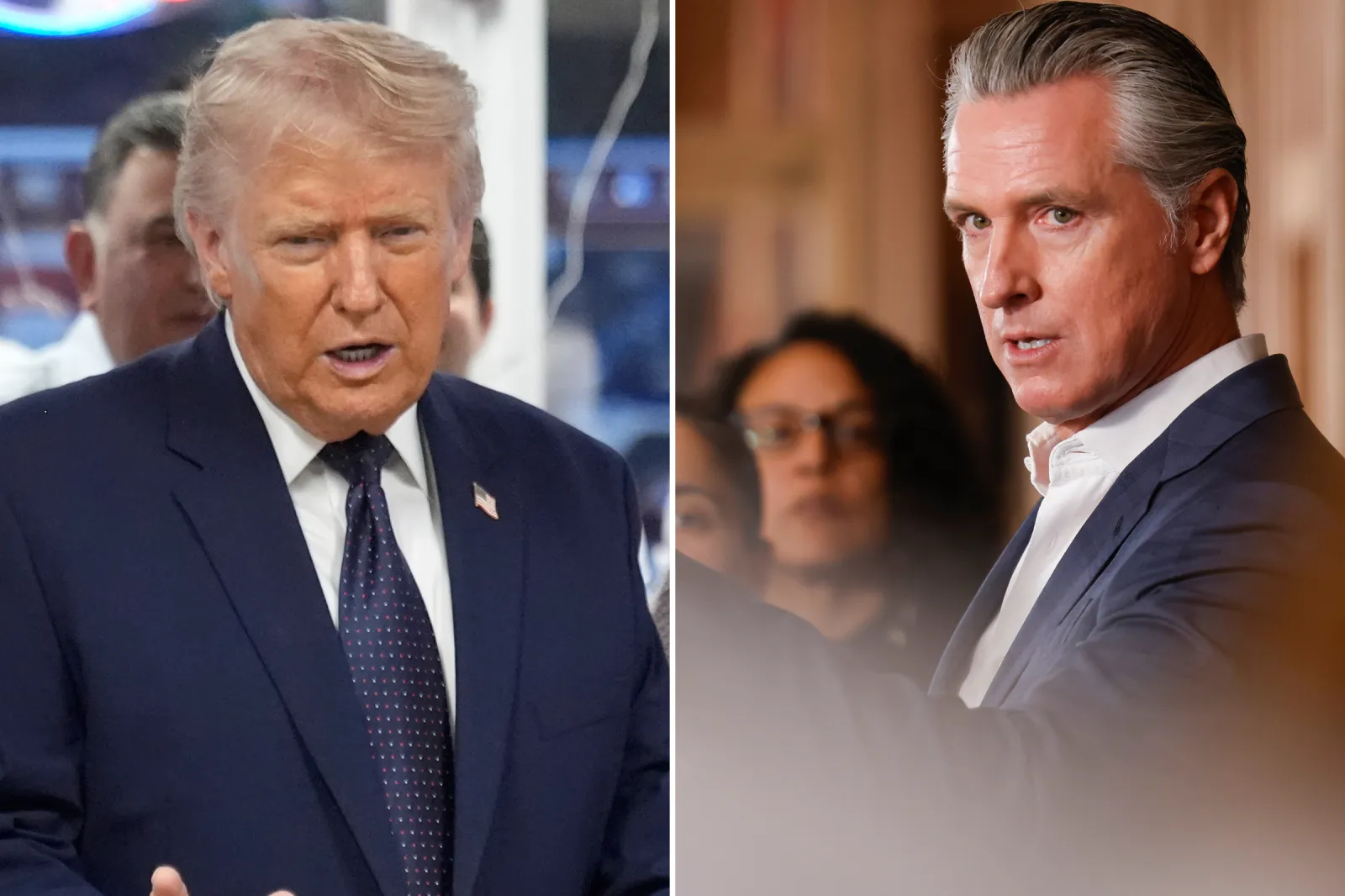
Newsom's office has been hitting back at the comments, reminding users that the state "cracked down on hospice fraud years ago," and has been pointing the finger at President Donald Trump, as his administration paused a hospice oversight program at the start of 2025.
His office wrote on X: "Governor Gavin Newsom signed a law BANNING all new hospice licenses in 2021 to curb fraud. What’s Trump doing? Making it easier for scammers to steal taxpayer dollars!"
Read More on News
Newsom's office also told Newsweek: "In 2021, Governor Gavin Newsom signed a law banning ALL new hospice licenses. That moratorium is still in place—blocking bad actors from entering the system while the state tightens oversight of existing providers."
Responding to Newsom's office's comments, White House spokeswoman Abigail Jackson told Newsweek: "No one cares about Newscum’s boring X posts except Newsweek. The reality is he has consistently put the American people last by providing American taxpayer-funded health care to illegal aliens."
The Context
While California has been in the spotlight for its hospice fraud, it is not the only state experiencing the problem—it is a nationwide issue.
A report by the U.S. Department of Health and Human Services Office of the Inspector General in 2023 found that suspected hospice fraud amounts totaled an estimated $198.1 million nationwide.
However, some states in particular have seen a surge in new operators, namely California, Arizona, Nevada and Texas, meaning these states are considered hotspots for potential hospice fraud.
As a result, CMS implemented a Provisional Period of Enhanced Oversight (PPEO) for newly Medicare-enrolled hospices and hospices that underwent a change in ownership in these states from July 2023. The oversight expanded to Georgia and Ohio in December 2025.
...
What To Know
In 2021, Newsom signed into law a bill banning all new hospice licenses due to concerns about fraud and abuse, following an extensive investigation.
A year later, the Acting California State Auditor Michael Tilden informed Newsom that his office found the "state’s weak controls have created the opportunity for large-scale fraud and abuse" in hospice systems.
The issues found were wide-ranging, and included that "abnormally high rates" of still-living patients were being discharged from hospice care, and hospice agencies were using "possibly stolen identities of medical personnel."
It also said that Los Angeles County had experienced a 1,500 percent increase in the number of hospice companies since 2010, which is more than six times the national average relative to its elderly population. The auditors also said Los Angeles County’s hospice agencies "likely overbilled Medicare by $105 million in 2019 alone."
As a result of these issues, the state has revoked the licenses of more than 280 hospices in the past two years and has identified approximately 300 additional hospices that are being evaluated for revocation, according to Newsom's office.
It was in February 2025 that the Trump administration paused the Hospice Special Focus Program so that the Centers for Medicare and Medicaid Services (CMS) could further evaluate it.
The program was designed to identify poorly performing hospices that needed increased oversight to ensure they met requirements.
In November 2025, the California Department of Public Health (CDPH) said that emergency regulations for hospice agencies were "necessary to address situations that call for immediate action to avoid serious harm to public peace, health, safety, and general welfare."
This was because previous legislation had only extended emergency oversight regulations until January 2026, and so CDPH said that if additional emergency regulations are not passed by January 1, then "hospice licenses will be issued without the regulatory requirements needed to protect the health and safety of hospice patients" and that the kinds of fraud and abuse identified in the 2022 Auditor’s report would cease to be avoided.
The state's hospice fraud issue is still a problem to this day. Last month, California Attorney General Bonta announced the arrests of and filing of multiple felony charges against seven individuals for hospice fraud in Monterey County.
Since Attorney General Bonta has been in office, the California Department of Justice has investigated 101 criminal enterprises and 284 criminal defendants and filed 24 civil cases, according to Newsom's office. To date, 109 individuals have been charged with hospice-related offenses.
California's hospice fraud, therefore, remains an ongoing issue, as a recent CBS News report highlighted, which sparked a public uproar about the problem on social media, resulting in a blame game, with users pointing the finger at Newsom, while he, in turn, blamed the Trump administration.
What People Are Saying
The X account @libsoftiktok, which has more than 4.7 million followers on the platform, wrote: "A CBS News investigation reveals that hospice fraud in Los Angeles is skyrocketing They found one building with 89 registered hospices! Medicare hospice fraud reached nearly $200 million in 2023. Any comment @GavinNewsom?"
Newsom's office responded: "Let's see what Trump is up to on this ..." and shared a link to an article reporting on the Trump administration pausing the hospice oversight program in 2025.
This prompted the response from an X user: "What does Trump have to do with the rampant healthcare fraud in California where you're Governor?" Another user implied Newsom was "obsessed" with Trump, and another accused him of "deflection."
Update 3/12/26, 3:07 a.m. ET: This article has been updated with comment from Newsom's office and the White House.
View 0 Comments
Submit Correction
View Editorial & AI Guidelines