David McNew/Getty Images

By Joe Edwards
Reporter
0
Share
Newsweek is a Trust Project member
See more of our trusted coverage when you search.Prefer Newsweek on Googleto see more of our trusted coverage when you search.
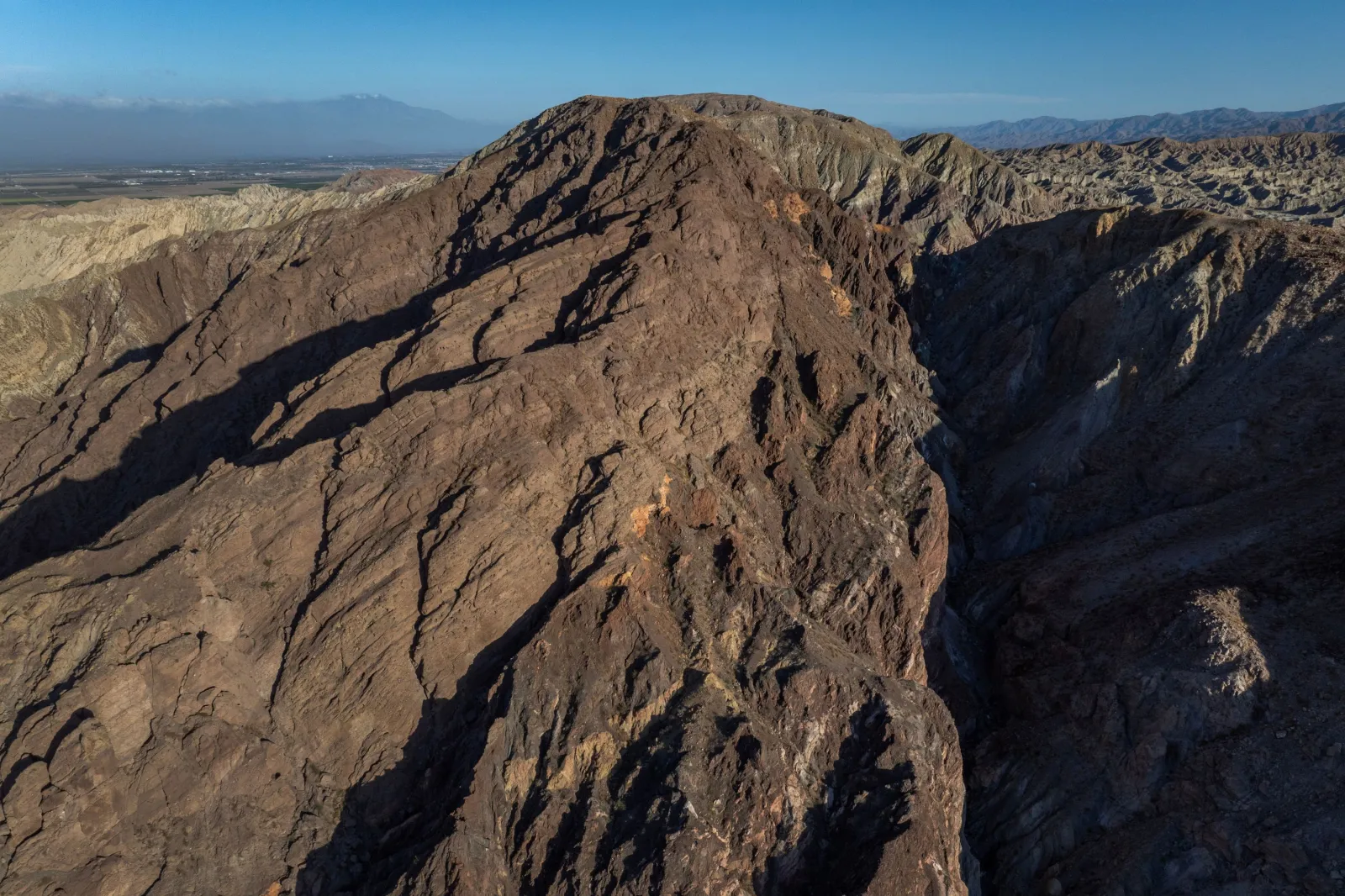
Tectonic stress along the San Andreas and San Jacinto fault systems in Southern California has climbed to the highest level seen in the past millennium, according to new research led by earth scientists at the University of Hawaiʻi at Mānoa, raising fresh concerns about the region’s seismic risk.
The study says several fault segments are now at—or, in some places, above—their peak stress levels over the last 1,000 years, suggesting the system is in a “critically loaded state,” according to its authors.
Why It Matters
The University of Hawai’i said that the study has direct implications for seismic risk analysis in one of the nation's most populous and infrastructure‑critical areas.
Read More on Science
Researchers also found Cajon Pass—a critical junction between the faults—may function as an “earthquake gate,” sometimes stopping a rupture from crossing between the two networks and sometimes allowing it to continue through both in a single event. That matters because a joint rupture involving both systems could be much more damaging than a large earthquake on only one fault and affect densely populated areas such as Los Angeles, San Bernardino, Riverside and the Coachella Valley.
...
What To Know
The research, published in the Journal of Geophysical Research: Solid Earth, used a physics-based earthquake cycle model to simulate how stress has built up and been released over roughly 1,000 years along the southern San Andreas and San Jacinto systems, including the junction at Cajon Pass, northeast of Los Angeles.
The team fed the model a millennium-long earthquake history built from geological records, including radiocarbon-dated displaced sediments and tree-ring evidence, then ran the simulation forward to estimate present-day loading, according to the university's release.
Lead author Liliane Burkhard said the results showed “stress levels on multiple fault segments are now at or above the highest values seen in the past millennium and that the region may be capable of a large through-going rupture involving both fault systems.”
Burkhard added that Cajon Pass may act as "an ’earthquake gate:’ sometimes blocking large ruptures from crossing between the faults and sometimes allowing them to pass through and involve both systems in a single event.”
"The most important thing to understand is that this is not a distant, theoretical risk," Burkhard told Newsweek. "The stress that drives large earthquakes has been building continuously since 1857, and our model shows it has now exceeded anything we have seen in a thousand years of earthquake history.
"That does not mean an earthquake will happen tomorrow, but it does mean the system is as loaded as it has ever been in our record, and that the question is not really if but when. For anyone living in Southern California, that is a reason to take preparedness seriously, to know evacuation routes, to have a communication plan with friends and family, to have an emergency kit with water, food, and medication ready."
Burkhard also said the conditions controlling whether the “earthquake gate” opens or stays closed appear to depend on how closely stress levels on the two fault systems are aligned at the moment of rupture.
“Right now, with stress at historically high levels across the region and more than 160 years elapsed since the last major rupture, the system is in a critically loaded state,” she said.
What Happens Next
The University of Hawaiʻi said this kind of physics-based stress modeling can help improve seismic hazard evaluations and guide decisions around infrastructure design, emergency planning, and building standards in the area. It also noted that the modeling approach developed in the study could be applied to other complex fault intersections worldwide.
View 0 Comments
Submit Correction
View Editorial & AI Guidelines