...

By Adeola Adeosun
Weekend Night Editor
0
Share
Newsweek is a Trust Project member
See more of our trusted coverage when you search.Prefer Newsweek on Googleto see more of our trusted coverage when you search.
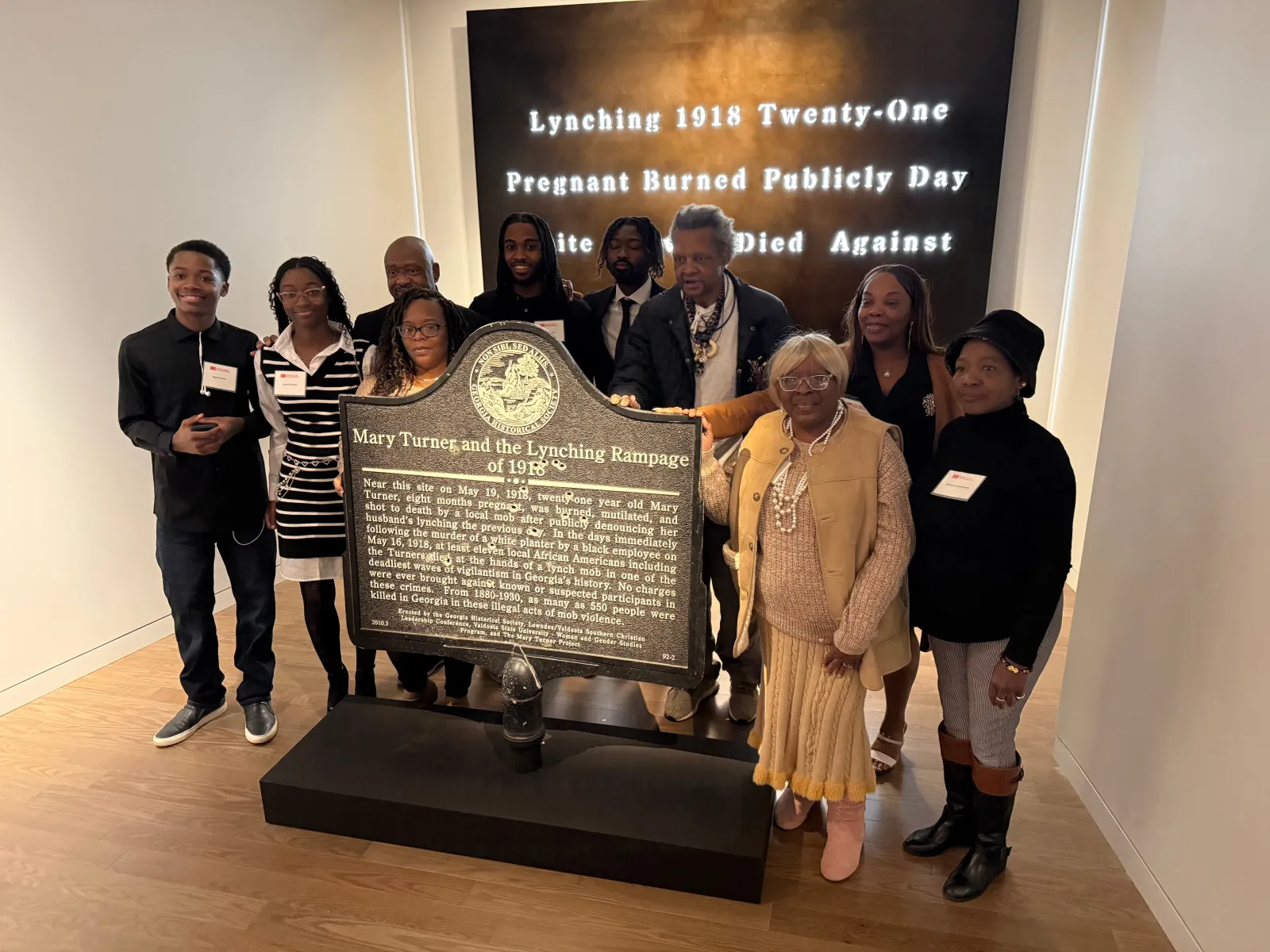
A historical marker commemorating Mary Turner, a Black woman lynched by a white mob in 1918, will go on display Monday at the National Center for Civil and Human Rights in Atlanta.
The Georgia Historical Society marker, which was repeatedly vandalized with bullet holes and damaged by an off-road vehicle at its original location in rural southern Georgia, now forms the centerpiece of a new exhibit that includes testimony from Turner's descendants spanning six generations.
Why It Matters
The marker's journey from vandalized roadside memorial to protected museum exhibit reflects ongoing tensions over how America confronts its history of racial violence.
Read More on News
Mary Turner, eight months pregnant, was killed by an angry mob in Valdosta, Georgia, after publicly demanding justice for her husband Hayes Turner's lynching as well as at least 10 other Black people. The state of Georgia recorded as many as 550 lynchings between 1880 and 1930, making it among the most active states for these acts of racial terror.
What To Know
The 1918 lynchings in Georgia's Brooks and Lowndes counties claimed the lives of Hayes and Mary Turner along with at least 10 other Black people. Walter White, founder of Georgia's NAACP chapter, investigated the killings immediately afterward, interviewing eyewitnesses and providing suspect names to the governor. A light-skinned Black man who could pass for white, White documented his findings in the NAACP's publication, The Crisis.
The national reaction to these killings prompted the first anti-lynching legislation in 1918. While the bill passed the House in 1922, Southern senators filibustered it. Lynching would not become a federal hate crime until 2022—a full century later.
The Equal Justice Initiative has documented more than 4,400 racial terror lynchings between Reconstruction and World War II. The organization has placed markers at numerous sites and built a monument to victims in Montgomery, Alabama.
What People Are Saying
Katrina Thomas, Mary Turner's great-granddaughter, told the Associated Press: "I'm glad the memorial was shot up. Millions of people are going to learn her story. That her voice is continuing years and years after, it shows history does not disappear. It lives and continues to grow."
Randy McClain, the Turners' great-grandnephew, told the AP: "The same injustice that took her life was the same injustice that kept vandalizing it, year after year."
He added: "Here it feels like a very safe space. She's now finally at rest, and her story can be told. And her family can feel some sense of vindication."

...
What Happens Next
The exhibit opens Monday at the National Center for Civil and Human Rights, where the damaged marker's bullet holes are projected on a wall alongside recorded testimony from Turner's descendants.
Reporting from the Associated Press contributed to this article.
View 0 Comments
Submit Correction
View Editorial & AI Guidelines