
By Dr. Victor Raúl Castillo Mantilla
CEO and President, Hospital Internacional de Colombia – FCV
0
Share
Newsweek is a Trust Project member
See more of our trusted coverage when you search.Prefer Newsweek on Googleto see more of our trusted coverage when you search.
When Shirley Elizabeth Juredin traveled from the British Virgin Islands to Bucaramanga to treat advanced coronary disease, her case reflected a growing trend: Patients crossing borders in search of solutions their local health systems cannot provide.
Far from being an isolated case, her decision is part of a global dynamic that is transforming access to specialized medical care. Medical tourism is no longer an alternative pathway; it has become a strategic response to prolonged waiting lists, limitations in high-complexity infrastructure and gaps in access to clinical innovation.
In this context, Bucaramanga —nestled in the Colombian Andes and traditionally known as the “Beautiful City”— has evolved from a regional healthcare center into an international destination for patients seeking advanced clinical solutions, specialized medical technology and a comprehensive model of care.
Read More on Community Forum
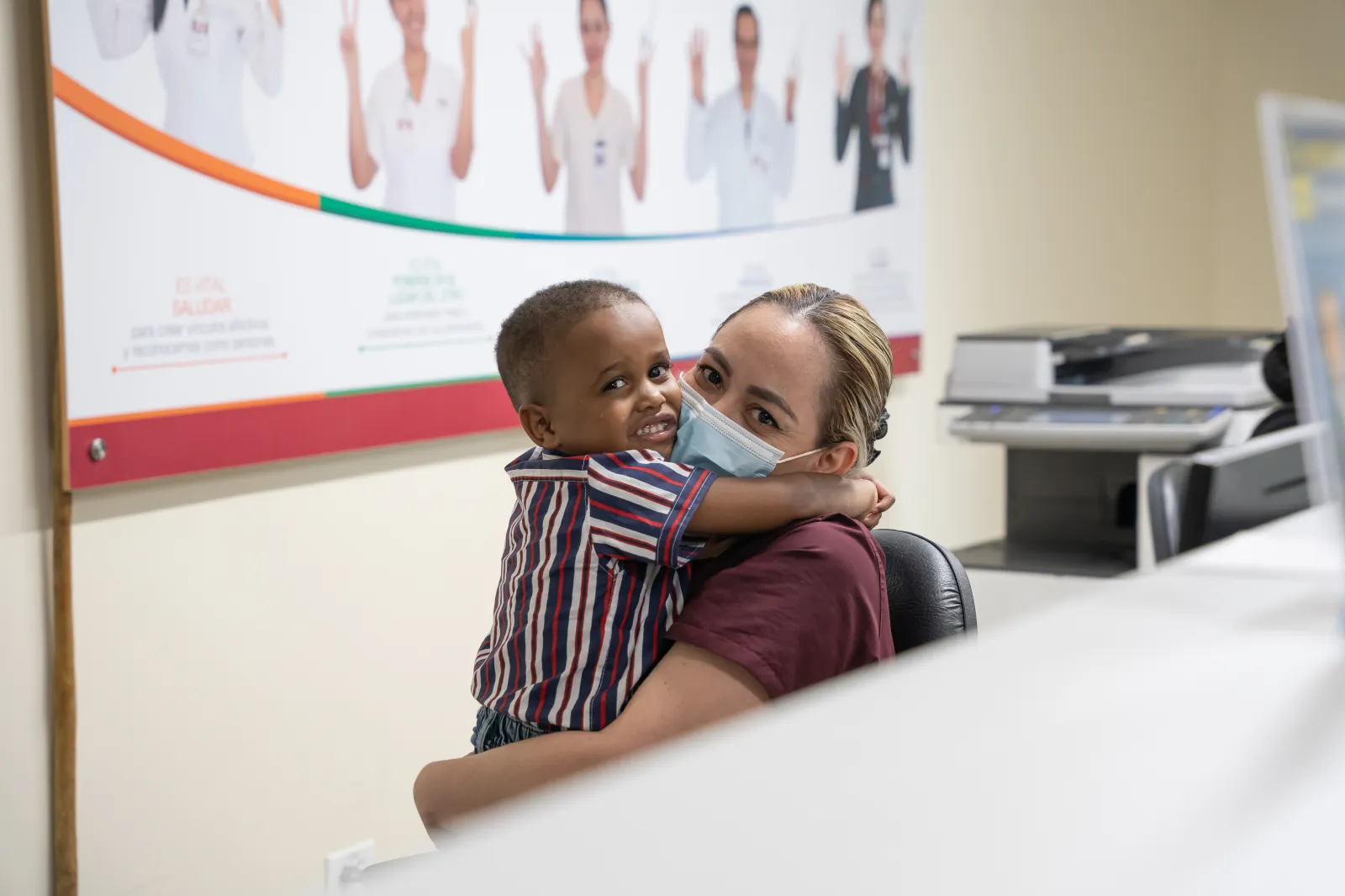
Attracting international patients depends on more than infrastructure or accreditations. It requires clinical coherence, operational coordination and measurable outcomes. At the Hospital Internacional de Colombia (HIC), we have consolidated a model that integrates diagnosis, intervention, intensive care, rehabilitation and follow-up within a single clinical environment. Multidisciplinary teams jointly analyze complex cases, optimizing medical decisions and reducing waiting times.
For international patients, this model translates into a fundamental element: Predictability. Traveling abroad for treatment involves clinical, financial and personal considerations. Concentrating the entire care process within one integrated ecosystem provides clarity, reduces uncertainty, and strengthens trust at every stage of the journey.
That trust rests on consistent clinical outcomes, strong governance and standardized protocols supported by rigorous outcome measurement. It is further reinforced through continuous talent development and an institutional culture focused on ongoing improvement.
In this framework, Bucaramanga’s positioning as a health destination is the result of sustained investment in human capital, disciplined adoption of international standards and continuous evaluation of quality of care. It is not a spontaneous phenomenon, but the outcome of long-term strategic construction.
An Expanding International Dynamic
International tourism figures in Colombia show sustained growth: In 2024, the country received approximately 6.7 million non-resident visitors, the highest number recorded to date, according to the Ministry of Commerce, Industry and Tourism. Within this flow, Bucaramanga is beginning to receive a distinct type of traveler: individuals who arrive not for leisure, but in search of clinical solutions requiring advanced care and specialized coordination.
Among them is Tivon, a child from Antigua and Barbuda who traveled to Bucaramanga to treat a rare esophageal condition called achalasia. He became the first international pediatric patient to undergo the POEM [Peroral Endoscopic Myotomy] technique at HIC, a minimally invasive, high-complexity intervention. Today, Tivon leads a normal life, and his case opens the door for more children across the region to access innovative treatments.

...
His story is not an isolated one. From Barbados, Suriname, Aruba and other Caribbean and Latin American countries, patients have traveled to Bucaramanga and returned home with stabilized conditions, successful interventions or recoveries that allow them to resume daily life. In each case, there is more than a well-executed procedure; there is a conscious decision to trust a healthcare system that, until recently, was absent from the global map.
These experiences explain Bucaramanga’s consolidation as a health destination. Reputation in medical tourism is not built by specialty, but by the consistency with which complex clinical scenarios are resolved under clearly defined standards.
Results That Transcend Borders
Our project began with a cardiovascular focus, with development centered on consolidating high-complexity programs, particularly in advanced heart failure, mechanical circulatory support and ventricular assist technologies. These capabilities, integrated within specialized multidisciplinary teams, expanded therapeutic alternatives available in Latin America and reduced the need to refer critical cases outside the region.
Yuk Yin Hau Fun, a Chinese national residing in Panama, faced advanced heart failure with no clear alternatives. After a comprehensive evaluation, he received a HeartMate III artificial heart implant, a ventricular assist device that stabilized his condition and restored his quality of life. “You saved my life, I carry you in my heart,” he said upon departure, summarizing the human impact of technical expertise with international reach.
Building on this cardiovascular foundation, the model progressively expanded into other strategic areas. Today, it integrates specialized institutes in neurology, orthopedics and traumatology, oncology, pediatrics and women’s health, among others. This expansion was not driven by service accumulation, but by the need to provide comprehensive resolution of complex cases under a unified clinical standard.

...
The purpose has been to align different specialties within a coordinated system that prevents fragmentation and enables a truly multidisciplinary patient approach.
In practice, this vision is reflected in the stories of patients like June Diana Holder from Barbados, who traveled more than 3,000 kilometers to undergo robotic-assisted joint replacement after months of disabling pain. Days later, she was walking independently and celebrating the recovery of her mobility, demonstrating how applied innovation can transform quality of life in a matter of weeks. In this context, robotics functions as a tool to reduce technical variability, optimize procedural consistency and expand resolutive capacity in complex interventions.
In a region where digital transformation in healthcare advances unevenly, achieving these standards from an intermediate city demonstrates that international competitiveness depends more on institutional consistency than on geographic location.
The Architecture of Competitiveness
Remaining competitive in the medical tourism landscape requires environments capable of sustaining high clinical standards with consistency and scale. The Hospital Internacional de Colombia was conceived as a high-capacity hospital campus within an ecosystem that, across its two hospital centers, currently reaches nearly 800 beds. Over the next two years, a planned expansion of approximately 500 additional beds will strengthen installed capacity to serve regional and international demand under criteria of efficiency and clinical safety.
This institutional development has been recognized in international evaluations. HIC was included among the ten best hospitals in Colombia in the most recent Latin America’s Best Hospitals ranking published by Newsweek, an assessment that evaluates clinical quality, professional reputation and patient experience. This recognition validates the alignment between infrastructure, human talent and sustained clinical outcomes.
In addition, HIC joined the Mayo Clinic Care Network, an international network connecting selected institutions with Mayo Clinic’s clinical knowledge and best practices. This collaboration provides access to specialized tools, complex case discussions and guidance on care standards, strengthening resolutive capacity within a global reference framework.

...
Digital transformation has become a structural component of the care model. HIC was recertified with HIMSS EMRAM Level 7, the highest international validation of electronic medical record maturity, reflecting advanced integration of clinical data into care processes. This architecture strengthens medical decision-making, improves care traceability and standardizes protocols under safety and quality criteria.
On this foundation, artificial intelligence-supported solutions are being developed to enable continuous monitoring and anticipation of clinical risk events by integrating real-time data analytics into the care pathway.
Infrastructure, technology and data do not operate as independent initiatives; they function as an integrated system that sustains the value proposition for international patients.
Patient Care: Structure and Guidance
In medical tourism, clinical capacity must be accompanied by an organized and predictable experience for those traveling from other countries in search of treatment. With this objective, HIC developed a dedicated international patient model that integrates medical guidance, administrative coordination and logistical support within a single process.
Before travel, the international team conducts remote medical evaluations, organizes second opinions, structures treatment plans and provides clarity on cost and timeline estimates. This anticipatory preparation reduces uncertainty and ensures that patients arrive with a defined clinical itinerary.
During their stay, coordination continues in a personalized manner. Bilingual teams accompany the care process, aligning appointments, diagnostics and procedures under a unified therapeutic plan. For international patients, this integration represents something fundamental: continuity and transparency at every stage of treatment.

...
Follow-up does not conclude at hospital discharge. Structured medical reports, remote check-ups and ongoing communication maintain case traceability even after patients return to their home countries.
The experience cannot depend on improvisation. It requires standardized processes, clear communication and consistent guidance. This organizational dimension — as relevant as technology or infrastructure — transforms a clinical intervention into a comprehensive experience.
In an increasingly interconnected world, healthcare is no longer local. Patients no longer ask only who can treat them, but where they will find quality, safety and comprehensive support.
From Bucaramanga, we are working to ensure that answer includes Colombia.
Dr. Victor Raúl Castillo Mantilla is a member of the Newsweek CEO Circle, an invite-only executive community of subscribers.
View 0 Comments
Submit Correction
View Editorial & AI Guidelines