...

By Joshua Rhett Miller
Senior Reporter
0
Share
Newsweek is a Trust Project member
See more of our trusted coverage when you search.Prefer Newsweek on Googleto see more of our trusted coverage when you search.
The husband of a Michigan woman who vanished during a nighttime boat ride in the Bahamas is holding onto hope that she's still alive—and plans to resume searching for her following his release from custody on Monday.
Brian Hooker, who was released late Monday by Bahamian authorities, said he feels compelled to resume looking for Lynette Hooker, 55, after telling police she fell overboard as the couple traveled in an 8-foot motorboat from Hope Town to Elbow Cay on April 4.
"I won't be able to stop looking," Hooker told CBS News on Tuesday, adding that "someone with more authority" would need to stop his planned efforts.
Read More on News
"I want to," the 58-year-old replied when asked if he believes Lynette is still alive.
...
Hooker, who has denied wrongdoing in the incident, said he's hopeful his wife of more than 20 years somehow managed to swim to safety.
"I believe I've been told that people have lasted in the Bahamas after falling overboard for days and even weeks," he told CBS News. "There are so many islands, there are so many sandbars, little atolls and spits of land. Of course, you think about alternatives to that, but I'm not really capable of just turning away from this."
Hooker's attorney, Terrel Butler, told NBC News authorities had "no evidence" against her client. He was released from custody five days after telling police his wife fell overboard with keys to the boat, saying she had been carried away by strong currents. Brian Hooker then paddled to shore before alerting someone that she had vanished, he told authorities.
The Royal Bahamas Police Force said in a statement Monday that the decision to release Hooker had been made "following consultation with the Department of Public Prosecution, which recommended that no charges be filed at this time pending the outcome of further investigation."
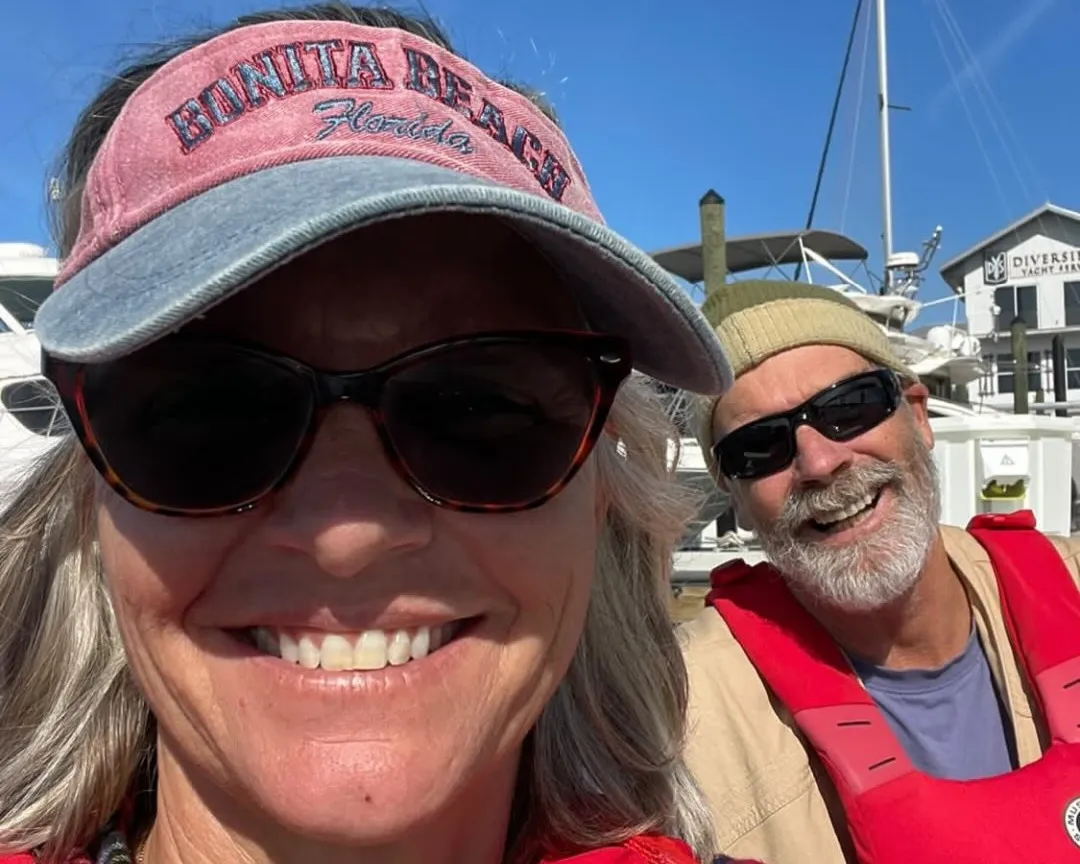
The couple, who chronicled their adventures online as "The Sailing Hookers," had been traveling together for more than 12 years, Hooker told CBS News.
Hooker said the couple's primary vessel, a 46-foot-long boat they named Soulmate, features two bedrooms and baths.
"We were more like co-captains," he said. "There are certain jobs that I did, and certain jobs that she did, because there's a big enough boat that it takes two people to really to run efficiently."

...
"She's our floating home," he said. "We've been on her for four years now."
Hooker had previously described a "cascade of failures" that led to his wife’s disappearance from the smaller motorboat in a phone call to a friend on April 7, saying she “basically just bounced off the dinghy” amid winds of around 20 mph.
"The wind blew us apart so fast that I think, I think, she tried to swim back to the sailboat, back to our sailboat, which was probably, I don't know, 1,000 yards or something," he said. "I yelled to her that I lost the oar and I threw the anchor out and anchored the dinghy and just yeah, I yelled. I couldn't see her anymore."
Karli Aylesworth, Lynette Hooker's daughter, has publicly questioned her stepfather's version of events and called for a thorough investigation. She told NBC News last week she found it unlikely her mother, an experienced sailor, would "just fall" from a boat.
Aylesworth said the couple’s relationship had been volatile, adding they had a "history of not getting along, especially when they drink."
Brian Hooker paddled to the island of Abacoa after his wife fell overboard. He docked at the Marsh Harbor Boat Yard in the eastern end of the Bahamas early on April 5, police said.
Survival at sea depends on several factors, including water temperature and available resources, but a Japanese sailor, Captain Oguri Jukichi and one of his mates, Otokichi, survived roughly 484 days adrift at sea, according to Guinness World Records. Their vessel had been damaged in a storm off Japan's coast in October 1813 before they drifted into the Pacific, where they were rescued by an American ship off California on March 24, 1815.
View 0 Comments
Submit Correction
View Editorial & AI Guidelines