
By Pandora Dewan
Senior Science Reporter
0
Share
Newsweek is a Trust Project member
See more of our trusted coverage when you search.Prefer Newsweek on Googleto see more of our trusted coverage when you search.
For many people, having a fly swoop into your eye is an inconsequential nuisance. But for a 10-year-old boy in Turkey, this left a litter of maggots to grow under his lid.
The boy, who lives in Tatvan, had been suffering from eye pain for several days. On July 5, his parents took him to the Tatvan State Hospital Eye Polyclinic for an examination, and they were horrified by what they found.
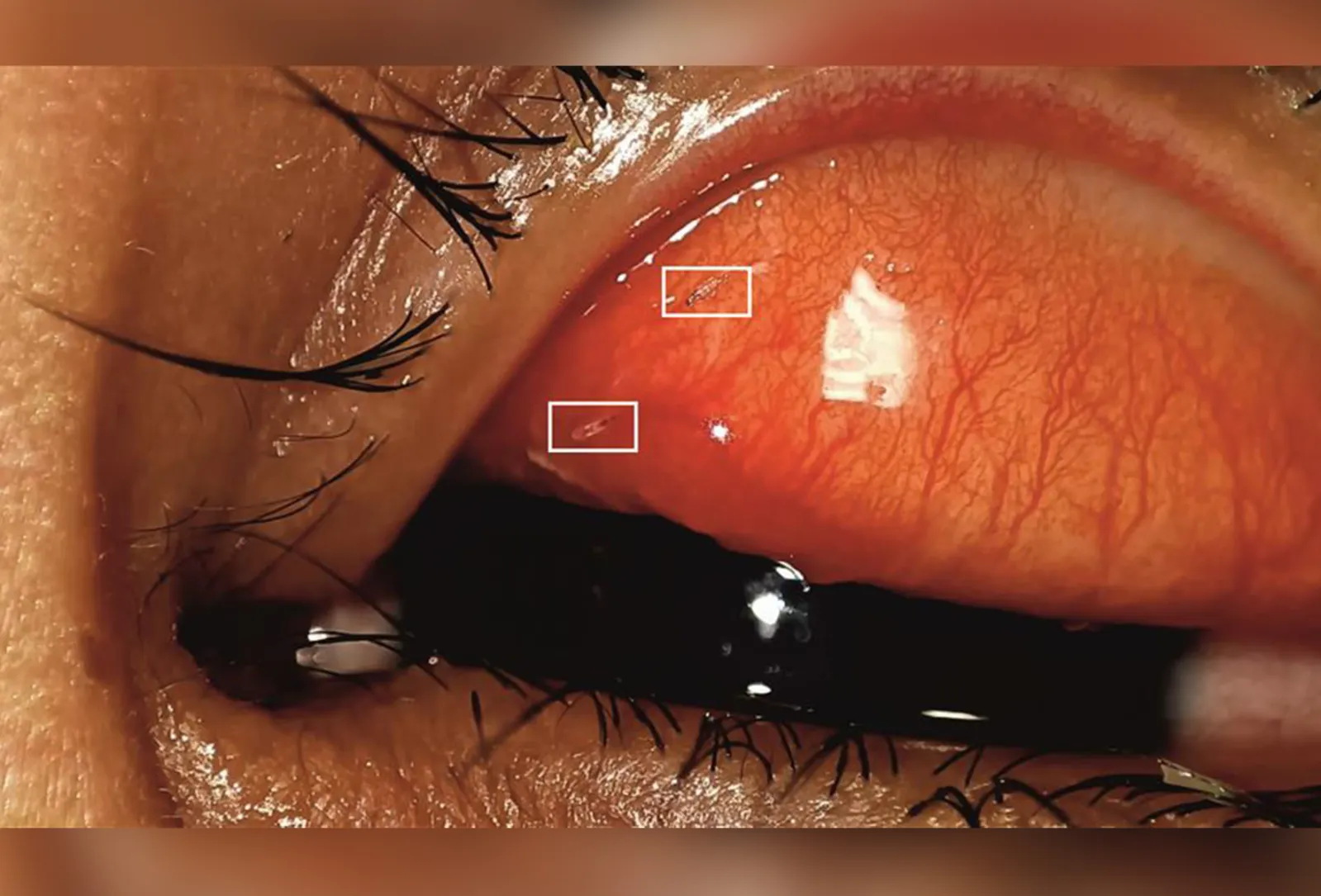
Under his left eyelid, doctors found eight live fly larvae. The next day, they found a further three larvae, ophthalmology specialist Op. Dr. Halil İbrahim Ateşoğlu told local media.<
Read More
Brain-Eating Amoeba on Rise in Some U.S. States5 min read

Dermatologist Reveals ‘The Eight-Legged’ Mites Living On Our Faces4 min read

Disease Caused by Tick Bites Spreading in Northeast6 min read


...
"In our examination, we noticed the worms moving under the patient's eyelid, and we cleaned them in the microscopic examination," Ateşoğlu said.
A statement made by the hospital said the boy's doctors believe that the larvae had deposited when an adult fly flew into his eye two days before. The patient was given antibiotic drops and has now been discharged.
As skin crawling as this sounds, finding fly larvae in a person's eye is not unheard of. There is even an official term for it: ophthalmomyiasis.
Ophthalmomyiasis is a clinical condition that occurs when the larvae of different fly species find their way into or onto human eyeballs, according to the National Library of Medicine. Usually, this occurs when an adult fly carrying larvae flies into the eye, although larvae may also be transferred by contaminated hands.
Ophthalmomyiasis is most commonly seen in people who work closely with farm animals or live near rivers, rural areas or farms. When the larvae enter the eye, they latch on using tiny hooks along their body.
...
The species most commonly involved in ophthalmomyiasis is called Oestrus ovis, also known as the sheep bot fly. As part of their life cycle, these flies deposit their parasitic larvae in the nostrils of sheep, goats and wild ruminants like deer, but they can also accidentally end up in the eye socket.
In April 2022, a 53-year-old man in France suffered a similar infestation after a fly flew into his eye while he was gardening. More than a dozen maggots were removed from his right eye, according to the New England Journal of Medicine.
Luckily, this condition is still fairly rare. A study published in the journal BMC Ophthalmology found only 295 reported cases of sheep bot fly eye infestation between 1918 and 2017.
Ateşoğlu said that fly eye infestations are more common in the summer, so it is best to see a doctor if you experience unusual eye itching or redness after an ocular encounter with one of these insects.
View 0 Comments
Submit Correction
View Editorial & AI Guidelines