
...

By Jesus Mesa
Reporter
0
Share
Newsweek is a Trust Project member
See more of our trusted coverage when you search.Prefer Newsweek on Googleto see more of our trusted coverage when you search.
The Boeing Starliner, officially known as the CST-100 Starliner, is intended to be a crucial component of NASA's Commercial Crew Program, aimed at transporting astronauts to the International Space Station (ISS) with the help of the private sector.
But ever since the spacecraft was first announced in 2010, the Starliner, pitched as heralding a new era in space transportation alongside Elon Musk's SpaceX Crew Dragon, has been plagued by setbacks.
From software glitches to parachute failures, the Starliner's journey has been marred by setback after setback, even once it finally transported its first humans into space last month.
Read More on News
...
Here's a timeline of the critical events that have impacted Boeing's Starliner program.
July 2010: Announcement
NASA awards Boeing a $92.3 million contract to develop the CST-100 Starliner as part of its Commercial Crew Program, aimed at providing safe and reliable transport to the ISS after the Space Shuttle program is retired. Boeing stated that the capsule would draw upon its experience with NASA's Apollo, Shuttle and ISS programs, as well as the Orbital Express project sponsored by the Department of Defense.
September 2014: Major Contract Award
NASA officially chooses Boeing and awards an additional $4.2 billion contract to complete development and certify the Starliner for crewed missions, positioning it as a competitor to SpaceX's Crew Dragon. The contracts included at least one crewed flight test with at least one NASA astronaut aboard.
December 20, 2019: Unsuccessful First Mission
Starliner embarks on its first uncrewed Orbital Flight Test (OFT-1), but mission does not go as planned. A series of software glitches prevents the spacecraft from reaching the ISS, forcing it to return to Earth prematurely. Despite this, the landing is deemed successful, demonstrating some aspects of the spacecraft's design and capabilities.
March 2020: Investigation and Review
NASA and Boeing announced an extensive review of the Starliner's software and systems, leading to a delay in future flights after the failed OFT mission. The Independent Review Team identified several software glitches and gave 80 recommendations for Boeing to address before another uncrewed flight.
August 3, 2021: OFT-2 Postponed
The second uncrewed test flight, OFT-2, is postponed due to a valve issue in the spacecraft's propulsion system. Boeing undertakes extensive rework and testing to resolve the issue. The launch is delayed several more times, with the new date set for May 2022.
May 19, 2022: OFT-2 Success
After thorough analysis and corrective actions, OFT-2 successfully launches, completing its mission to the ISS and paving the way for the Crew Flight Test (CFT). Starliner stays parked at the ISS for four days.

...
June 16, 2022: Astronauts Selected for Crewed Flight
NASA confirms that the CFT mission will be a two-person flight test, consisting of veteran NASA astronauts Barry E. Wilmore and Sunita Williams, with Michael Fincke selected as a backup.
July 2023: Indefinite Delay
After various delays bump the planned launch of the Crew Flight Test to July 2023, Boeing announces an indefinite delay due to issues with the parachute system and wiring harnesses, pushing the planned Crew Flight Test to late 2024.
The mission entails flying a crew of two NASA astronauts to the ISS for a one-week test flight.
May 6, 2024: First Failed Crewed Mission
After months of speculation, Boeing announces that the Crew Flight Test is tentatively set for launch, slightly sooner than expected.

...
But due to a problem with an oxygen valve on the ULA Atlas rocket, the May 6 launch date is scrubbed approximately two hours before the planned launch time.
May 18, 2024: Starliner's First Crewed Mission Delayed Again
After rescheduling its May 6 liftoff for May 21, a helium leak discovered by NASA engineers leads to another delay for Starliner's first manned mission. The launch team ultimately deems the leak a minor issue and clears the Crew Flight Test for a June 1 launch. Engineers traced the leak to a component on one of the propulsion system's 28 control thrusters used for maneuvering in Earth's orbit.
June 1, 2024: Launch Aborted at Last Minute
The flight rescheduled for June 1 is once again scrubbed just prior to launch after one of the spacecraft's three redundant computers fails to synchronize with the others, just 3 minutes and 50 seconds before liftoff.
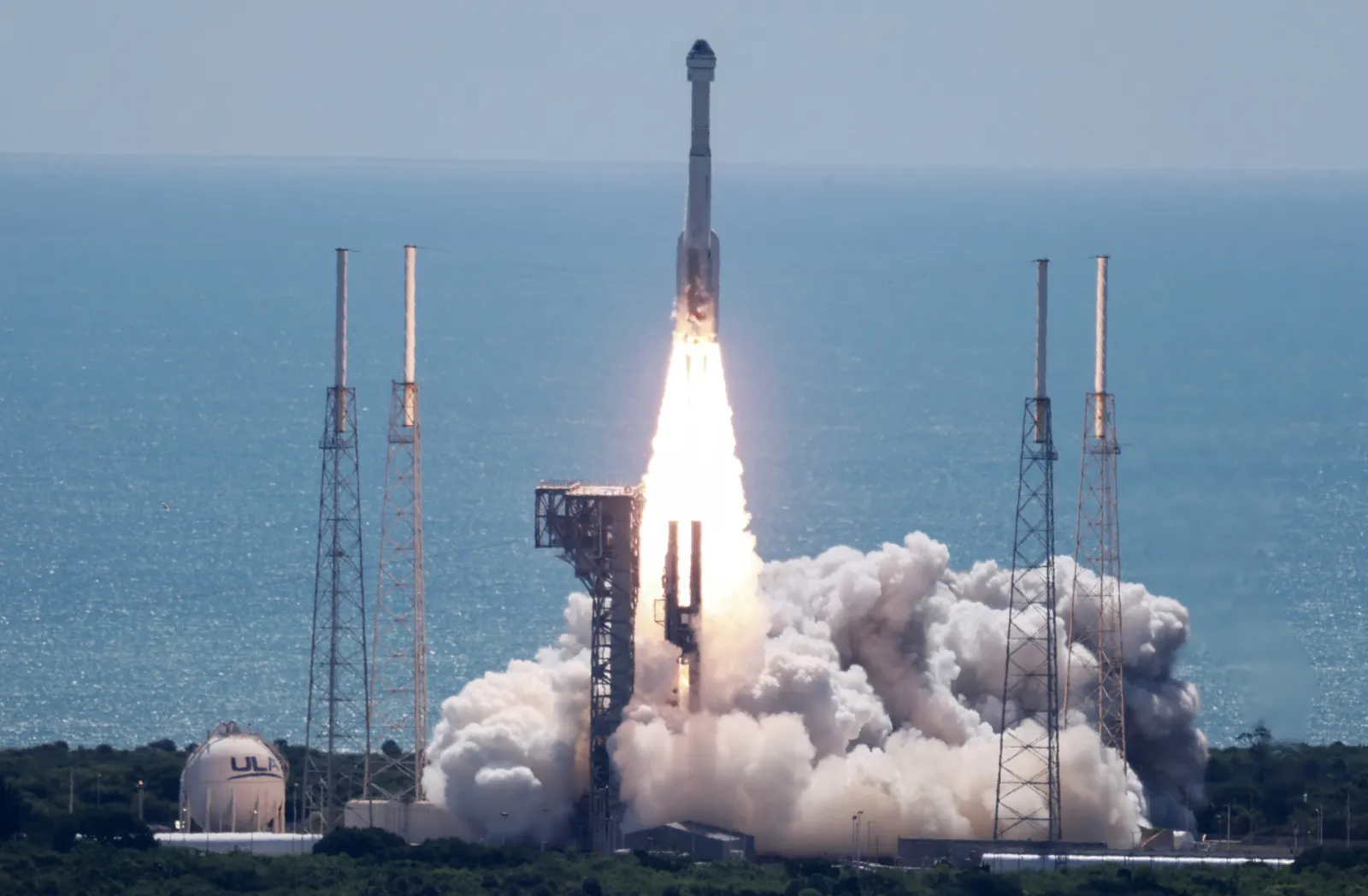
June 5, 2024: Successful Launch with Some Problems
The CFT finally lifts off on the Atlas V rocket on its third launch attempt, with the crew initially expecting to spend around eight days in orbit as a test-run for the Starliner in its first manned flight, before returning to Earth on June 14.
...
However, as Starliner closes in on the space station a day after launch, last-minute thruster failures nearly derail the docking with ISS.
June 14, 2024: Return Date Pushed
Nine days after their arrival at the ISS, the undocking date is pushed back to June 22. The astronauts have a call with Boeing mission managers to discuss the end of the mission, and then enter Starliner to review the spacecraft's flight operations and procedures.
June 22, 2024: Not 'Stranded' but No Return Date
Amid gathering questions from the media, Boeing says the problems with the Starliner that had caused the astronauts to remain on the ISS were corrected but confirms there are no updates on when the return mission would happen.
In a statement to Newsweek, a Boeing spokesperson said that the helium leaks and the majority of the thruster problems on the Starliner spacecraft had been deemed stable and "not a concern" for Starliner's return to Earth.
Some tests in New Mexico were part of this extended evaluation period to ensure the spacecraft's readiness and safety for future missions.
June 26, 2024: Astronauts Confident in Using Starliner for Return
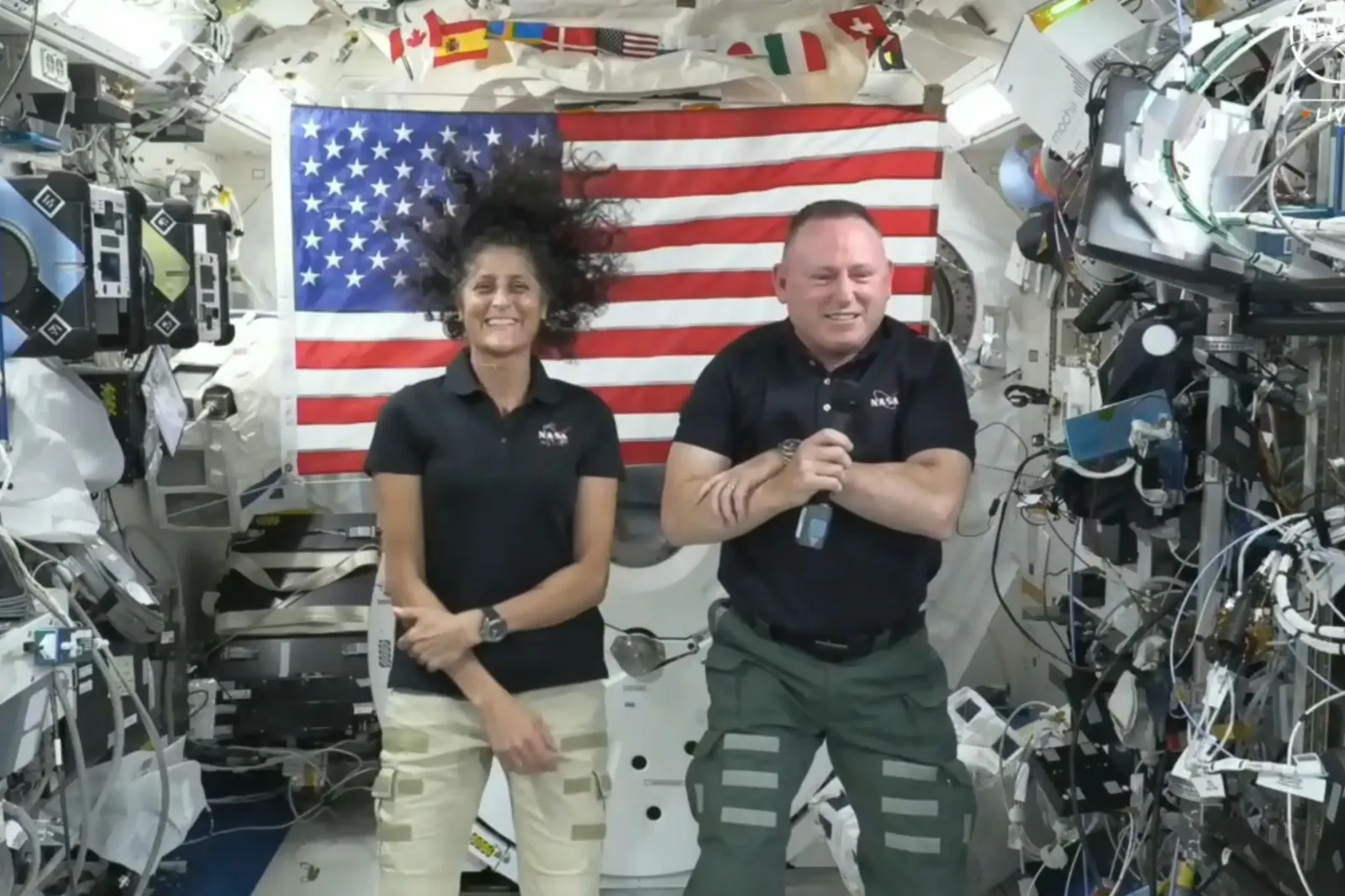
In a press conference beamed from the ISS, after several reports said the astronauts were "stranded" in space, NASA astronauts Sunita Williams and Butch Wilmore express strong confidence in the Boeing Starliner capsule's ability to return them safely to Earth.
...
They said their delayed departure from the ISS was necessary for a full examination of the Starliner's technical issues.
"There is no reason to believe that Starliner can't handle the return flight to Earth. Let's remember that going to space is hard, and human spaceflight is even more difficult. However, the capsule has proved its capability by successfully bringing astronauts to the ISS", Patrick Binning, an expert in space systems and missions at Johns Hopkins Applied Physics Laboratory, told Newsweek.
According to NASA's Commercial Crew Program manager Steve Stich, the team is in "no rush" to bring the astronauts home, and both Boeing and NASA have previously said that the Starliner can spend up to 45 days docked at the station without issue.
That would be this Saturday.
Update 7/18/24 3:45 p.m. ET: This story has been updated to correct a typo.
Do you have a story Newsweek should be covering? Do you have any questions about this story? Contact LiveNews@newsweek.com
View 0 Comments
Submit Correction
View Editorial & AI Guidelines