...


By Dan Gooding and Gabe Whisnant
0
Share
Newsweek is a Trust Project member
See more of our trusted coverage when you search.Prefer Newsweek on Googleto see more of our trusted coverage when you search.
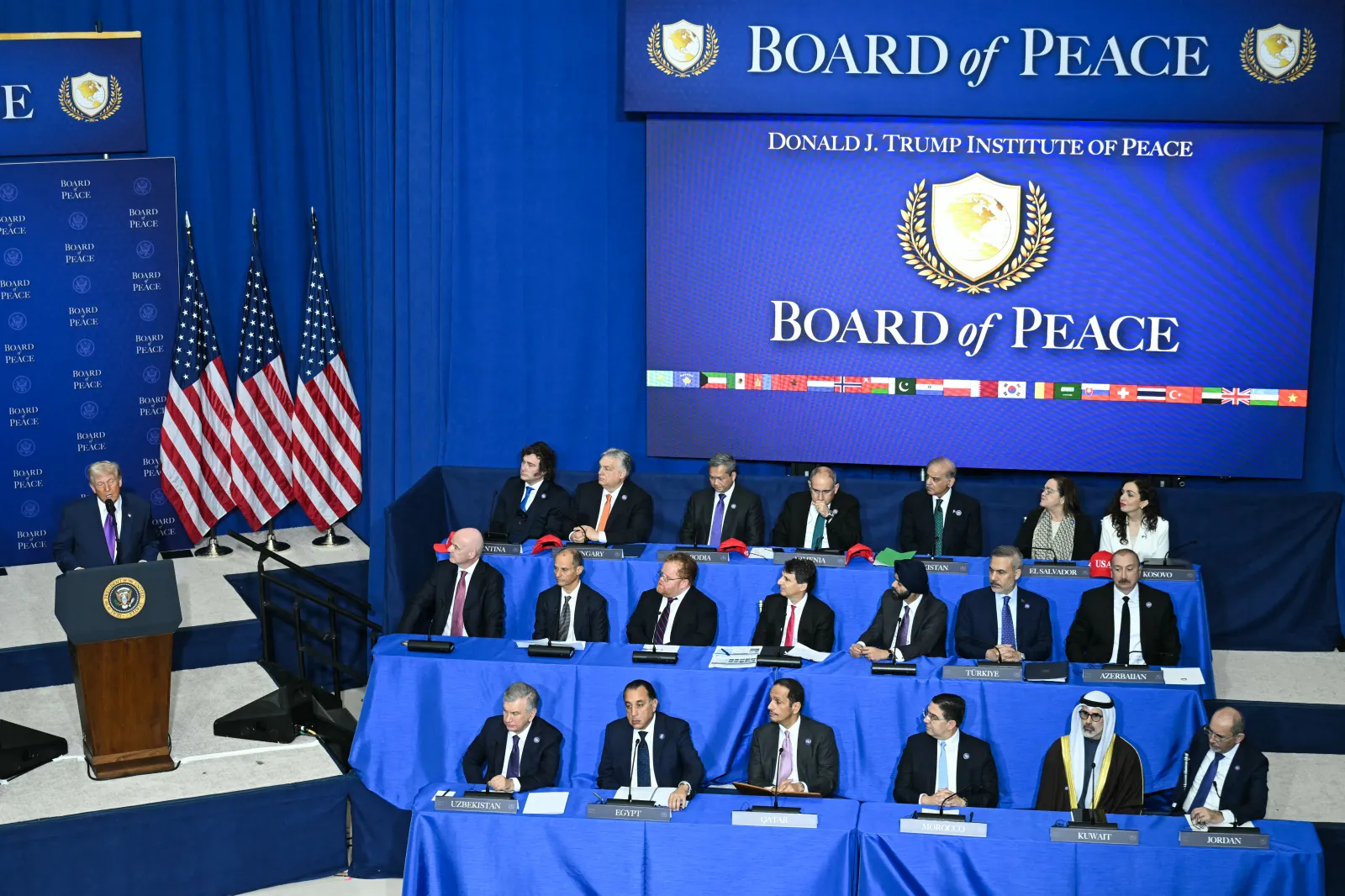
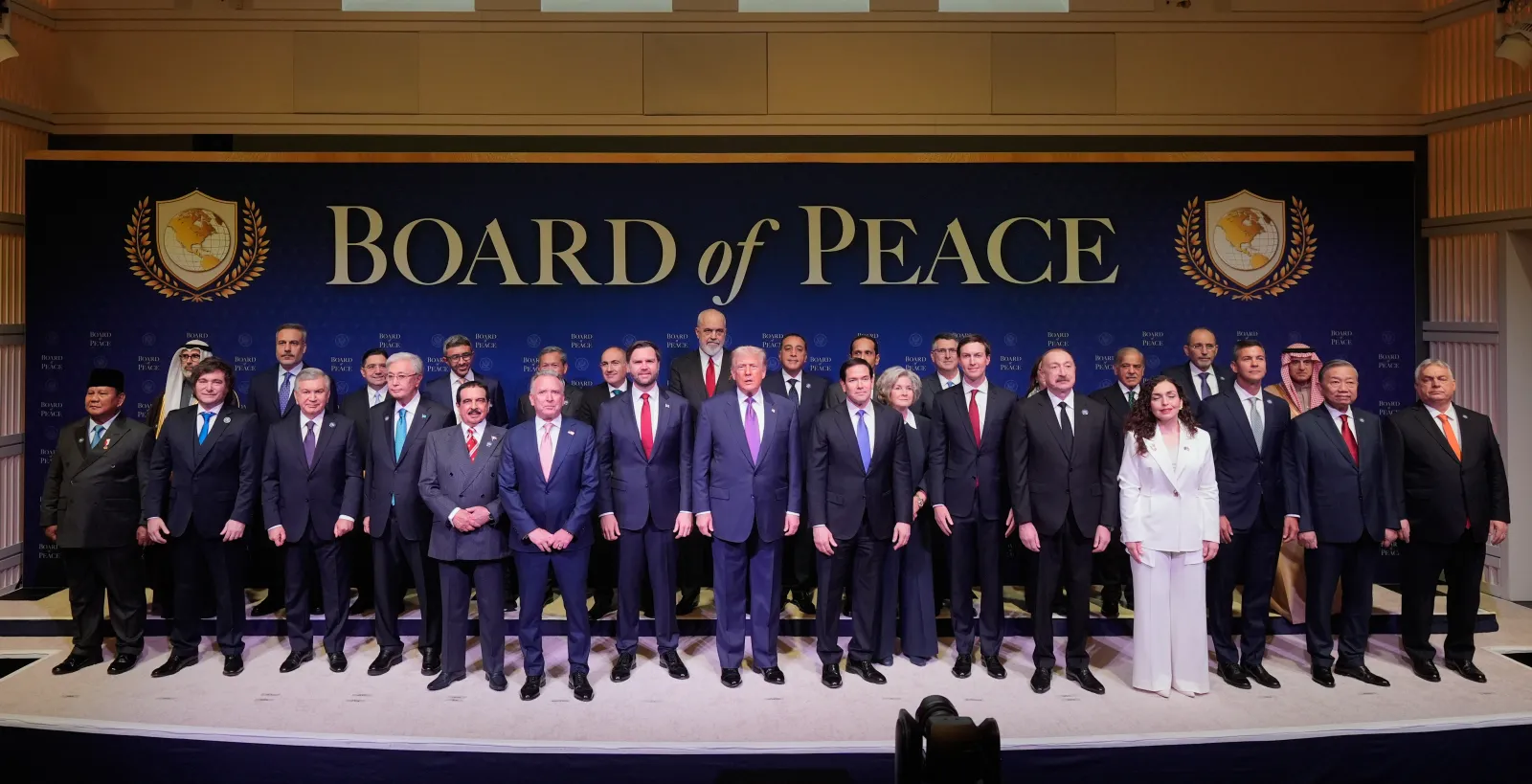
President Donald Trump held the inaugural meeting of his new Board of Peace in Washington, D.C., on Thursday, with nine members pledging to give $7 billion toward a Gaza aid package.
The event, held at the U.S. Institute of Peace, which now bears Trump's name, was missing some key U.S. allies who have not joined the bloc. Some, including Germany, Italy, Norway, Switzerland, and the United Kingdom, sent official observers to the meeting.
The U.N. Security Council held a high-level meeting Wednesday, looking at the ceasefire deal in the Middle East and Israel's efforts to expand its control of the West Bank. The meeting had been moved up by a day, after Trump announced his board would meet the same day.
Read More on Politics
Why It Matters
The board met as the U.S. President seeks to rewrite global diplomacy, having long criticized organizations including the United Nations and NATO, while still seeking to keep the U.S. involved in those blocs. Concerns have been raised that a membership fee for the board could lead to conflicts of interest, but the Trump administration has insisted that the effort is about achieving peace, not profit.
...
What Is the Board of Peace?
The board stemmed from Trump's plan to end the conflict in Gaza, which included a ceasefire with Israel brokered by the United States in October. That has remained fragile, however, and the U.S. president's plan has expanded to have a more ambitious remit, aiming to end other conflicts around the world, not just in the Middle East.
During Thursday's meeting, Trump said Indonesia, Morocco, Kazakhstan, Kosovo and Albania had pledged to send troops for a Gaza stabilization force, while Egypt and Jordan will train police for the efforts. Troops will initially be deployed to Rafah, a major population center where the U.S. hopes to first focus reconstruction efforts.
As for the financial contributions, those are coming from Kazakhstan, Azerbaijan, the United Arab Emirates, Morocco, Bahrain, Qatar, Saudi Arabia, Uzbekistan, and Kuwait, Trump said.
“Every dollar spent is an investment in stability and the hope of new and harmonious (region),” said Trump in thanking the donors, adding, “The Board of Peace is showing how a better future can be built right here in this room."
Who Are the Members and Which Countries Are Represented?
While invitations were sent out to dozens of countries, not all have agreed to join the board alongside the U.S.
Those countries that have accepted are:
- Albania
- Argentina
- Armenia
- Azerbaijan
- Bahrain
- Belarus
- Bulgaria
- Cambodia
- Egypt
- El Salvador
- Hungary
- Indonesia
- Israel
- Jordan
- Kazakhstan
- Kuwait
- Kosovo
- Morocco
- Mongolia
- Pakistan
- Paraguay
- Qatar
- Saudi Arabia
- Turkey
- United Arab Emirates
- Uzbekistan
- Vietnam
Others have opted out, including multiple European nations.
What People Are Saying
President Donald Trump, at the meeting: “Someday I won’t be here. The United Nations will be. I think it is going to be much stronger, and the Board of Peace is going to almost be looking over the United Nations and making sure it runs properly.”
This article contains reporting by The Associated Press.
This is a breaking news story and will be updated.
View 0 Comments
Submit Correction
View Editorial & AI Guidelines