10
Loading video...

By Anna Commander
News Editor
0
Share
Newsweek is a Trust Project member
See more of our trusted coverage when you search.Prefer Newsweek on Googleto see more of our trusted coverage when you search.
Blue Origin founder Jeff Bezos said it was a “very rough day” after a company rocket exploded during a late-night ground test, vowing the team would “rebuild whatever needs rebuilding” and return to flight.
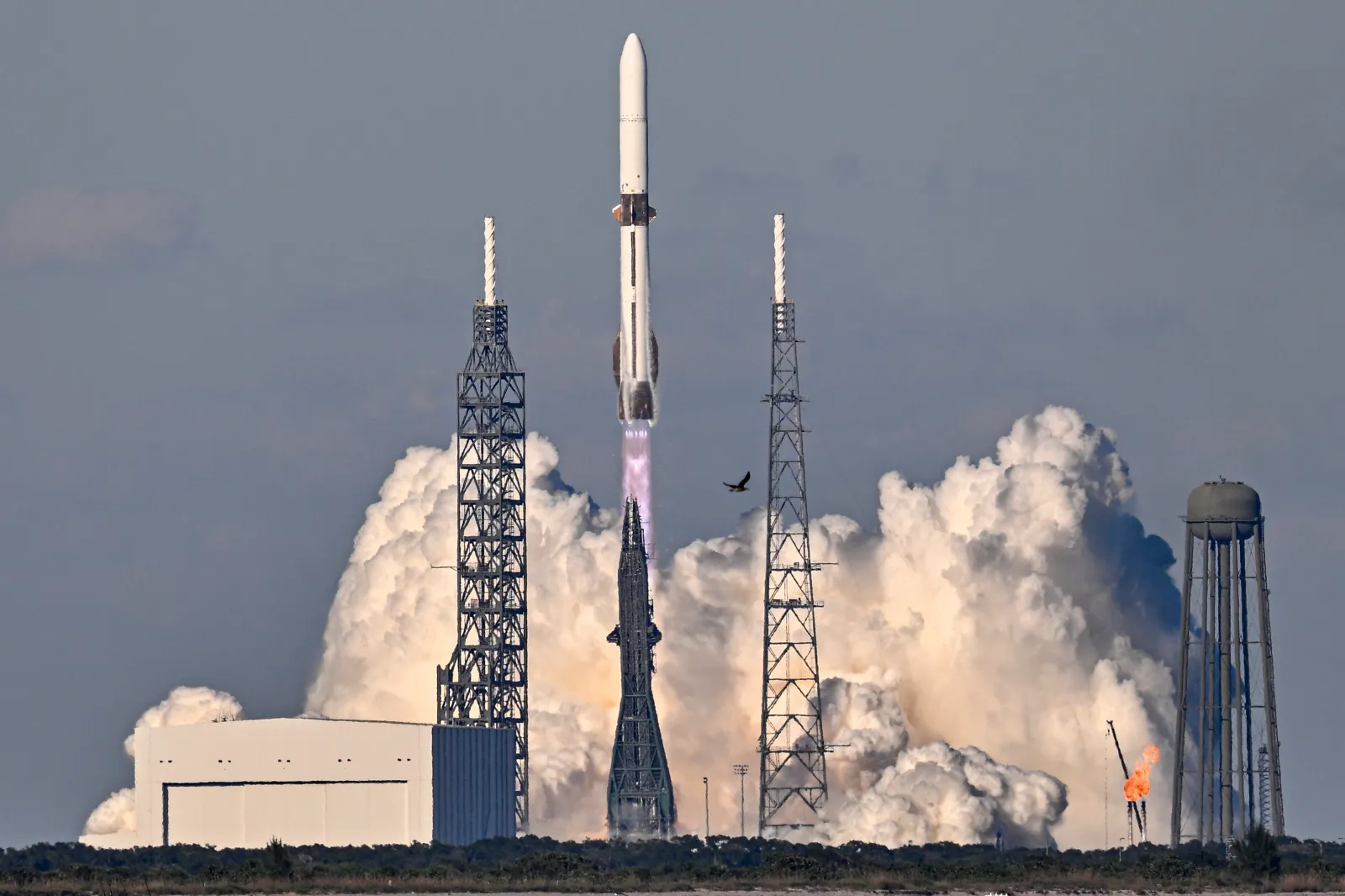
A Blue Origin rocket exploded during a "hotfire test" on Thursday night while on a launchpad in Cape Canaveral, Florida.
U.S. Space Force's Space Launch Delta 45 wing said in a post on Facebook that "A Blue Origin New Glenn rocket experienced an anomaly at approximately 9:00 p.m. during a hotfire test at Space Launch Complex 36. Emergency responders are on the scene. All personnel have been accounted for and there were no injuries/fatalities."
Read More on News
Blue Origin also said in a post to X that all involved were OK and that updates would be provided when more was learned. When reached for comment on Thursday night, Blue Origin sent Newsweek its post about the blast.
...
What To Know
Bezos said in a post to X at 3:13 a.m. ET Friday: “All personnel are accounted for and safe. It’s too early to know the root cause but we’re already working to find it. Very rough day, but we’ll rebuild whatever needs rebuilding and get back to flying. It’s worth it.”
SpaceX founder Elon Musk said on Thursday night that the incident was "Most unfortunate. Rockets are hard." He also responded to Blue Origin's post on X: "Sorry to see this, I hope you recover quickly."
FOX35 Orlando Meteorologist Noah Bergren said the explosion was "Seen and felt all over central Florida," adding, "one of the largest rocket explosions on record occurred in Cape Canaveral."
Videos of the explosion online show a fiery burst take over the launchpad and surrounding areas while lighting up the Central Florida sky.
FOX35 News in Orlando reported that homes shook up and down the Space Coast around 9 p.m. as residents and visitors took to social media to share pictures of the fireball.
Officials said there was no threat to the public following the explosion, which shook nearby homes and briefly lit up the night sky.
NASA Administrator Jared Isaacman said NASA is aware of the explosion. "Spaceflight is unforgiving, and developing new heavy-lift launch capability is extraordinarily difficult. We will work with our partners to support a thorough investigation of this anomaly, assess near-term mission impacts, and get back to launching rockets," he said in part on X, adding that any potential impact on the Artemis and Moon Base programs will be announced when determined.
The Federal Aviation Administration (FAA) said the incident occurred during a static fire test that was not within the scope of FAA-licensed launch activities and had no impact on air traffic.
Range officials and U.S. Space Force personnel are now coordinating with Blue Origin and its partners to determine the cause of the anomaly.
The New Glenn rocket was grounded in April after engine failure left a satellite in the wrong orbit, the Associated Press reports.
The explosion is also believed to have caused significant damage to Launch Complex 36, the only pad currently used for New Glenn launches, raising the likelihood of delays as the company assesses repairs and investigates the incident.
Reports in Space Explored indicate the launch pad and surrounding infrastructure sustained significant damage and were heavily impacted by the blast.
The rocket was not carrying any satellites at the time of the test, despite being prepared for a mission as soon as next week to deploy a batch of Amazon broadband satellites.
Officials have not yet said how long the disruption could affect Blue Origin’s launch schedule, but the upcoming mission is now in doubt.
The 97-meter (321-foot) New Glenn rocket had been expected to launch as soon as next week, carrying satellites for Amazon’s planned broadband constellation, marking a potential setback for the company’s launch schedule.
View 0 Comments
Submit Correction
View Editorial & AI Guidelines