...


By Dan Gooding and Giulia Carbonaro
0
Share
Newsweek is a Trust Project member
See more of our trusted coverage when you search.Prefer Newsweek on Googleto see more of our trusted coverage when you search.
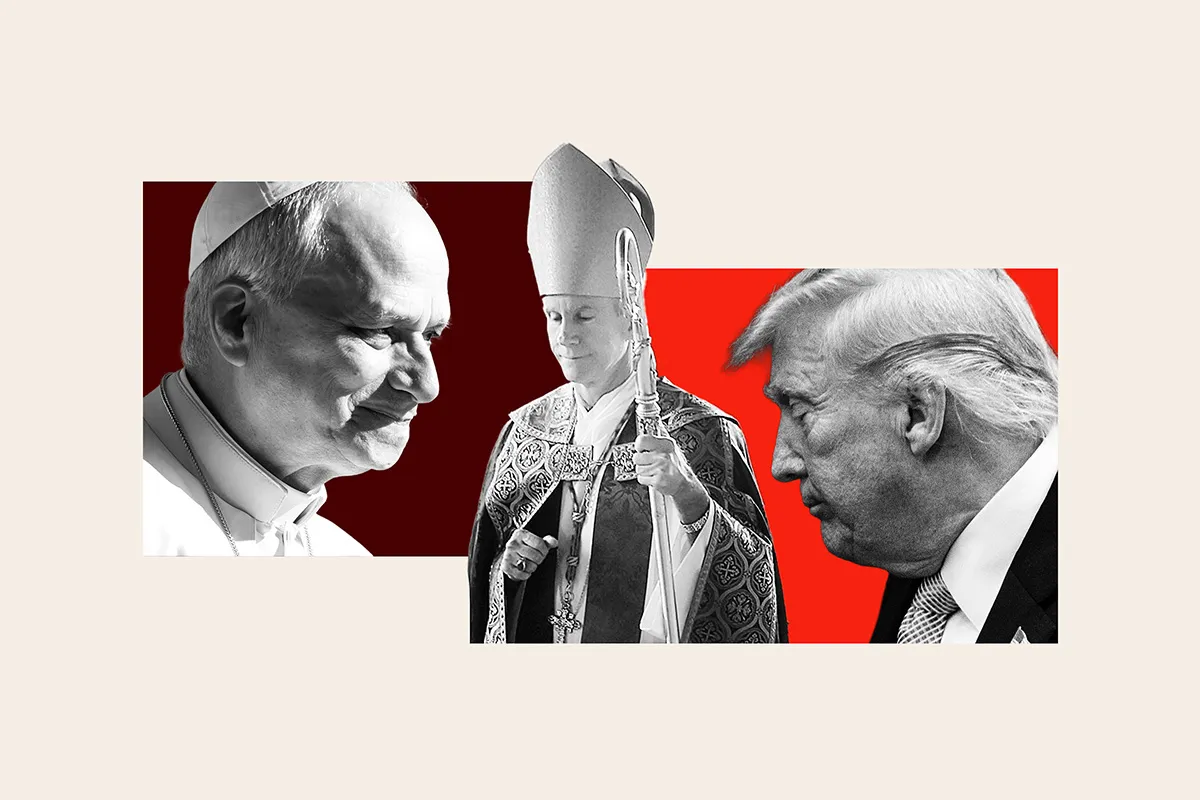
A Catholic bishop in the U.S. told Newsweek Friday that the pope is bigger than one world leader or administration, after reports the Pentagon told Vatican officials to get in line with American world policy.
Bishop Joseph Strickland, who used to lead the Diocese of Tyler, Texas, before he was removed from his position by Pope Francis, said he was concerned about what Trump administration officials were reported to have told Cardinal Cristophe Pierre in a closed-door meeting in January.
“The position, the chair of Peter, the papacy, is bigger than one individual,” Strickland said. “What was most troublesome, to me, was it seemed to be treating the papacy as just one more world leader.
Read More on U.S.
“We certainly understand that for people who don't believe in the papacy, but for us as Catholics, it's more than just one more world leader. We believe it's a divinely established office. So, it needs to be treated in a different perspective."
A Tense Meeting at the Pentagon
...
U.S. officials were reported to have lectured the Catholic Church representatives, with one official reaching for a 14th century weapon and invoking the Avignon Papacy—a period of time when the French monarchy used military force to bend the Bishop of Rome to its wishes.
The meeting was so tense that it was reported to have prompted the Vatican to turn down an invitation for the pope to attend the 250th anniversary celebrations planned later this year.
While the Pentagon denied such tension in a statement to Newsweek earlier this week, saying, "we have nothing but the highest regard and welcome continued dialogue with the Holy See,” Strickland said, invoking a time such as the Avignon papacy would not be well-received by the Catholic Church.
“For a time, the pope was in Avignon because of the situation in Rome, and in the papal states and in a lot of conflict going on,” the former bishop explained. “So, the pope took refuge in Avignon, and bringing that up just indicates a kind of a threatening attitude toward the papacy that is like, ‘Well, the pope can be displaced if we, the powers of the world, decide that needs to happen.' ”
Strickland repeated that the pope, whoever that may be at any given time, was not beholden to any world leaders or governments’ wishes.
The meeting may have taken place in January, but the timing of the reporting, initially by The Free Press, came amid President Donald Trump’s war with Iran, alongside Israel. Pope Leo XIV has repeatedly called for an end to hostilities and has not shown support for the U.S. decision to launch strikes.
A Role for the Catholic Vice President

...
At time of publication, an uneasy ceasefire brokered by Pakistan between the U.S. and Iran hangs over negotiations on a longer-term deal, with Vice President JD Vance, a Catholic himself, leading the American delegation.
Strickland said he hoped Vance would lean on Christian principles, including “the value of every person”, when approaching talks.
“When innocent people are losing their lives in a conflict like this, the rather, in my estimation, cold term is collateral damage, ‘oh, it's just a consequence’, but these are people,” he told Newsweek. “So, the church is always there to speak for the value of every person.”
The church’s long history, often involved with or on the fringes of conflicts, could also be influential for Vance and others as they make decisions. Strickland said that history has shown, time and again, that weapons and bombs would not bring long-term peace, only create more conflict.

...
At home in the U.S., the church has become increasingly divided in recent years, with more conservative believers celebrating increasingly Christian messaging from the federal government under Trump. Others have said the government’s actions are at odds with their faith.
Strickland said that leaders needed to be cautious that they do not forgo their purported principles stemming from their faith when making decisions.
“In many ways, ‘might makes right’ in our world, but the church doesn't embrace that, might doesn't necessarily make right,” he said. “The more power you have, the more responsibility you have to seek to live the truth.
“When we begin to compromise the truth, for whatever purposes, it doesn't have a good ending, because we're departing from the reality that we live in.”
View 0 Comments
Submit Correction
View Editorial & AI Guidelines