10
Loading video...

By Isabel Cameron
Freelance Science Reporter
0
Share
Newsweek is a Trust Project member
See more of our trusted coverage when you search.Prefer Newsweek on Googleto see more of our trusted coverage when you search.
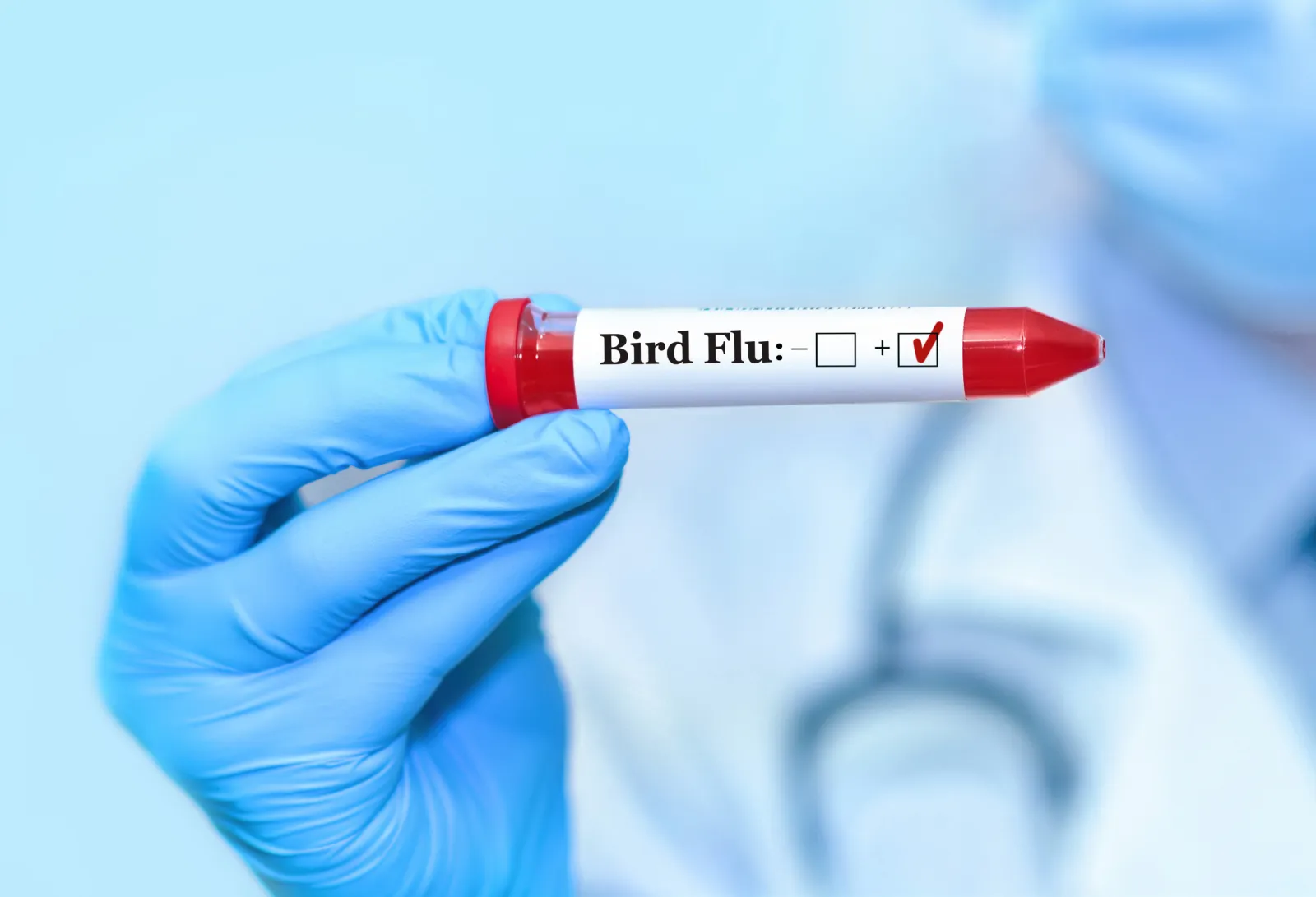
Bird flu has made a concerning leap from birds to dairy cattle across multiple U.S. states, marking the onset of mammal-to-mammal transmission.
This development has seen the virus spreading between cows and even jumping to other animals, including cats and a raccoon, according to a new study.
"The virus is currently evolving to become better adapted to mammals," Anthony Maresso, a professor at Baylor College of Medicine who is monitoring avian influenza in Texas wastewater but did not work on the study, told Newsweek.
Read More on Health
More From Newsweek Vault: What Is a Health Savings Account?
"It's learning and improving its ability to find new hosts, such as cows, and the concern is that it might soon achieve its ultimate goal—human-to-human transmission."
...
Diego Diel, the study's lead author and an associate professor of virology at Cornell University, added that while whole genome sequencing did not identify any mutations making bird flu more transmissible to humans, the data is still concerning as it suggests that the virus may be adapting in mammals.
More From Newsweek Vault: Compare the Top Health Savings Account (HSA) Providers
"The concern is that potential mutations could arise that could lead adaptation to mammals, spillover into humans and potential efficient transmission in humans in the future," he said in a statement.
Therefore, it is critical to continue to monitor the virus in affected animals and also in any potential infected humans, Diel added.
So far, 11 human cases of bird flu have been reported in the U.S., with the first case dating back to April 2022. Each case presented mild symptoms: four were linked to cattle farms and seven to poultry farms, including an outbreak of four cases in Colorado in the past few weeks.
The recent patients fell ill with the same strain identified in the study as circulating in dairy cows, leading researchers to suspect that the virus likely originated from dairy farms in the same county.
"This is already a pandemic for animals, carried across the globe by birds, and has the potential to become a global flu pandemic for people too," Maresso added.
"To prevent this, we must take several critical steps: increase environmental and clinical surveillance of virus activity, sequence all viral strains or variants to track their mutations, and begin developing a preventive vaccine.
"Additionally, we need to store the vaccine, implement a plan to upscale and distribute it to both humans and farm animals, and inform the public about the myriad reasonable mitigation measures required. It's crucial that people understand their efforts are essential to winning this battle."
Bird flu infections were first detected in January 2022 and have since led to the deaths of over 100 million domestic birds and thousands of wild birds in the U.S.
The virus can be detected in dairy cattle herds, likely infected by wild birds, through symptoms such as reduced appetite, changes in feral consistency, respiratory distress, and a significant drop in milk production.
The U.S. Department of Agriculture has funded bird flu testing programs at no cost to producers. According to Diel, early testing, strengthened biosecurity measures, and quarantines in the event of positive results are essential to containing further spread of the virus.
The researchers determined that the cow-to-cow transmission occurred when infected cows from Texas were moved to a farm with healthy cows in Ohio.
In addition, the cats and raccoon likely fell ill from drinking raw milk from infected cows, while the wild birds may have contracted the virus through environmental contamination or aerosols stirred up during milking or cleaning operations.
To prevent bird flu from spreading undetected, Maresso emphasizes the need for increased testing and surveillance.
"Only by knowing where the problem is can we properly neutralize its spread. Testing includes animals on farms, people in clinics, and populations of people through wastewater. Without knowing the source of virus, following its murder trail so to speak, we cannot properly mitigate is clandestine activities," he said.
"Of great concern is that this virus is now of high burden in wild animals, meaning it has multiple ways to successfully interact with domestic animals and us. This is rather unprecedented."
The study, funded by the AHDC, the Ohio Animal Disease and Diagnostic Laboratory, the Texas A&M Veterinary Medical Diagnostic Laboratory and the USDA, was published in Nature.
Updated on July 25 at 2 p.m. E.D.T. to include additional expert commentary from Anthony Maresso.
Is there a health problem that's worrying you? Do you have a question about bird flu? Let us know via health@newsweek.com. We can ask experts for advice, and your story could be featured in Newsweek.
View 0 Comments
Submit Correction
View Editorial & AI Guidelines