...

By Newsweek Editors
0
Share
Newsweek is a Trust Project member
See more of our trusted coverage when you search.Prefer Newsweek on Googleto see more of our trusted coverage when you search.
The clue came from a job that should have been boring.
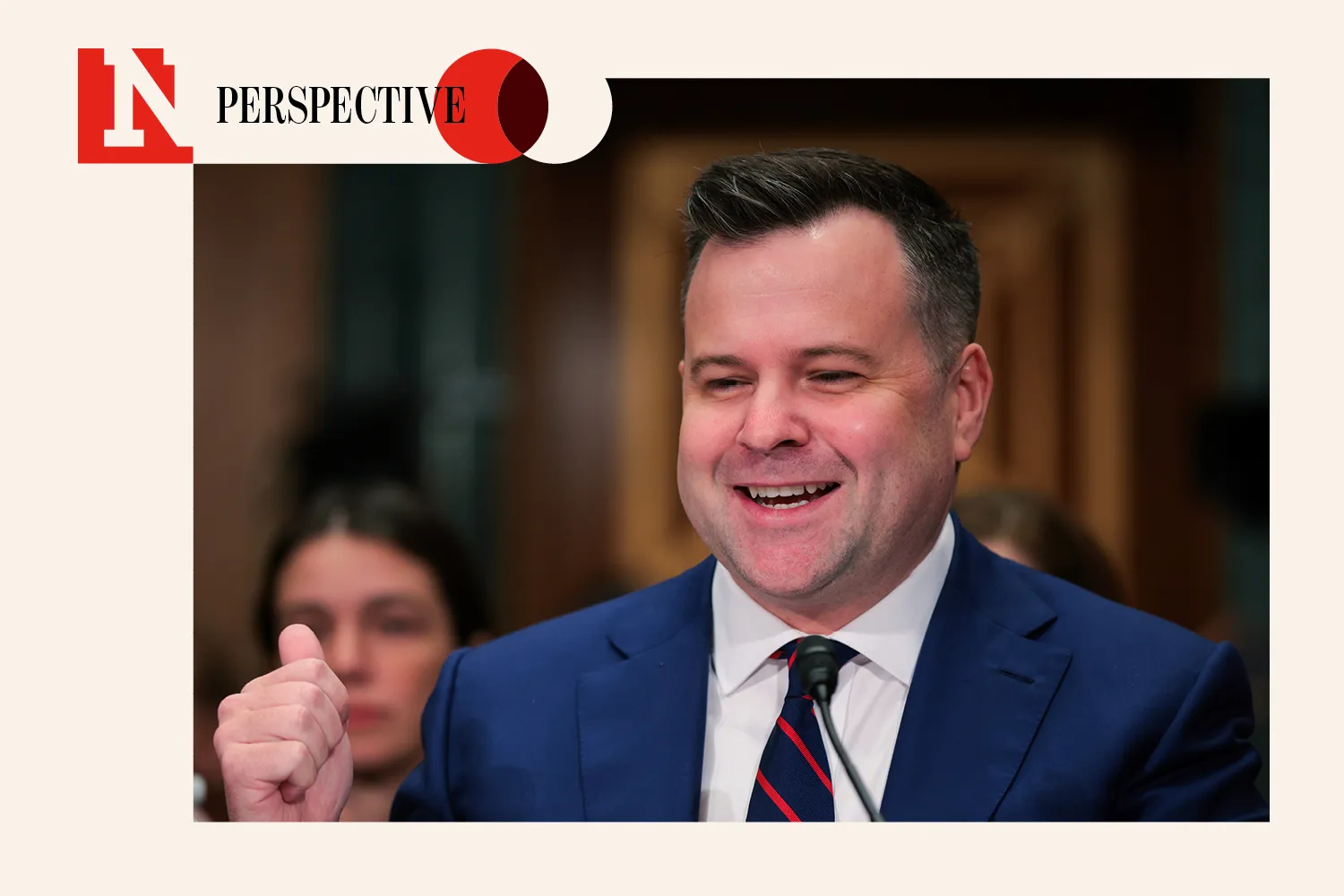
For months before President Donald Trump named him acting Director of National Intelligence (DNI), Bill Pulte was a federal housing regulator, but an unusually visible one.
Pulte was photographed outside the West Wing, while reporters tracked his feuds, mortgage-fraud referrals and, less salaciously, his provocative policy ideas.
Read More on Analysis
His boorish style earned Pulte a nickname inside the administration: “Little Trump”.
That moniker read like Washington gossip until Tuesday, when Trump elevated Pulte to run the intelligence community in an acting capacity while keeping him atop the FHFA.
Now that label reads like a political strategy.
His move to acting DNI was not, it seems, a long-planned promotion. Pulte stepped in to fill a sudden vacancy.
Tulsi Gabbard announced in May that she would resign as DNI at the end of June, citing her husband’s diagnosis with a rare form of bone cancer, though it came after months of speculation about tensions between her anti-war beliefs and Trump’s belligerent foreign policy.
But this only sharpens the question. Trump did not engineer this opening. Yet when a sensitive national security seat came open unexpectedly, the person he reached for was a combative housing regulator with no intelligence background.
Whom a president grabs in a pinch sends its own kind of signal.
Succession as a Method
Trump’s choice makes little sense through the familiar 2028 lens of campaigns, veepstakes and cable-news succession talk, all ultimately the question of who inherits the MAGA movement.
But it makes more sense as a clue to a different kind of succession: how Trumpism reproduces inside government, by elevating officials who can perform command, conflict and personal access in technical institutions.
Pulte does not come from the intelligence world. He was sworn in as FHFA director on March 14, 2025, and he oversees Fannie Mae, Freddie Mac and the Federal Home Loan Banks.
The post he is now slated to fill is a different animal with, arguably, higher stakes: the DNI is the head of the intelligence community and the president’s principal intelligence adviser.
The strangeness of that leap underlines the point. What is on display is not a clean handoff to one heir. It is a franchise model, one that can spread throughout all levels of government across the U.S.
These franchisees learn the Trump method. Announce on social media, identify enemies, prize direct contact, treat loyalty as executive energy, and convert a bureaucratic office into a personal stage, while aggressively delivering MAGA policy wins it can celebrate.
Pulte’s elevation suggests the next phase of Trumpism may be built by small Trumps in narrow jurisdictions before it is settled by one big Trump heir on a presidential ballot.
The Style Is the Credential
Trump defended the appointment by saying Pulte had “deep experience managing the most sensitive matters in America,” and the president pointed to his role at FHFA and as chair of Fannie Mae and Freddie Mac.
It’s an argument about confidence, not intelligence expertise.
What national security qualifications Pulte brings to the role are unclear, even as the U.S. faces conflict in the Middle East, a great power competition with China, the question of support for Ukraine, and the military uses of artificial intelligence.
The record that matters is Pulte’s governing style.
Pulte had posted at least 13 official agency orders on his personal X account, and former FHFA officials have said the practice raised questions about legality and transparency; one former chief of staff called it “very bizarre.”
That's not a side detail. It’s the mechanism Trump values, and it sends a clear lesson to other officials throughout his administration.
Pulte also became a visible combatant in Trump’s campaign against perceived adversaries.
His mortgage-fraud referrals targeted Senator Adam Schiff, Federal Reserve Governor Lisa Cook, Letitia James and former Representative Eric Swalwell, all of whom denied wrongdoing.
The referrals against Schiff and Cook produced no charges; the James prosecution was dismissed after a federal judge found the prosecutor had been unlawfully appointed.
Pulte has shown how to miniaturize Trumpism. And for him, it's paying off.
In Defense of Pulte's Selection
The best defense of the appointment is the job’s structure. The DNI advises the president on intelligence, and a permanent DNI is appointed with Senate consent under the intelligence statute.
An acting designation to bridge a sudden vacancy is ordinary; presidents reach for trusted hands when a seat opens without warning, and reading grand strategy into a stopgap can be a stretch.
Pulte is also no random internet personality parachuted into government; the Senate confirmed him as FHFA director on a 56-43 vote, with three Democrats crossing over.
A president who distrusts the bureaucracy will predictably prefer officials who are loyal, politically alert and willing to move fast.
Pulte has publicly denied that the mortgage-fraud push is partisan, saying previously, “We do not care whether you’re a Republican, a Democrat.”
Trump allies can fairly argue that an aggressive regulator should not be disqualified merely because his targets are powerful Democrats.
That explains why Pulte can be considered, and why a temporary fix should not be over-read, but the spectacle appears to hold a deeper meaning.
Trump seems to reward officials who govern in his image—public confrontation, direct media performance, enemy targeting, and the aura of private access.
The vacancy may have been accidental. But the choice of who fills it was not.
Loyalty in Lieu of Competence?
Pulte will not personally remake the intelligence community in a few months. He will not because he cannot.
Acting officials face statutory limits; the Federal Vacancies Reform Act generally caps acting service at 210 days unless a nomination resets the clock.
The deeper risk is structural and specific. The DNI sits atop the agencies that decide what intelligence reaches the president and how it is framed.
Staffing that office for loyalty and showmanship rather than judgment threatens the one thing it exists to protect: the integrity of what a president is told before he decides on war, espionage or the use of force.
And the system teaches. Senate Democrats accused Pulte in September 2025 of using FHFA for a “politically motivated public campaign” against Trump’s perceived adversaries.
His defenders can dismiss that as partisan opposition. But the same confrontational record did not block his elevation to a national-security role—it preceded it.
Ambitious officials watching will draw the obvious lesson about what gets rewarded.
Little Trumpism
“Little Trump” is more than a nickname. It conceptualizes a model of succession that can adapt and proliferate rapidly, and penetrate more deeply into the governance of American society.
A housing regulator can become a political combatant. A social-media operator can become an acting intelligence chief. A technical office can become a theater of dominance.
Pulte may leave the DNI role quickly, and a permanent nominee may eventually give the Senate a more conventional fight. But the lesson of the appointment is already made clear.
Trumpism does not need to wait for a single heir. It can manufacture many smaller versions of the same governing style and spread them throughout the government right now.
View 0 Comments
Submit Correction
View Editorial & AI Guidelines