10
Loading video...

By Missy S. Mastel
0
Share
Newsweek is a Trust Project member
See more of our trusted coverage when you search.Prefer Newsweek on Googleto see more of our trusted coverage when you search.
Twice, Kerr County, Texas, asked the state for a share of federal disaster money to build a $1 million flood-warning system. Twice, the application was turned down, in 2017 and 2018, before catastrophe struck.
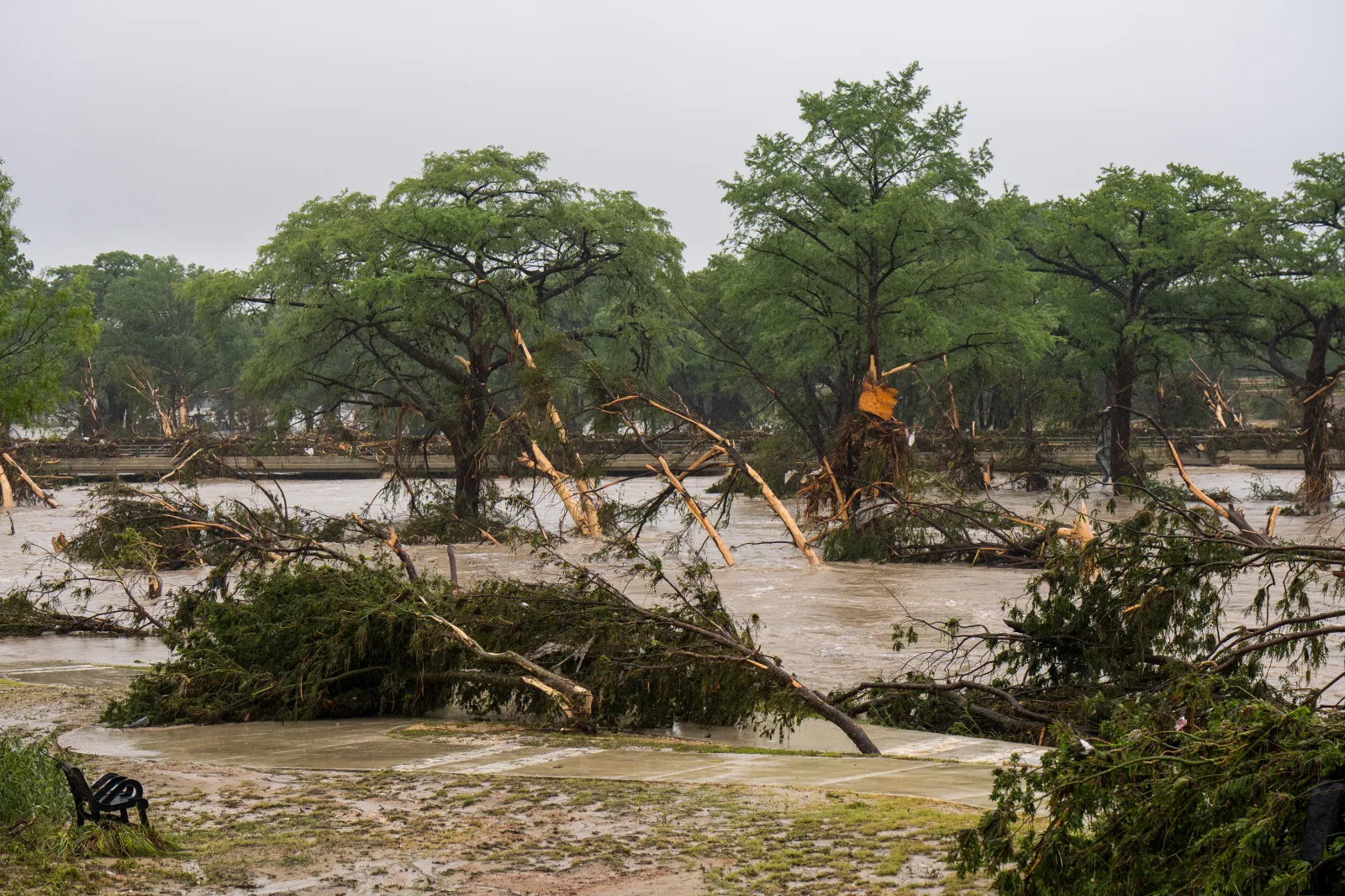
On July 4, 2025, the Guadalupe River rose in the dark and killed at least 27 campers and counselors at a girls’ camp along its banks in the county.
The proposed siren and river gauge warning system might have helped save lives. Kerr County thought the funds existed and I believe there is even evidence of unspent federal mitigation funds, but they never reached the riverbank in this case.
Read More on Leadership Insights
I’ve devoted 25 years to moving money toward gaps like that one, helping recover and redirect more than $1 billion in mission-driven capital. I trained as an accountant and studied theology, an odd pairing until you realize what each discipline actually asks. Theology asks what we owe one another. Accounting asks whether we’ve paid. Kerr County's experience suggests we haven’t.
...
To my mind, this isn’t a story about incompetence or even bureaucracy. It’s a story about trust, and about a country that has less of it to spend than it used to.
Consider the simplest measure of whether we still trust strangers enough to help them, whether we give to them at all. In 2000, roughly two-thirds of American households gave to charity. By 2018, the Generosity Commission cites a report by the Lilly Family School of Philanthropy indicating that this figure had fallen to just 49.6 percent, the first time in the survey’s history that fewer than half U.S. households gave anything at all. If left unaddressed, I fear the percentage of Americans who donate could drop to single digits in the next 50 years.
The 2026 Edelman Trust Barometer found something even more telling: seven in 10 people worldwide say they’re unwilling or hesitant to trust someone whose values, background, or sources of information differ from their own. The survey also found that nonprofits were not regarded as the world’s most ethical and competent institutions. Businesses scored better.
Both globally and at home, it's clear to me that we are not short on climate solutions or the capital to fund a good deal of them. But I suspect we're running short of the willingness to hand either one to someone outside our own circle.

...
Climate action has largely depended on that willingness. The Paris Agreement depends on it. The Green Climate Fund depends on it. Many resilience plans assume that people will spend money on problems they will never personally witness, trusting institutions they’ve never visited to use it well. That assumption appears to be breaking down in real time.
I don’t believe we solve this by asking people to trust each other more. I think we solve it by building structured interdependence, a financial structure that doesn’t require trust to work.
Here is what that might look like in practice. A corporation’s investment, let’s say in water reuse, for example, succeeds only if the water management nonprofit on the ground succeeds first. Corporations seeking credible sustainability outcomes could purchase verified environmental or resilience data from nonprofits delivering work on the ground. Philanthropic institutions could provide first-loss or early-stage capital to reduce the risk of those partnerships.
In this kind of structure, everybody needs each other and has a vested interest in the outcome of the other participants. Systems like this are sturdier, I believe.
It is the kind of architecture I have spent my career building, deal by deal, largely because I found grant cycles and goodwill continually failing the communities I was trying to help.
If I could change one thing about how climate money moves in this country, it would be this: any major climate funding program, public, philanthropic, or corporate, should require at least two sectors to participate together, agree on measurable community outcomes up front, and publish not just annual results every year showing where the money went and what it achieved, but as a percentage of what we need to achieve.
The lesson from disasters like Kerr County shouldn't be simply about sympathy, nor is it that communities just need more money. It’s that money sitting in an account is ineffective and might as well be worthless if the system around it can’t move it to where the water is rising.
We may never restore trust in our institutions and in each other. I’ve stopped waiting for that. But we can build something that doesn’t ask people to trust strangers. Only to need them.
The next flood won’t wait for us to fix that. Neither should we.
Missy S. Mastel, CPA, CGMA, is the founder of Climate Impact Innovations and a sustainability futurist whose work focuses on aligning finance, philanthropy, and climate solutions. The views expressed in this article are her own.
View 0 Comments
Submit Correction
View Editorial & AI Guidelines