10
Loading video...

By Billal Rahman
Immigration Reporter
0
Share
Newsweek is a Trust Project member
See more of our trusted coverage when you search.Prefer Newsweek on Googleto see more of our trusted coverage when you search.
The Department of Homeland Security (DHS) has allowed a temporary pause on border construction projects in the Big Bend region of Texas to expire, clearing the way for work on one project to resume while officials consider scaling back a separate proposal affecting Big Bend National Park.
Federal court filings from September 29 show U.S. Customs and Border Protection (CBP) will lift its pause on ground-disturbing activities for the Big Bend 2 project beginning September 30. That project calls for approximately 61 miles of border barrier system in Presidio County and is separate from the Big Bend 4 project that includes land within and east of Big Bend National Park.
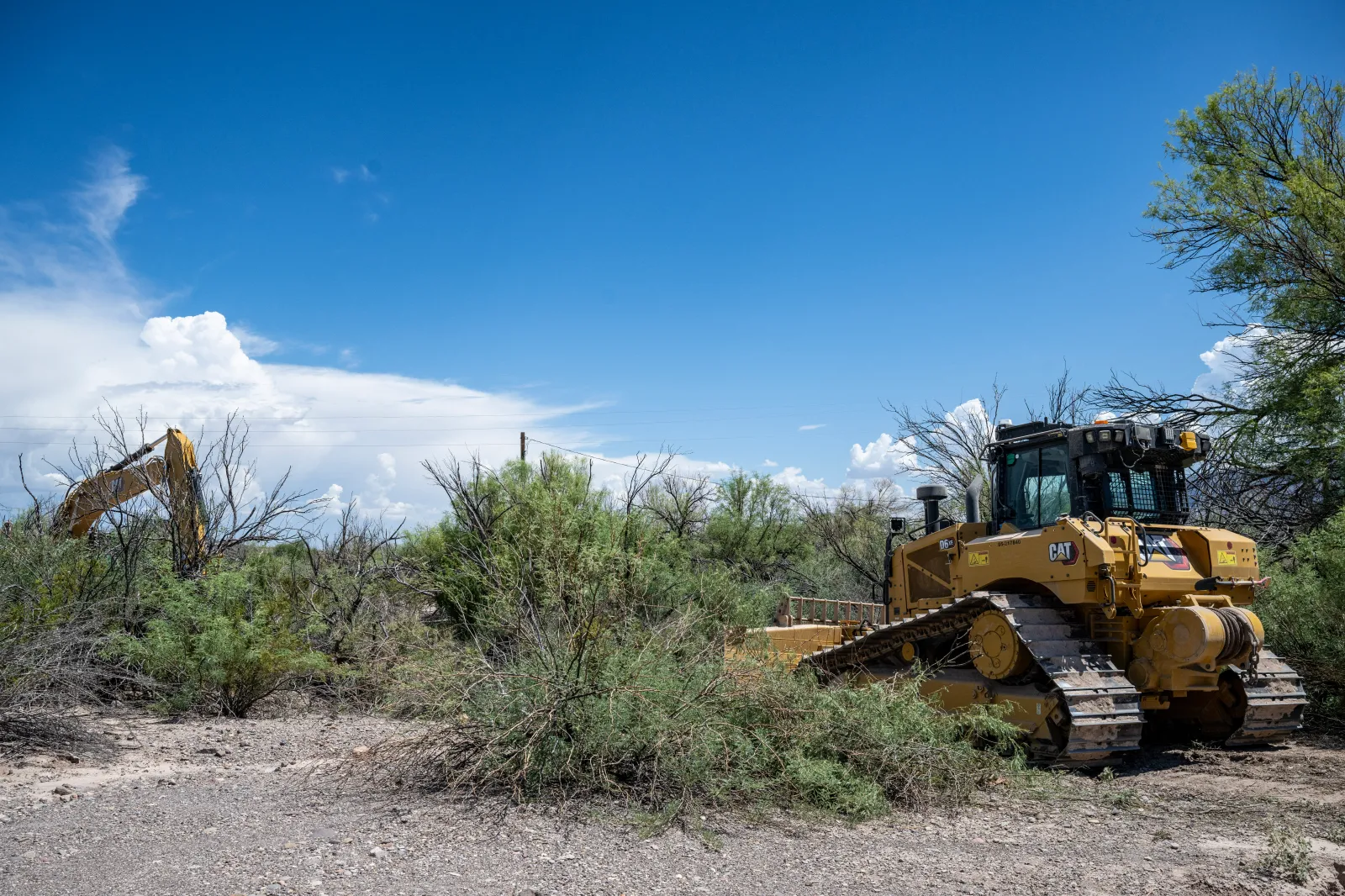
Clara Bensen, board member with Conserve Big Bend and director of communications for the No Big Bend Wall initiative, told Newsweek: "A massive man camp and laydown site about 30 minutes north of the park has rows of bulldozers parked and waiting. We've seen steady construction mobilization. It's obvious they plan to begin construction again.
Read More on News
"That being said, midterms are four weeks out, and this is a very unpopular move in much of Texas. The DHS may try to delay more bad PR until we see where politics land in November.
"It's devastating. So many people have a deep personal connection to this landscape—and that includes people who have deep roots in this region, newer residents, and folks who have been visiting their whole life. Watching it get torn up for no good reason is maddening. Because the local economy depends on tourism and farmers and ranchers depend on river access, the destruction also endangers many livelihoods."
For Big Bend 4, CBP is considering changes that would "reduce its scope and avoid or minimize potential impacts" after receiving input from the National Park Service and other stakeholders, according to the government's September 29 filing in Friends of the Ruidosa Church v. Mullin.
The filing says ground-disturbing activity will not begin immediately in the Big Bend 4 project area, either because the pause has expired or once a revised project is approved. The government said several additional weeks would likely be needed for contract administration, equipment and personnel to remobilize and other planning.
...
Conservation groups challenging the administration's plans are due back in federal court Friday, where several plaintiffs are seeking a preliminary injunction to halt construction.
Bob Krumenaker, chair of Keep Big Bend Wild and superintendent of Big Bend National Park from 2018 to 2023, told Newsweek that whether a scaled-back project addresses conservation concerns "depends entirely on what they will do."
He said the group would not object to CBP relying on existing roads and technology similar to what is already used in the park. "If it’s a significantly scaled back project and if they truly take into account stakeholder views…it might not be a big problem," Krumenaker said. "But they've not solicited public input, and they've done nothing to earn our trust."
CBP told Newsweek that it had not lifted the pause on border wall construction, with a spokesperson saying, "CBP is close to finalizing its path forward and has been engaging with impacted stakeholders."
The spokesperson said CBP had temporarily paused design and survey work so that leadership could conduct site visits and meet locals.
Newsweek also contacted DHS for comment via email.
Project Could Be Scaled Back
CBP's original Big Bend 4 proposal called for approximately 17 miles of noncontiguous steel post-and-rail vehicle barriers within and east of Big Bend National Park, along with new and improved patrol roads and detection technology. The proposal contemplated about 205 miles of new or improved patrol roads.
The government now says it is considering revisions to Big Bend 4 based on feedback from the National Park Service and other stakeholders.
Although the Big Bend 4 project area includes portions of Big Bend Ranch State Park, CBP does not plan to construct a barrier inside the state park, according to the September 29 filing. The agency instead anticipates building a road and deploying related technology in parts of that area.
The government said it would provide the court and the parties with an update when a final decision is made and release details through CBP's website and local media.
When CBP announced the Brewster County proposal in June, it said the project was intended to support Border Patrol operations and sought public input on environmental, cultural, commercial and quality-of-life effects. The agency said the project's features could include cameras, utility infrastructure and other detection systems in addition to vehicle barriers and patrol roads.
CBP Commissioner Rodney Scott subsequently announced on August 17 that the agency was pausing construction inside Big Bend National Park while he conducted what he described as an on-the-ground evaluation and met local leaders, community members and other stakeholders.
"While a 30-foot-tall wall is planned for the Sierra Blanca, Presidio, Marfa and Van Horn areas in USBP’s Big Bend Sector, CBP is implementing a border security strategy that leverages advanced technology and the area’s natural terrain in the remaining areas of Big Bend," the CBP spokesperson said. "Cameras, sensors, roads, and limited low-profile vehicle barriers may be deployed in strategic locations to restrict unlawful vehicle access while utilizing existing natural barriers.
"CBP is not planning to construct 30-foot-high barriers in Big Bend National Park, Big Bend Ranch State Park, or the Black Gap Wildlife Management Area. CBP will improve existing public and park roads where it is possible to maintain agent access along the border."

...
Separate 61-Mile Project Moving Forward
According to both September 29 government filings, CBP plans approximately 61 miles of barrier system in Presidio County. It would include a 30-foot bollard-style pedestrian barrier and a road, with cameras, lights, sensors, and other detection technology used where deemed appropriate. Most of the land along that project's proposed alignment is privately owned, the government said.
CBP said it generally obtains rights of access before entering private land for surveys or pre-construction work and acquires an easement or other property interest before construction. The agency said it attempts to accommodate landowner concerns where possible.
However, officials said several property owners have declined to engage with the government or voluntarily provide access. CBP therefore anticipates referring a number of cases to the Justice Department in the coming weeks for possible condemnation proceedings, according to the filings.
Court records show that CBP agreed on August 31 to pause ground-disturbing activity on both projects through September 30 while it conducted additional engagement. According to the filing, CBP held more than 40 meetings or other engagements with public officials, property owners and other stakeholders during that period.
The government argued additional border infrastructure would improve safety and security in the area and asked the court to deny the plaintiffs' request for another status hearing as well as their motion for a temporary restraining order.
Conservationists Promise Court Fight
Conservation groups, meanwhile, say even a reduced project could significantly affect the national park.
The Coalition to Protect America's National Parks and Keep Big Bend Wild called on DHS on September 30 to extend the construction pause.
Emily Thompson, executive director of the Coalition to Protect America’s National Parks, said in a press release, "We are disappointed, and urge the Department of Homeland Security to extend this pause. Continuing with construction of border barriers, roads, and associated infrastructure inside Big Bend National Park will do unprecedented damage to the park."
The groups have raised concerns about wildlife migration, lighting, roads, flooding and the effects of construction on the park's landscape. Those concerns represent the organizations' assessment of the proposed project.
Sheriff Thaddeus Cleveland, a Republican who previously served as a Border Patrol agent in charge in the Big Bend area, told Newsweek he believed the original DHS proposal could be improved. "The Big Bend is unique, and border security here should be driven by the terrain, the threat and the operational needs of the agents on the ground," Cleveland said. "During my years there, our plans for strengthening border security focused on road improvements, technology and additional manpower."
Krumenaker stressed that his objections were not to border security itself. "We do believe in a strong border. This is just not the way to do it," he said.
Krumenaker said there is housing and office space in the park for up to eight Border Patrol agents but that, based on information he had received, only two or three agents are currently stationed there. He questioned the usefulness of additional infrastructure without sufficient personnel to respond to sensor alerts, adding: "I never heard anyone in the Border Patrol when I spent my five years at Big Bend saying we need significantly more infrastructure in order to keep the border secure here."
In June, six former Big Bend superintendents and a former deputy superintendent wrote to DHS urging officials to limit physical barriers and new roads inside the park. They proposed alternatives such as relying on existing roads and upgrading surveillance technology. The officials said border security and conservation need not be in conflict.
DHS and CBP have maintained that border infrastructure is needed for security and have said they are considering stakeholder concerns.
CBP expects to make a final decision on the revised scope during the first week of October, according to the filing.
Update 10/1/26, 5:27 p.m. ET: This article was updated with comment from CBP.
Contact Newsweek editors on this story: Matthew Cannon and James Debens
View 0 Comments
Submit Correction
View Editorial & AI Guidelines