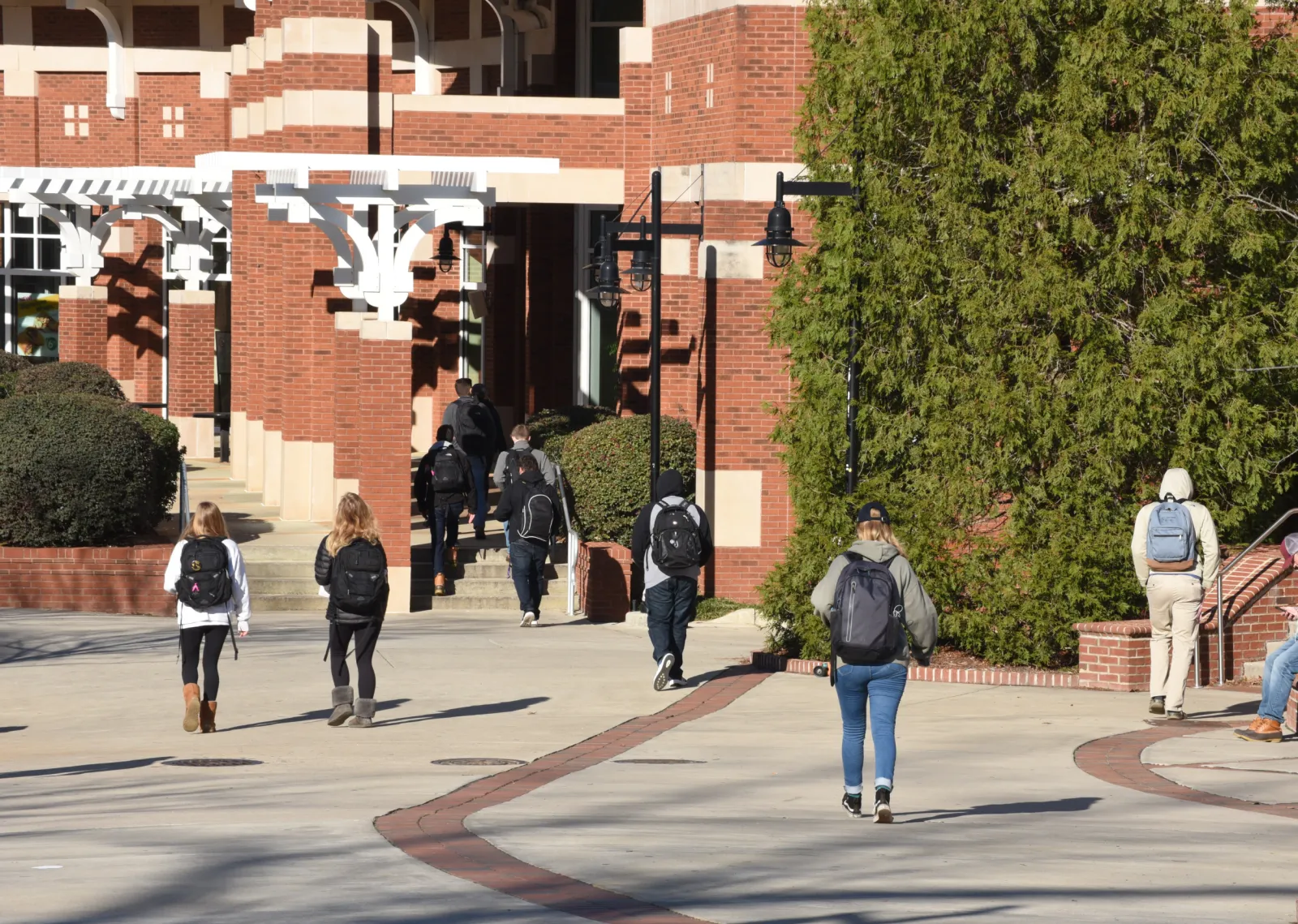
Sharkshock/College students

By Peter Marber
CIO for Emerging Markets, Aperture Investors
Share
Newsweek is a Trust Project member
See more of our trusted coverage when you search.Prefer Newsweek on Googleto see more of our trusted coverage when you search.
This is the time when many annual college rankings are updated, and many parents and students pore over them as they consider college application lists. It's also when many employers and talent professionals begin their recruiting season for college graduates in the spring of 2024.
It's astonishing how intertwined the college admissions and job recruiting processes have become in America. Just as many students anxiously focus on attending the top 50 or 100 ranked schools out of 4,000+ in the U.S., recruiters, too, often limit hiring to a small sliver of possible institutions. But in this bustling marketplace of schools and ratings, it's critical to evaluate if these rankings truly reflect the diverse spectrum of academic excellence, student backgrounds, and professional preparation in America.
Read More on Experts
The Flawed Obsession with Rankings and Prestige
Rankings have been a central theme in the college admissions process for decades, acting as magnets for student talent. But rankings have slanted quietly towards wealthy, elite institutions — institutions that also favor wealthier applicants who can better prepare for SATs and other standardized tests. There are also many who believe the U.S. college system is rigged in favor of the already rich, citing the Varsity Blues scandal and multi-decade alumni legacy admissions policies. Many critics have also highlighted the skyrocketing cost of higher education tied to boosting their ratings and rankings, which has led to a $1+ trillion student debt problem in America.
What we're beginning to see is that rankings are self-perpetuating and often overshadow the academic robustness and socio-economic inclusivity of other deserving institutions. They also form oligopolies of prestige schools that dominate hiring in many lucrative professions, as Lauren Rivera has documented. Indeed, under the status quo of most ranking systems, prestigious, affluent schools continue to thrive, while equally competent but lesser-known schools suffer from lack of visibility.
In September, U.S. News & World Report — the 800-pound gorilla in the college ratings game — released its annual rankings list with what the magazine called "the most significant methodological change in the rankings' history." The new approach now emphasizes social mobility and employment outcomes for graduating students — converging essentially with methodologies of other rankings such as those of Forbes and Washington Monthly.
Several of these "outcomes" focused rankings look at earnings power from Payscale.com in which many public universities, U.S. service and military academies such as West Point, and lesser-known private schools generate surprisingly high lifetime earnings than many more prestigious, better-ranked institutions. Moreover, there is growing evidence that certain post-high school certificate programs also generate surprisingly robust lifetime employment and income outcomes with a far lower investment in time and tuition than many college degrees.
What the data suggest is that looking at graduates from a wider range of schools and certificate programs, many that may not be perceived as prestigious, may actually be great sources for talented long-term employees. It also suggests that many jobs can be filled by graduates of certificate programs which are cheaper to earn and don't saddle them with debt.
Breaking the Prestige Logjam: Time for New Academies?
Humans are somewhat hardwired to crave prestige and improve the lives of their children; that seems to be a fact of life. In the case of higher education, maybe it's time to break the logjam of those schools at the top and start adding some new prestigious public institutions with civic missions — similar to U.S. service academies. According to Payscale, the five academies at West Point, Annapolis, Colorado Springs, Kings Point, and New London were all in the top 28 schools in 20-year employment returns; and four remarkably were in the top eight, ahead of all eight Ivy league schools. In this vein, why not start a new "United States Institute of Technology" or "United States School of Design" to rival older, prestigious schools?
The U.S. service academies have been highly respected, well-ranked, and among the best schools for social mobility and achieving the American Dream. By establishing new universities that emulate the prestige of Ivy League schools, while incorporating the structured, civic-oriented ethos of service academies, we can not only revitalize higher education but also promote social mobility and repair a tarnished image of a system that often seems rigged.
Taking a leaf out of the service academy playbook, these new schools could emphasize disciplines that are crucial to the country's future. This could range from cybersecurity, sustainable urban development, public health, and innovative green technologies to interdisciplinary studies that mesh technology with humanities, something I advocated in my latest book with Daniel Araya, "Augmented Education in the Global Age: Artificial Intelligence and the Future of Learning and Work."
Similar to how the academies at West Point and Annapolis are sources of national pride, these new institutions would symbolize America's commitment to exceptional education, economic competitiveness, and civic responsibility. Outside of the U.S., higher education is comprised of nearly 100% public institutions, and there have been similar strategic pushes for creating new supercharged schools in many countries including China, South Korea, France, and Saudi Arabia, among others.
In the meantime, it's time to broaden our recruiting horizons as employers. America's higher education landscape is rich and varied, teeming with institutions that offer outstanding teaching, research, social mobility, and public service. These colleges, sometimes eclipsed by traditional elites, deserve equal attention during recruitment season. As the dynamics of college rankings continue to evolve, let's think outside the box and expand our understanding and appreciation of what constitutes meaningful higher education, student success, and job preparation.
Submit Correction
View Editorial & AI Guidelines