
By Aristos Georgiou
Science and Health Reporter
0
Share
Newsweek is a Trust Project member
See more of our trusted coverage when you search.Prefer Newsweek on Googleto see more of our trusted coverage when you search.
The Perseid meteor shower is one of the year's most spectacular skygazing events and a perfect opportunity for astrophotographers to test their skills.
Photographers from all over the world have captured stunning images of this year's shower—the result of tiny pieces of debris originating from the comet Swift-Tuttle burning up in the Earth's atmosphere at around 130,000 miles per hour.
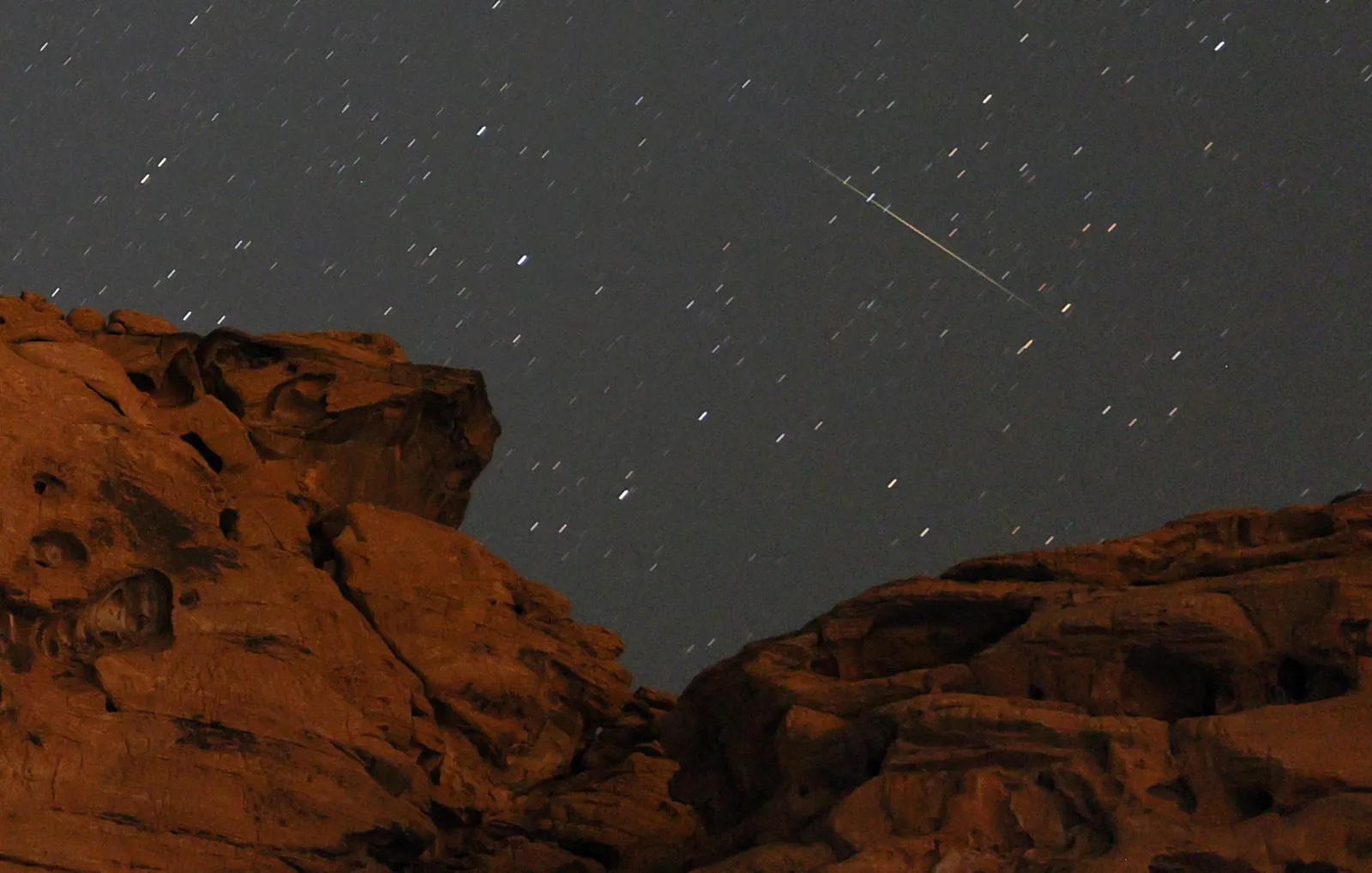
In the image below captured by astrophotographer Ethan Miller, a Perseid meteor can be seen streaking above a sandstone outcropping at Redstone in the Pinto Valley wilderness area—located in Nevada's Lake Mead National Recreation Area—on August 12.
Read More
Strange ‘Dancing Ghosts’ Created by Black Holes Found 1B Light-Years Away4 min read

Amazing NASA Video Shows Venus Glowing as Orbiter Zips Past3 min read

NASA Is Recruiting for a Mars Simulation Mission: Here’s How to Apply4 min read

...
The Perseid meteor shower is active every year from around mid-July to late August, with peak activity usually occurring between August 9 and 14. In 2021, the peak night of activity came on August 11-12.
The shower is primarily visible in the Northern Hemisphere because its radiant—or the point in the sky where Perseid meteors appear to originate from—lies in the constellation Perseus.
The stunning image of Perseid meteors below was created by photographer Samuel de Roman. It was produced by combining multiple exposures of the meteors above Porma Reservoir in Spain on August 5—several days before the peak night.

...
According to the American Meteor Society, the Perseid meteor shower can produce between 50 and 75 visible meteors per hour at its peak, if the observer is watching from an area with clear skies and low light pollution.
This year, the moon was only 13 percent full on the peak night and set around 10 p.m., meaning viewing conditions were as "near to perfect as can be" as skies were dark until dawn, according to Sky & Telescope magazine.
The image below, snapped by Menahem Kahana, shows a Perseid meteor streaking above the sky above Israel's Negev desert near the city of Mitzpe Ramon on August 12, with the majestic Milky Way visible in the background.

...
The Perseids occur every year when the Earth passes through streams of debris left behind by Swift-Tuttle in its 133-year-long orbit around the sun.
Meteors, colloquially known as "shooting stars," are the glowing streaks in the sky that we see when tiny pieces of space debris (meteoroids) enter and burn up in the Earth's atmosphere. The meteoroids that produce most meteors that we see can be rocky or metallic and tend to range from around the size of a grain of sand to roughly that of a pea.

...
View 0 Comments
Submit Correction
View Editorial & AI Guidelines