...

By Ian Randall
Deputy Science Editor
0
Share
Newsweek is a Trust Project member
See more of our trusted coverage when you search.Prefer Newsweek on Googleto see more of our trusted coverage when you search.
To quote Ian Malcolm, played by Jeff Goldblum in Jurassic Park, "Life finds a way"—and that's certainly the case for the newest member of a Louisiana's aquarium who was born with no male involvement.
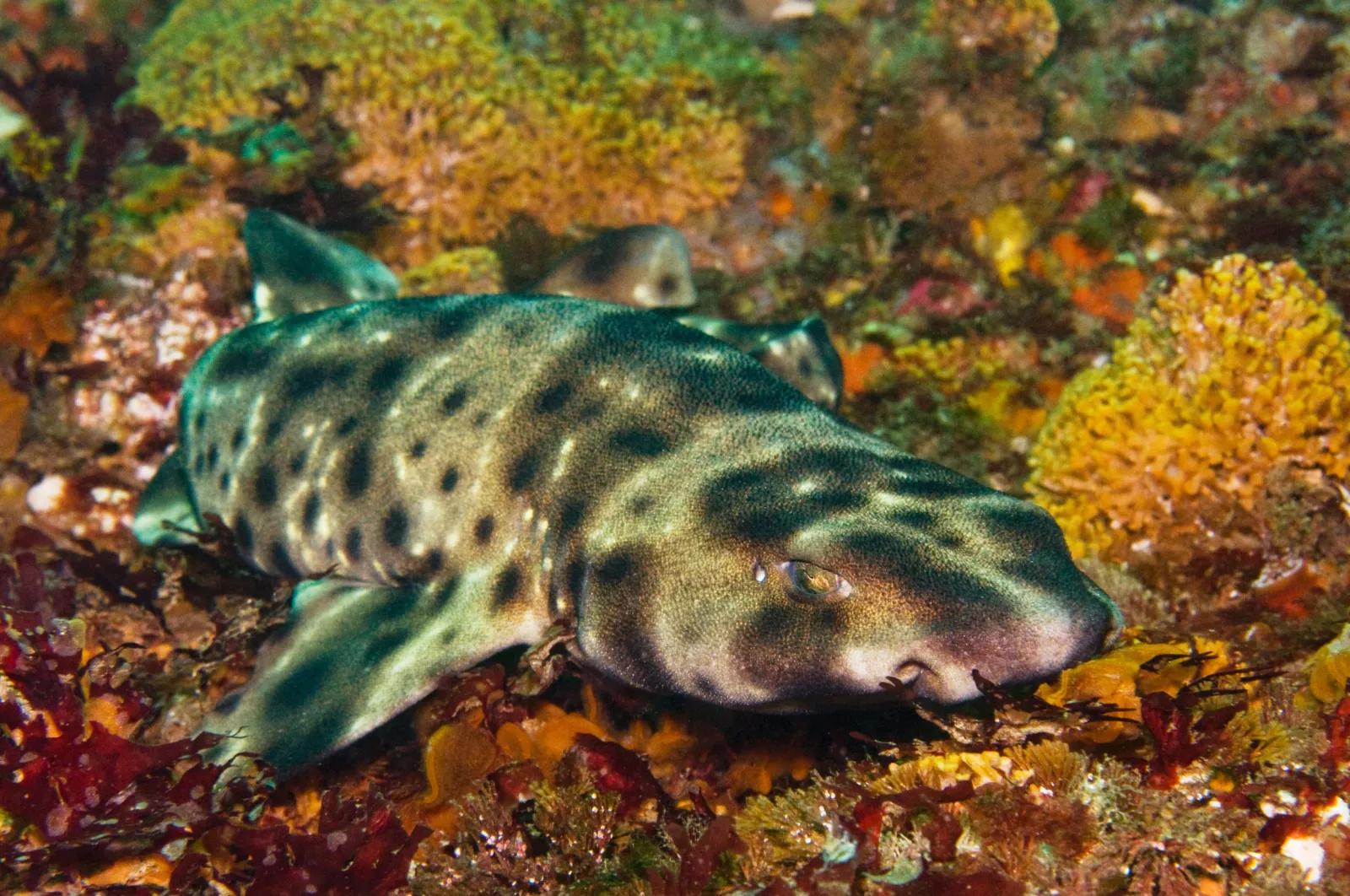
The swell shark pup, "Yoko", hatched in January from an egg lain in a tank occupied only by two female sharks, neither of whom had encountered a male in more than three years.
Yoko's health is currently being closely monitored by staff at the Shreveport Aquarium, so for the present they are not available for visitors to see.
Read More on Science
"This situation is incredible and shows the resilience of this species," Greg Barrick, the aquarium's curator of live animals, said in a statement.
"It really proves that life... uh... finds a way," he added.
Newsweek has contacted Shreveport Aquarium by email for additional comment.
...
Aquarium staff have two hypotheses to explain the mysterious circumstances around young Yoko's birth.
One possibility is that this represents a case of "parthenogenesis", a rare form of asexual reproduction exhibited in sharks that lets them give birth without needing to mate.
When eggs are produced by meiosis—the cell division process that leaves the egg with half of the parent organism's genetic information—small cells known as "polar bodies" are also created, also with half of the female's DNA.
Ordinarily, polar bodies are just reabsorbed. In the case of parthenogenesis, however, a polar body ends up basically being used to fertilize an egg.
Sharks are not the only species known to undergo parthenogenesis; the phenomenon has also been recorded in species of bird, fish, lizard and snake.
Alternatively, it could be that Yoko's mother mated with a male years ago, but the fertilization process was delayed.
"We are very excited in the coming months to confirm whether this was indeed a case of parthenogenesis, or if it was delayed fertilization," Barrick said.
Once Yoko has reached a large enough size to safely draw blood from, the aquarium will analyse the pup's DNA to determine how it was born.
In the meantime, a close watch is being kept on the aquarium's special charge. Sadly, young sharks born in such unusual circumstances often face significant developmental challenges.
"Should Yoko's time with us be brief, it will still leave an unforgettable legacy, contributing invaluable insights to the study of shark reproduction and conservation efforts," Shreveport Aquarium said in a statement.
In the wild, swell sharks are native to the coastal waters of the eastern Pacific. They get their name from their ability to swell their bodies up with either air or water, a trick which they use to deter predators.
Do you have a tip on a science story that Newsweek should be covering? Do you have a question about sharks? Let us know via science@newsweek.com.
View 0 Comments
Submit Correction
View Editorial & AI Guidelines