10
Loading video...

By Alyce Collins
Senior Reporter
0
Share
Newsweek is a Trust Project member
See more of our trusted coverage when you search.Prefer Newsweek on Googleto see more of our trusted coverage when you search.
A woman who was monitored during her pregnancy because of how much her baby was moving has left the internet in hysterics after revealing that he's still the same now.
When Ellen McBride from New York was around 18 weeks pregnant with her son, Myles, she felt him start to kick. This itself wasn't out of the ordinary, as the American Pregnancy Association (APA) suggests that most pregnant women will feel their baby kick sometime between 18 and 25 weeks.
What was unusual however was how much Myles was moving around, as McBride told Newsweek that once the kicks started, "they didn't stop."
Read More on Family & Parenting
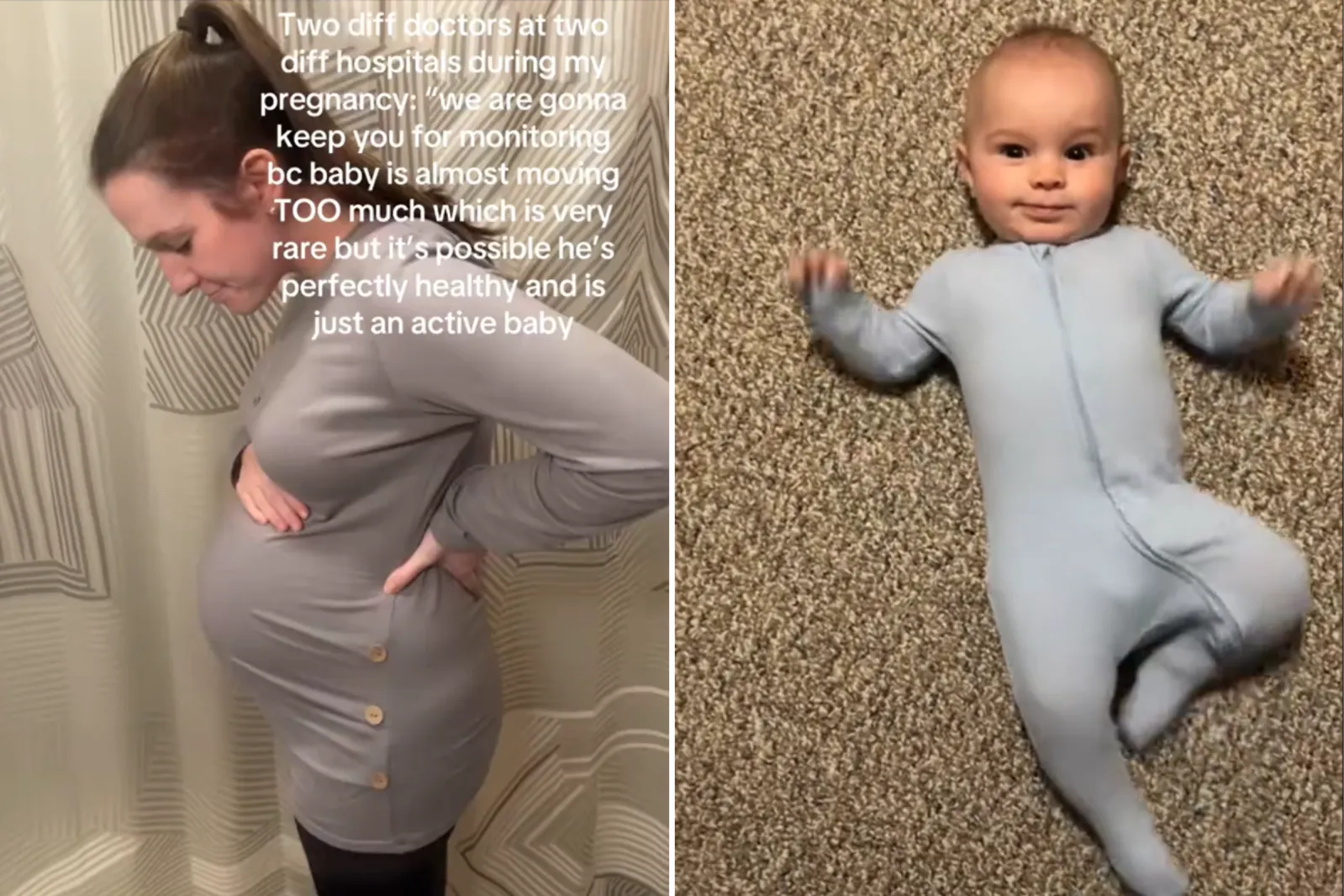
Indeed, McBride, who already has a 2-year-old daughter, had to be monitored in hospital because of how active he was throughout the pregnancy. As a result of how much he kicked and moved, Myles would develop a high heart rate.
...
"When I was pregnant, I never had to do kick counts because he would always exceed the minimum number of kicks that's considered healthy," McBride said.
"I had appointments at two hospitals, and he was moving so much that they had to keep me longer for more monitoring. They weren't worried about the movements themselves, but Myles' heart rate was really high because he never stopped moving," she continued. "They waited until he finally calmed down or fell asleep to make sure his heart rate returned to a normal range."
While every baby is different, expectant moms are encouraged to count how long it takes to feel 10 kicks, flutters or rolls. The APA suggests they want to feel at least 10 within a 2-hour time frame, ideally.
Fortunately, Myles was born perfectly healthy, and the now 8-month-old is still moving around incessantly. Given how active he was during the pregnancy, it came as no surprise to see that he continued this even after birth. If he's awake, his legs are sure to be moving.
When Myles was around 2 months old, his kicks started to become more frequent and powerful. McBride joked that they just became "more and more crazy" as he developed.
McBride told Newsweek: "He makes me laugh so hard with his crazy wiggles and happy screams. He mostly only does those intense butterfly kicks when he's happy or excited, which is very often. He even does it when he's being held.
"His little personality was so evident far before he was born. The tiny human was clearly his own little person from the start as no one has ever called me active."
The mom-of-two shared a hilarious video on TikTok (@mcbride_and_co), which showed footage of her baby bump moving around as Myles wiggled constantly, before comparing it to footage of the dancing baby months later.
The clip has left internet users in hysterics, leading to more than 1.9 million views and 338,400 likes on TikTok in a matter of days. McBride has been astounded by the online response, as she never imagined that her baby's love of moving would spread so much joy online.
McBride continued: "I am amazed that so many people liked the video of my silly boy. I, of course, thought it was hilarious, but I had no idea so many others would too.
"My lifelong dream was always to be a mom, but I had to seek answers from specialist doctors and address fertility problems to have my little miracles, who are so incredibly worth it. Children are such a blessing, and I cannot imagine my life without them."
Since the video of Myles went viral, plenty of social media users have lauded his constant moving and kicking, leading to more than 1,800 comments so far.
One comment reads: "He said just you wait [until] they release me."
Another TikToker wrote: "He's been PRACTICING."
A different person joked: "Baby is making snow angels on every surface."
Is there a health issue that's worrying you? Let us know via health@newsweek.com. We can ask experts for advice, and your story could be featured on Newsweek.
View 0 Comments
Submit Correction
View Editorial & AI Guidelines