...

By Chloe Mayer
Reporter
0
Share
Newsweek is a Trust Project member
See more of our trusted coverage when you search.Prefer Newsweek on Googleto see more of our trusted coverage when you search.
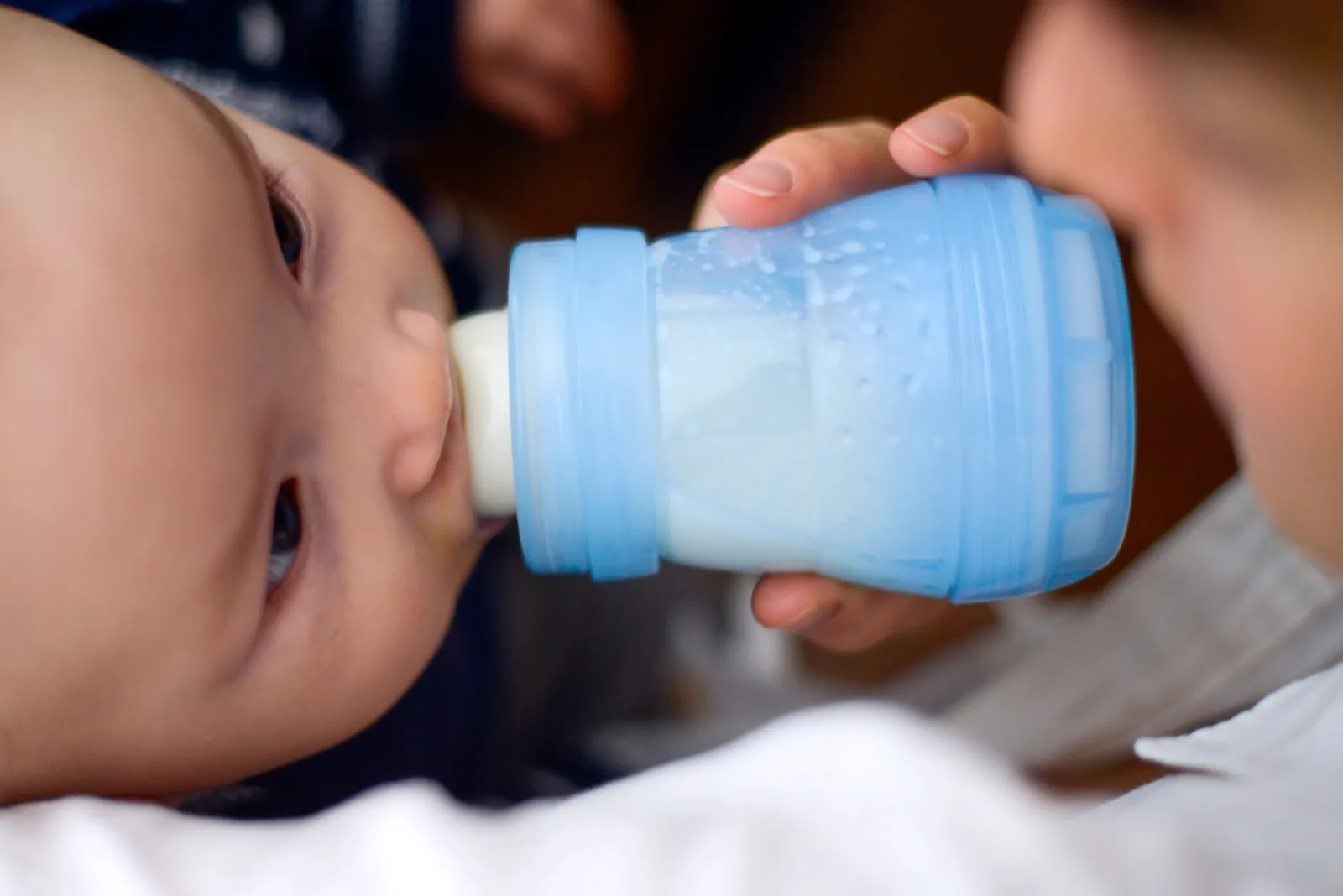
A milk bank recalled more than 100 bottles of breast milk amid fears they could have been contaminated with a "foreign material."
A total of 136 bottles of pasteurized human milk were recalled by the Minnesota Milk Bank For Babies in December, according to the Food and Drug Administration (FDA). They were only distributed within Minnesota.
The nature and potential source of contamination was not specified in the FDA's report, but the agency subsequently issued a Class II risk classification for the products, out of three possible risk levels.
Read More
Toddlers Get Half Their Calories From Ultra-Processed Food, Says Study7 min read

Mom Having ‘Anxiety Attack’ While Traveling With Baby Saved by Stranger4 min read

Scientists Reveal Hidden Factor That May Boost Child’s Brain Development3 min read

Newsweek contacted the Minnesota Milk Bank For Babies, which said a small, unidentified object was spotted in the milk as a baby was being fed at a hospital. Because it was unclear "what the object was or where it originated" the milk bank voluntarily recalled the rest of that batch "out of an abundance of caution," the organization said. The baby was unharmed.
...
Why It Matters
Babies are particularly vulnerable and should never be exposed to unsterilized products, choking hazards or foreign material.
The Minnesota Milk Bank For Babies states on its website that it was set up to "improve infant health outcomes by ensuring that medically vulnerable babies—in Minnesota and the Upper Midwest—have access to safely pasteurized life-giving human donor milk when mother's milk is unavailable or in low supply."
A Class II risk classification is issued by the FDA for products that "may cause temporary or medically reversible adverse health consequences or where the probability of serious adverse health consequences is remote."
What To Know
The FDA said the product affected was pasteurized donor human milk, in volumes of four fl. oz. / 120 ml per bottle, and 20 kcal/oz. The product was due to expire on January 1, 2025.
The recall was initiated voluntarily by the milk bank on December 3, and the FDA later issued its Class II risk classification on Thursday, January 2.
There are three FDA risk classifications in total, with Class I being the most severe in which there is a reasonable probability a "violative product will cause serious adverse health consequences or death." Meanwhile, Class III represents a situation in which the "use of, or exposure to, a violative product is not likely to cause adverse health consequences."
What People Are Saying
Linda H Dech, executive director of Minnesota Milk Bank for Babies, told Newsweek: "An unidentified foreign body was discovered in pasteurized donor human milk as it was being fed to a baby in a feeding device at the hospital. It is unknown whether the object was introduced during processing of the milk at the facility, or if it was introduced after being transferred into a feeding device at the hospital.
"The very small object was examined by nursing staff, discarded, and reported to hospital unit leadership who contacted the milk bank. Not knowing what the object was or where it originated, out of an abundance of caution, the milk bank decided to voluntarily recall the remaining bottles of unused milk from that batch. The remaining bottles were examined closely at the milk bank and no objects were found. No harm was reported by any recipient of the milk."
She added that donated milk is carefully checked "multiple times" during the various "logging and heat processing" stages, and the milk "must show negative microbial growth before dispensing."
Dech noted the organization is an accredited member of the Human Milk Banking Association of North America (HMBANA), and said: "There has never been an incident of disease transmission or any negative outcome due to pasteurized donor human milk from a HMBANA member bank. Regulatory Standards ensure that safety is the number one priority during all phases of donor screening and milk processing."
What Happens Next
The recall has been "completed," according to the FDA.
If you think you have experienced an adverse reaction to a food, including an ingredient, you can report it to the FDA on its website.
Do you have a story Newsweek should be covering? Do you have any questions about this story? Contact LiveNews@newsweek.com.
Update 1/7/25, 2:36 a.m. ET: This story was updated with comment from Minnesota Milk Bank for Babies.
View 0 Comments
Submit Correction
View Editorial & AI Guidelines