
...


By Brendan Cole and Joe Edwards
0
Share
Newsweek is a Trust Project member
See more of our trusted coverage when you search.Prefer Newsweek on Googleto see more of our trusted coverage when you search.
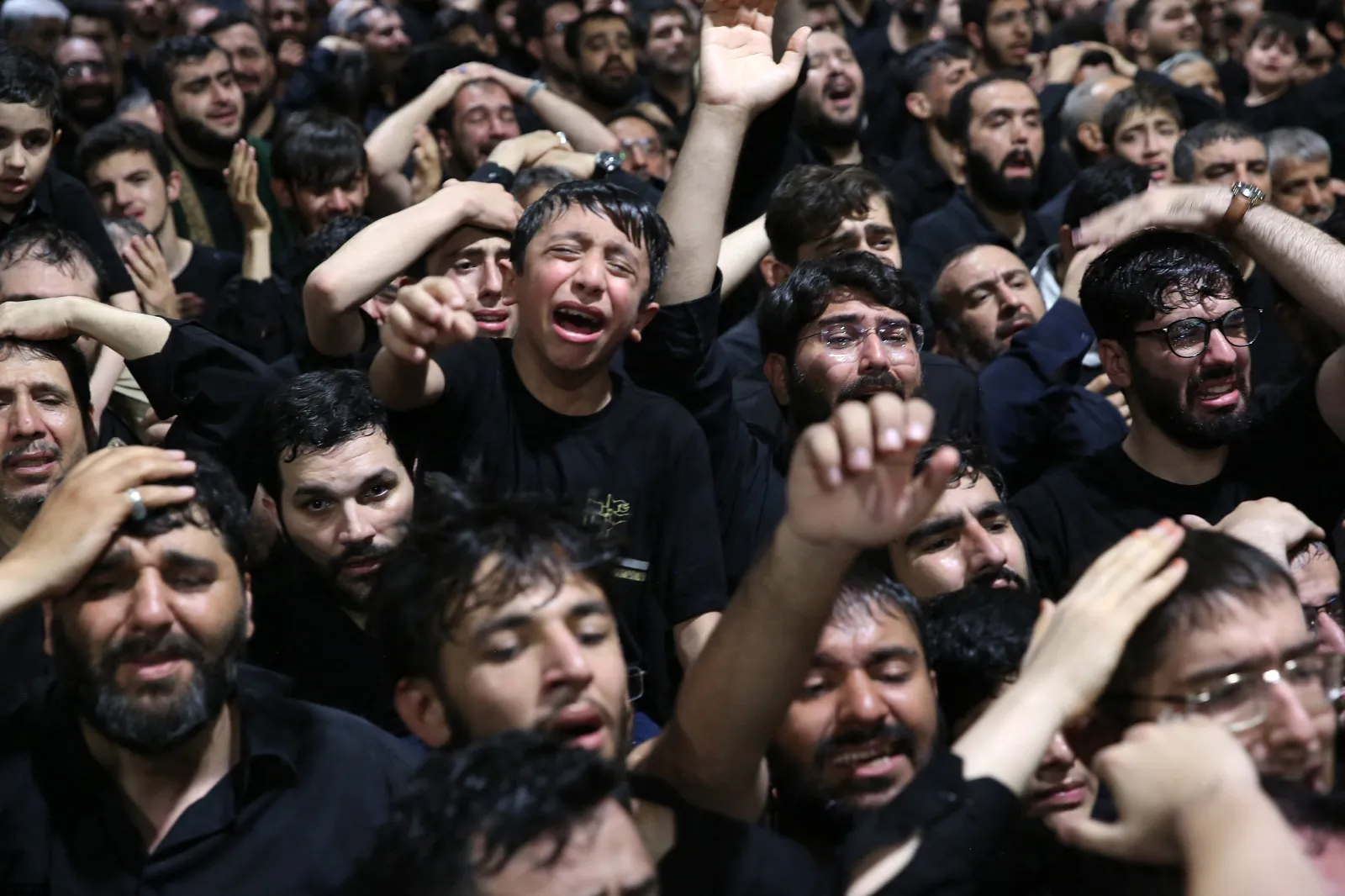
The coffin of former Iranian Supreme Leader Ali Khamenei has been brought to Tehran's Imam Khomeini Grand Mosalla ahead of several days of ceremonies across Iran and Iraq to mourn the man who led the Islamic Republic since 1989.
The 86-year-old was killed during joint Israeli and U.S. strikes on Tehran on February 28 that started the Iran War. His burial was initially scheduled for March but postponed as the conflict continued and expanded across the region.
Khamenei was succeeded by his son, Mojtaba Khamenei, who has not been seen in public since. His father’s funeral could attract up to 20 million mourners from across Iran and is likely to be used for propaganda purposes by the ruling regime.
Read More
Iran Risks New War Front as Kurdish Attacks Rise Amid US Ceasefire9 min read

“The funeral will be used for a staged rallying call for the ruling regime in the same spirit that they have been holding nighttime rallies around the country since January,” said Nazenin Ansari, managing editor of Kayhan London, a Persian-language digital newspaper and Kayhan Life, an English-language digital publication.
“It will be a staged mobilization dressed up as national unity," she told Newsweek.

...
Mourning Is Steeped in Symbolism
The timing of the ceremonies is significant, as it overlaps with the 250th U.S. Independence Day celebrations. They also take place during the Islamic month of Muharram. This is deeply associated in Shiite Islam with mourning, betrayal, and martyrdom—in particular the 7th century martyrdom of Imam Hussein, a Shia saint from whom Khamenei traces his lineage.
Emphasizing this link was the red flag that once flew over Hussein’s shrine being draped in Khamenei’s casket. His X account said that the red flag was a "symbol of resistance, sacrifice, and unwavering devotion to truth."
In Islam, burials are meant to be conducted within a day of death but because of the dangers posed of holding such an event during a war, it was postponed until after the framework deal to end the war was agreed last month.
“Certainly the funeral had been delayed to now because of security concerns. They would not have held it, if they had not received assurances,” said Ansari from Kayhan London.
She said while the plans were announced when they entered into talks with the U.S, there are concerns about internal issues arising from the people or other aggrieved anti-regime entities. “We have witnessed a rise in protests by students and laborers in the past few weeks. As such they have turned to the Afghan Fatemiyoun forces and the Popular Mobilization Forces,” Ansari said. “Many have been based in Iran since the January uprisings.”
Order of Events
The former Supreme Leader will be commemorated over several days stretching across five cities in both Iran and Iraq.
His coffin arrived in Tehran's Imam Khomeini Grand Mosalla on Friday where he is lying in state. On Saturday at 6 a.m. local time, his body will be placed on an elevated stage inside the mosque.
The Islamic Republic News Agency (IRNA) reported that farewell ceremonies will be held on Friday and Saturday. These dates correspond to the 13th and 14th of Tir in the Persian calendar, or the 19th and 20th of the lunar month of Muharram, it added.
There will be a funeral procession in Tehran on Saturday followed by a second procession on Sunday in the holy city of Qom, the IRNA said, citing the republic’s Commemoration Committee for the Bloody Ascension of the Martyred Militant Imam.
The final funeral ritual will take place next Thursday in the Holy City of Mashhad, added the IRNA, which noted how this coincided with the eve of the martyrdom anniversary of Imam Sajjad, also known as Zayn al-Abidin, the fourth Shia imam and a great-grandson of the Prophet Muhammad.
"The late leader will be laid to rest at the holy shrine of Imam Reza, the eighth Shia imam, in Mashhad," the agency added.
The committee has extended an invitation to Iranian citizens, "free people of the world, followers of the Islamic school and all interested individuals to attend the ceremonies."
Foreign Dignitaries Attend
Religious leaders and foreign dignitaries walked up to Khamenei’s casket to pay their respects to the background of a military band playing and prayers being sung. Among the Iranian officials were parliament speaker Mohammad Bagher Qalibaf, Foreign Minister Abbas Araghchi and President Masoud Pezeshkian.
Images from Iranian state media showed General Ahmad Vahidi, a key figure in Tehran’s tough stance during talks on ending the war with the U.S., alongside the casket during a smaller service on Thursday night. He had not been seen publicly since February 8, 20 days before the war began.
Iranian state-linked broadcaster IRIB said there would be representatives from more than 100 countries, although not all countries have publicly identified who they would send.
The Kremlin confirmed that former Russian president Dmitri Medvedev would be Russia’s representative. Moscow and Tehran have close ties, with the latter providing Russia with drone technology used in the war in Ukraine.
Pakistan's Prime Minister Shehbaz Sharif, Armenia's Prime Minister Nikol Pashinyan, Tajik President Emomali Rahmon and Turkish Vice President Cevdet Yılmaz will also attend.
Video on social media showed delegations arriving in Tehran, including Turkmenistan’s president Serdar Berdimuhamedow, Iraqi President Nezar Amidi, Uzbek Parliament Speaker Nuriddin Ismoilov and Georgia's President Mikheil Kavelashvili.
From China, the senior lawmaker He Wei, vice chairman of China’s top lawmaking body, the Standing Committee of the National People’s Congress, will attend.

...
Airports Closed, Cars Banned, 50 Million Loaves of Bread
Iranian media has been giving the funeral blanket coverage, broadcasting tribute songs and documentaries on the late Ayatollah's life which CNN reported had superseded news of talks with the U.S. over the memorandum of understanding that ended the war and reopened the Strait of Hormuz.
Tehran has framed the event as an act of defiance against the U.S. and Israel. Iranian President Masoud Pezeshkian said the death of the former Ayatollah marked the beginning of a new chapter of national unity.
Mohammad Bagher Ghalibaf, the parliamentary speaker leading Iran’s talks with the U.S., said in a statement "we must rise and raise the cry for the nation’s blood to the world."
More than 6,000 overhead water sprinklers have been set in the square where Tehran's Imam Khomeini Grand Mosalla is located, to keep the crowds cool. Tehran’s airports will be shut over the days of the ceremonies, and private vehicles will be banned in Tehran where 700 parking areas will be freed up to make room for the mourners.
Iranian media reported that 50 million pieces of bread will be baked to feed the mourners, with 16 mobile bakeries deployed in the capital.
Tehran and other major cities were ready for incoming mourners, according to the Red Crescent. Authorities have mobilized 2,500 ambulances, 21 helicopters, 100 drones, and thousands of rescue personnel for Tehran and other major cities.
Meanwhile, over two dozen hospitals, 500,000 liters of IV fluids and 20,000 classrooms were on standby.
A national campaign has called on people to volunteer their homes to host mourners visiting Tehran, Mashhad and Qom. Mosques, sports halls, parks, and cultural centers in Tehran have also been readied for the funeral ceremony.

...
Will Ayatollah’s Successor Appear?
Mojtaba Khameini was appointed successor to the late Ayatollah but he has not been seen in public since the February strike that killed his father and reportedly left him wounded.
Given that he is yet to appear in public as Supreme Leader, the funeral will be closely watched for any sign of him.
Ali Akbar Pourjamshidian, head of Iran's national funeral and farewell committee for the leader of the Islamic Revolution, said his attendance was outside the authority of the organizing committee.
His absence from several events linked to members of his family has sparked speculation about his wellbeing. Iranian authorities have not explained his absence, and claims regarding his medical condition have not been independently verified.
...
View 0 Comments
Submit Correction
View Editorial & AI Guidelines