...

By Daniel Orton
News Editor
0
Share
Newsweek is a Trust Project member
See more of our trusted coverage when you search.Prefer Newsweek on Googleto see more of our trusted coverage when you search.
A far-right Australian lawmaker sparked outrage after appearing in Parliament clad in a burka, drawing immediate accusations of racism and Islamophobia from across the political spectrum.
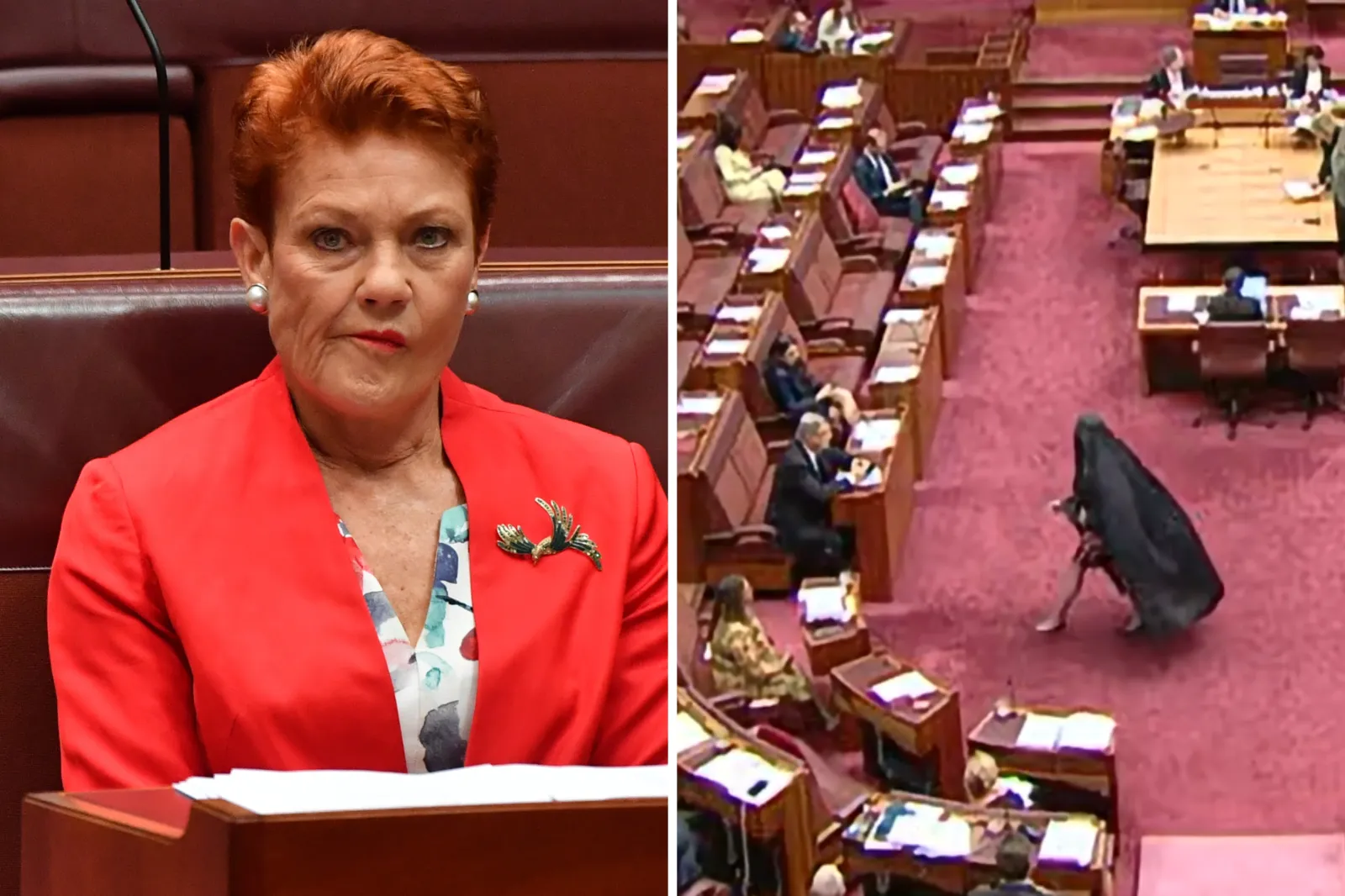
Senator Pauline Hanson, the leader of the right-wing populist One Nation party, entered the Australian Senate on Monday wearing the full-body covering traditionally worn by some Muslim women. The stunt came after she was blocked from introducing a bill seeking to ban burkas and similar full-face coverings in public spaces. Proceedings were suspended when Hanson refused to remove the garment, leading to rebukes from fellow senators and government leaders.
"This is a racist senator, displaying blatant racism," said Mehreen Faruqi, Australia's first female Muslim senator.
Read More on World
"She is disrespecting a faith," said Independent Senator Fatima Payman, who wears a hijab.
"It is the middle finger to people of faith," added Greens leader Senator Larissa Waters.
This marks the second time Hanson has worn a burka in Parliament, reprising a tactic first employed in 2017 to push for similar legislation.
Why It Matters
The incident reignited debate over Islamophobia in Australian politics and raised concerns about the normalization of anti-Muslim sentiment. Hanson's party doubled its Senate representation in the May 2025 federal election, signaling a rise in support for anti-immigration and nationalist platforms.
What To Know
The protest unfolded after Hanson's proposal for a nationwide ban on the burka was denied floor time in the Senate. Hanson, who represents Queensland, wore the burka as she entered the chamber, prompting immediate backlash. There were shouts of "shame on you" and "get her out," as the Senate descended into chaos at the "highly offensive" stunt.
One senator could be heard to ask Hanson as she took her seat, "Do you have any idea how dangerous you are to this country?" Others accused her of attention seeking.
When Hanson refused to remove the garment, Senate leaders temporarily suspended the session.
Penny Wong, Senate leader for the ruling Labor Party, addressed Hanson directly during the uproar, saying, "Whatever our own beliefs may be, the sort of disrespect that you’re engaging in now is not worthy of a member of the Australian Senate." Wong then moved a formal motion to suspend Hanson, which was supported by senators from both major parties.
Anne Ruston, deputy Senate leader for the opposition coalition, also backed the condemnation.
In a post on X later, Hanson said: "The fact is more than 20 countries around the world have banned the Burqa because they recognize it as a tool that oppresses women, poses a national security risk, encourages radical Islam and threatens social cohesion. If these hypocrites don't want me to wear a burqa, they can always support my ban."
"Let me make it quite clear. I have the utmost respect for people of what faith they may be," Hanson added during an interview with Sky News Australia.
...
Hanson's Burka Ban Proposal
The proposed legislation, titled "Ban the Burqa and Other Full Face Coverings in Public Places," seeks to prohibit the wearing of garments that fully cover the face, including the burka, in public spaces across Australia. Hanson argues the measure is aimed at improving public safety and addressing cultural practices she views as incompatible with Australian values. The bill cites similar restrictions in other countries and frames the ban as a step toward enhancing security and promoting transparency in public life.
Global Context: Burka Bans
Similar measures exist in other countries. In Europe, countries such as France and Belgium were among the first to enact nationwide bans on face‐covering clothing in public places, citing security, identification and societal integration concerns. Other European states such as Austria and Denmark have since adopted similar but often more limited measures in schools, on transport or in government buildings. In some Muslim-majority countries the state has imposed more modest restrictions—for example prohibiting full-face veils in government offices or banning the manufacture/sale of full face coverings—framed in terms of security and identification rather than fully blanket public bans.
What People Are Saying
One Nation leader Senator Pauline Hanson said in a Facebook post: "If the parliament won't ban it, I will display this oppressive, radical, non-religious head garb that risk our national security and the ill treatment of women on the floor of our parliament so that every Australian knows what's at stake. If they don't want me wearing it—ban the burqa."
Labor Senate leader Penny Wong said in the Senate chamber: "All of us in this place have a great privilege in coming into this chamber. We represent in our states, people of every faith, of all backgrounds. And we should do so decently."
Multiculturalism Minister Anne Aly said: "[Women] should be allowed and afforded the bodily autonomy to wear what she wants to wear, whether that's a bikini or a burka."
What Happens Next
The Senate incident has heightened calls for formal censure or disciplinary action against Hanson, though it remains unclear whether any penalties will be imposed. Advocates for religious freedom and multicultural rights are also using the controversy to push for clearer guidelines on decorum and respect in Parliament. Hanson's bill is not expected to advance in the current session, but her protest has ensured that debates over public religious expression will remain a flashpoint in Australian politics.
Update, 11/24/2025, 8 a.m. ET: This article was updated with additional information.
View 0 Comments
Submit Correction
View Editorial & AI Guidelines