...

By Anna Skinner
Associate News Editor
0
Share
Newsweek is a Trust Project member
See more of our trusted coverage when you search.Prefer Newsweek on Googleto see more of our trusted coverage when you search.
Impacts from an atmospheric river will continue trekking east across the U.S. Northwest through Tuesday, National Weather Service (NWS) meteorologists warned on Monday morning.
Why It Matters
Atmospheric rivers are a "long, narrow region in the atmosphere—like rivers in the sky—that transport most of the water vapor outside of the tropics," according to the National Oceanic and Atmospheric Administration (NOAA).
Read More on News
Though the heavy rain and snow associated with such storms can help alleviate drought, it also causes concern for flooding and mudslides. The storms are also known for their strong, damaging winds.
What To Know
In a forecast, the NWS warned of "heavy rain, high elevation mountain snow and strong winds" hitting the Northwestern U.S. and into the Rocky Mountain states on Monday. The weather impacts are associated with an atmospheric river that arrived over the weekend.
...
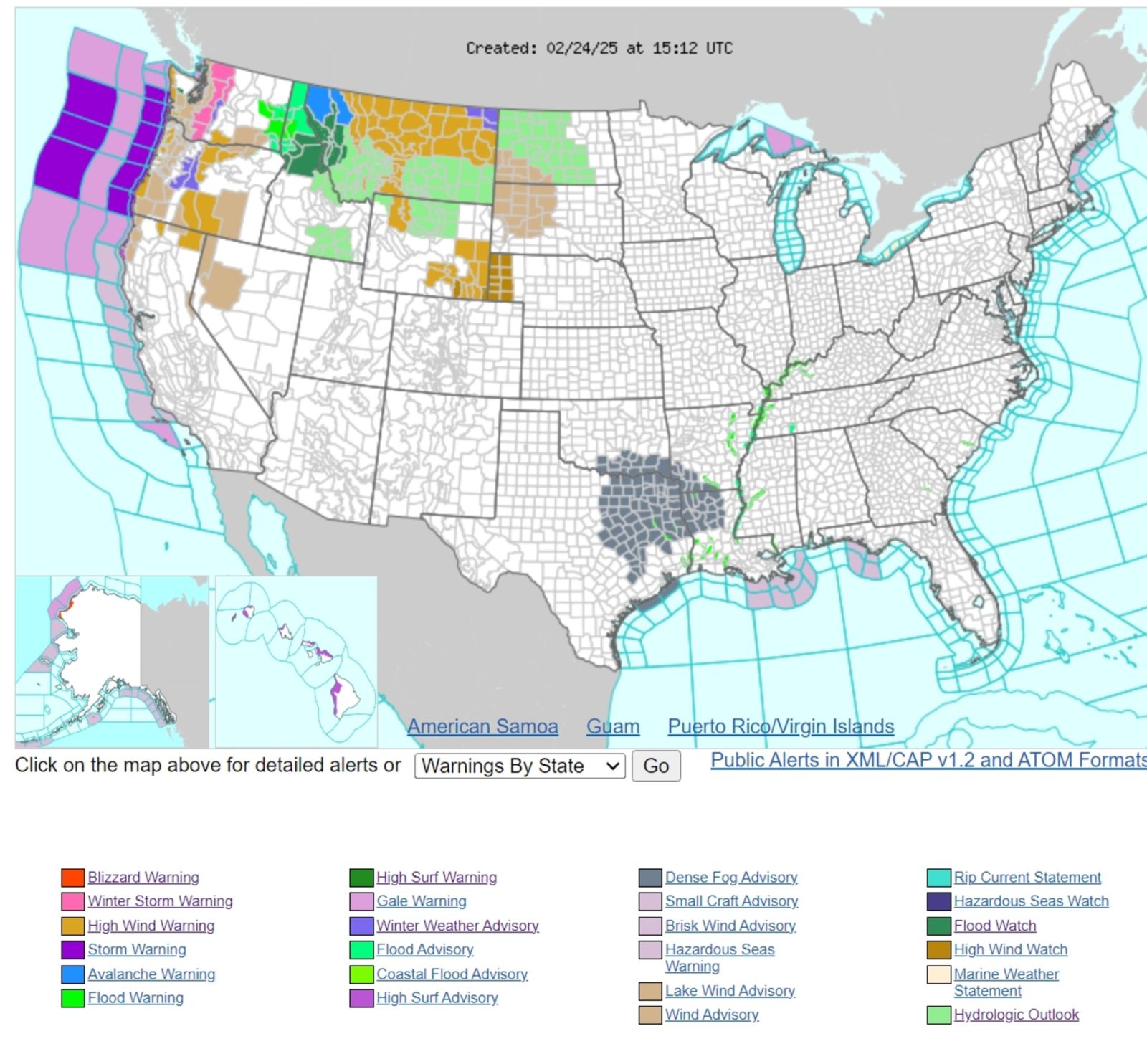
According to the NWS map showing all weather alerts currently in place for the U.S., most weather impacts were hitting the Northwest amid the ongoing atmospheric river. The alerts included a high wind warning, winter weather advisory, wind advisory, hazardous weather outlook, hydrologic outlook, high wind watch, avalanche warning, flood warning, flood advisory, flood watch, winter storm warning, storm warning, high surf warning, gale warning, coastal flood advisory, high surf advisory and small craft advisory.
Impacted states are Washington, Oregon, California, Nevada, Montana, Idaho, Wyoming, Nebraska, North Dakota and South Dakota.
Several roadways across multiple states were impacted by the heavy snow and rain, with meteorologists urging people to be careful if they must travel during the storm. Strong winds also disrupted travel.
Sunday night, the storm prompted more than a dozen lightning strikes across northern Idaho.
What People Are Saying
NWS meteorologist Steve Bodnar, who works for the Spokane, Washington, office which oversees the northern Idaho area, told Newsweek: "It is very rare to have lightning in February."
NWS forecast about the storm: "Heavy rain, gusty winds, and the threat for flooding continues throughout the Pacific Northwest east through the northern Great Basin and Rockies as an active Pacific storm track/Atmospheric River impact the region. After precipitation waned a bit overnight following the passage of one system, another Pacific system will move inland through the day Monday bringing additional showers and thunderstorms."
NWS office in Great Falls, Montana, in a high wind warning: "Travel could be difficult, especially for high profile vehicles. High winds may generally move loose debris and/or snow, and cause some property damage and/or cause isolated power outages, mainly on the Rocky Mountain Front."
What Happens Next
The atmospheric river will move out of the region on Tuesday. Looking forward, the Northwestern U.S. is expecting above-average temperatures and above-average precipitation from March 1 to 5, according to the NWS Climate Prediction Center outlooks.
View 0 Comments
Submit Correction
View Editorial & AI Guidelines