...


By Leonardo Feldman and Jesus Mesa
0
Share
Newsweek is a Trust Project member
See more of our trusted coverage when you search.Prefer Newsweek on Googleto see more of our trusted coverage when you search.
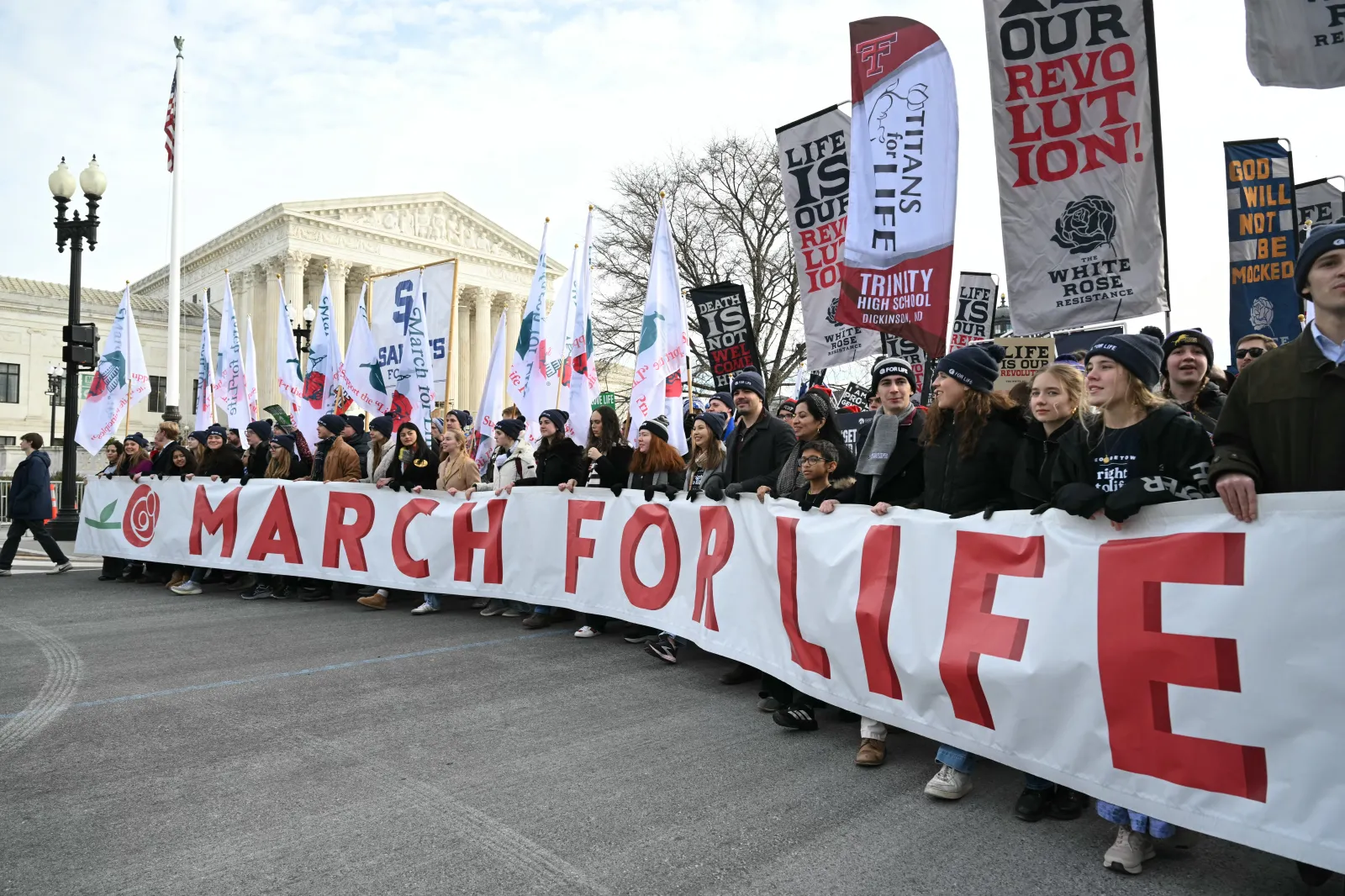
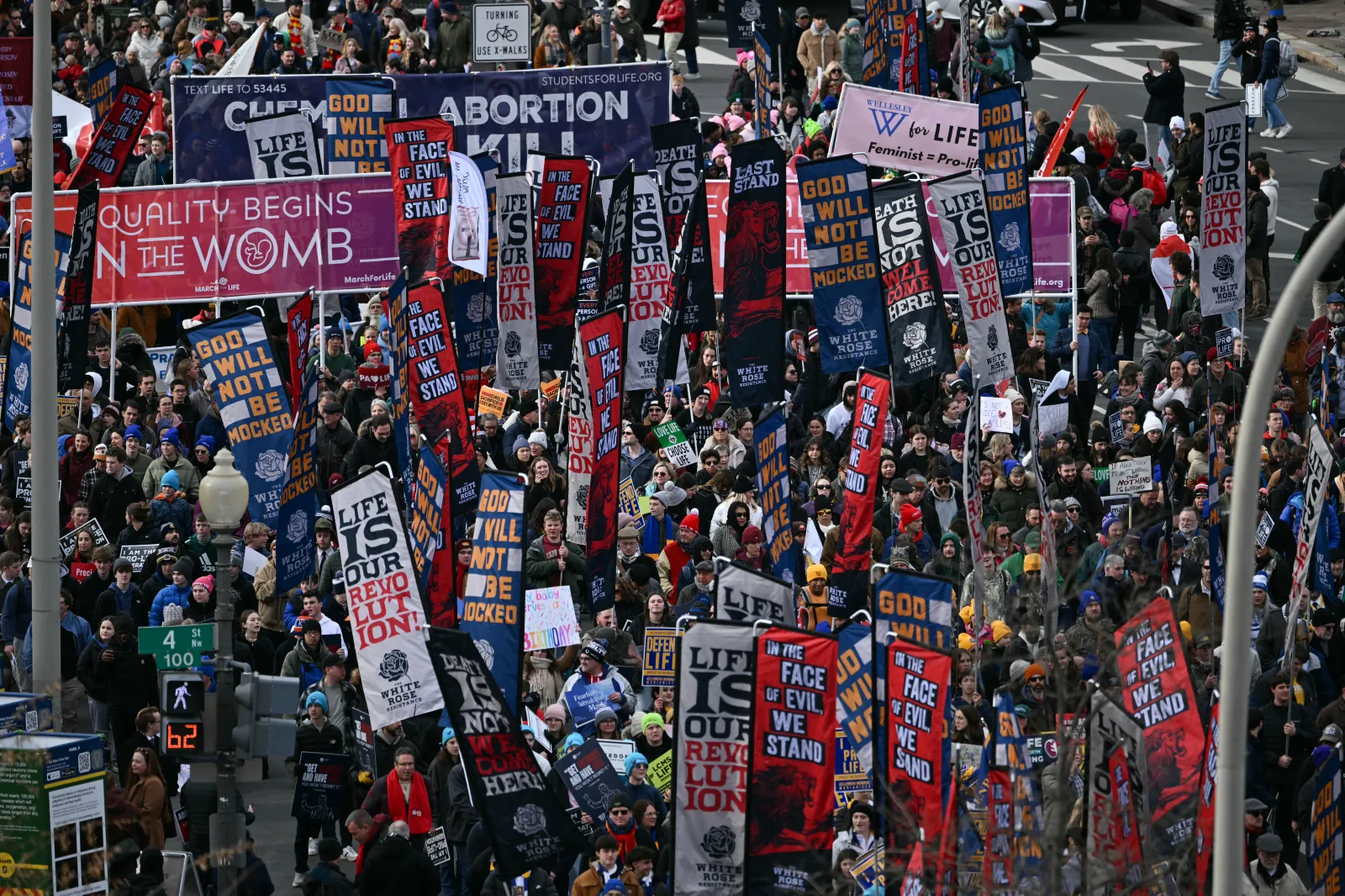
As tens of thousands gathered on the National Mall for the annual March for Life, praise for President Donald Trump ran alongside quiet disagreements about what his second term should ultimately deliver on the issue of abortion.
The rally marked the first March for Life held a full year into Trump’s second term, a point at which many activists say celebration is giving way to pressure for concrete federal action.
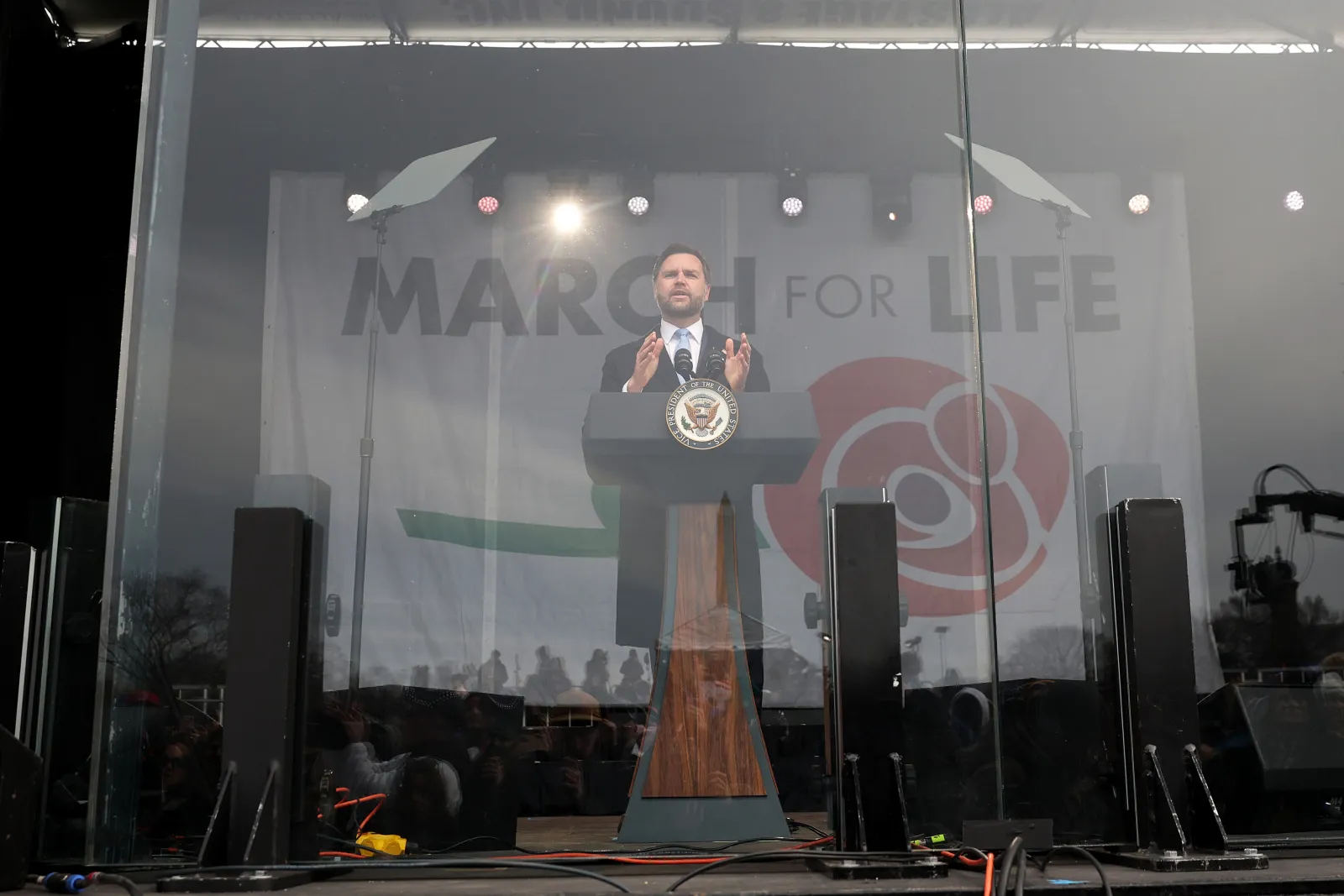
From the stage, Vice President JD Vance urged activists to “take heart in how far we’ve come,” citing the Supreme Court’s reversal of Roe v. Wade, the administration’s expansion of restrictions on U.S. foreign aid tied to abortion, and what he described as a renewed commitment to “families and human flourishing.”
Read More on Politics
Trump, addressing the crowd by video, similarly highlighted judicial appointments and framed his record as an “unprecedented” defense of pro-life activism.
...
Yet even as movement leaders point to judicial wins, some activists say the post-Dobbs era has raised a harder question: How much power is the White House willing to use now that abortion policy largely rests with the states? For some marchers interviewed by Newsweek, enthusiasm was often paired with impatience.
Francis Guidarelli, who traveled from Richmond, Virginia, said he was grateful for Trump’s role in reshaping the courts but wanted more decisive action. “We’re glad he appointed the good pro-life justices to the Supreme Court,” he said. “But we don’t want the abortion bill. That needs to be banned.”
Guidarelli also rejected assisted reproductive technologies outright, adding bluntly, “We don’t need IVF.”
Concerns about IVF have become more prominent inside the pro-life movement in recent years, particularly as Republican leaders attempt to balance opposition from social conservatives with broader public support for fertility treatments.
Joe, an attendee from Arlington, Virginia, said the administration had not gone far enough in addressing what he sees as unresolved moral questions. “There needs to be more of a conversation on the ethics of IVF,” he said. “If you’re creating human life just to have it sit in freezers for generations, what are the ethics of that?”
After Dobbs, What Comes Next?
Some marchers struck a more satisfied tone, but for others, the policy reality of 2026 feels incomplete. Despite significant executive actions in 2025, a vocal segment of the movement remains dissatisfied, citing what they describe as a "pragmatic pivot" by the administration.
While the One Big Beautiful Bill Act (OBBBA) successfully blocked Medicaid funding to Planned Parenthood, the provision is only a one-year temporary measure, falling short of the permanent federal debarment many activists demand. Furthermore, the administration’s refusal to enforce the Comstock Act to block the nationwide mailing of abortion pills—which now account for over 60 percent of U.S. abortions—has led some to argue that federal inaction is effectively "nullifying" red-state bans.
...
For activists like Morgan Reece of Michigan, gratitude and demands coexist. Reece praised Trump for pardoning anti-abortion activists and appointing conservative judges, but said the administration still had unfinished business.
“We definitely want him to do more,” she said. Her top priority was clear: “We want him to completely defund Planned Parenthood permanently and also debar them.”
Some marchers struck a more satisfied tone. Everett Barnes of Virginia described the administration’s record as strong and said the movement should recognize progress already made. “He’s made a great contribution, and his administration has supported us well,” Barnes said, pointing to Vance’s appearance at the rally as a sign of continued political alignment.
“Overall, I see his attitude toward respect for life as commendable.”
Not everyone framed the issue as strictly partisan. Elizabeth, who traveled from Omaha, Nebraska, said she hoped the movement could eventually move beyond hardened political lines. “I would love for it to become a bipartisan issue,” she said. “But first we have to find the common ground.”
Some activists argue that expanding support will be necessary to sustain long-term policy wins, particularly as abortion remains a galvanizing but politically volatile issue nationally.
...
Others acknowledged the political constraints Trump faces, even while wanting a stronger stance. Denise, from Arizona, said she understood the competing pressures on the White House. “I would love him to be stronger in pro-life values,” she said.
“But I understand the pressure he’s under.” When asked what she wanted to see next, she misspoke, saying she would like him to “legalize the abortion,” before moving on.
Trump, however, has consistently signaled that he would not pursue a national abortion ban, saying instead that decisions on the matter should remain with the states.
Abortion-rights groups, meanwhile, warn that the administration’s incremental moves—from agency rulemaking to funding decisions—could have sweeping national consequences, even in states where abortion rights have been codified, arguing that executive action can effectively reshape access without new legislation.
In a polarized era, the center is dismissed as bland. At Newsweek, ours is different: The Courageous Center—it's not "both sides," it's sharp, challenging and alive with ideas. We follow facts, not factions. If that sounds like the kind of journalism you want to see thrive, we need you.
When you become a Newsweek Member, you support a mission to keep the center strong and vibrant. Members enjoy: Ad-free browsing, exclusive content and editor conversations. Help keep the center courageous. Join today.


View 0 Comments
Submit Correction
View Editorial & AI Guidelines