...

By Jordan King
Reporter
0
Share
Newsweek is a Trust Project member
See more of our trusted coverage when you search.Prefer Newsweek on Googleto see more of our trusted coverage when you search.
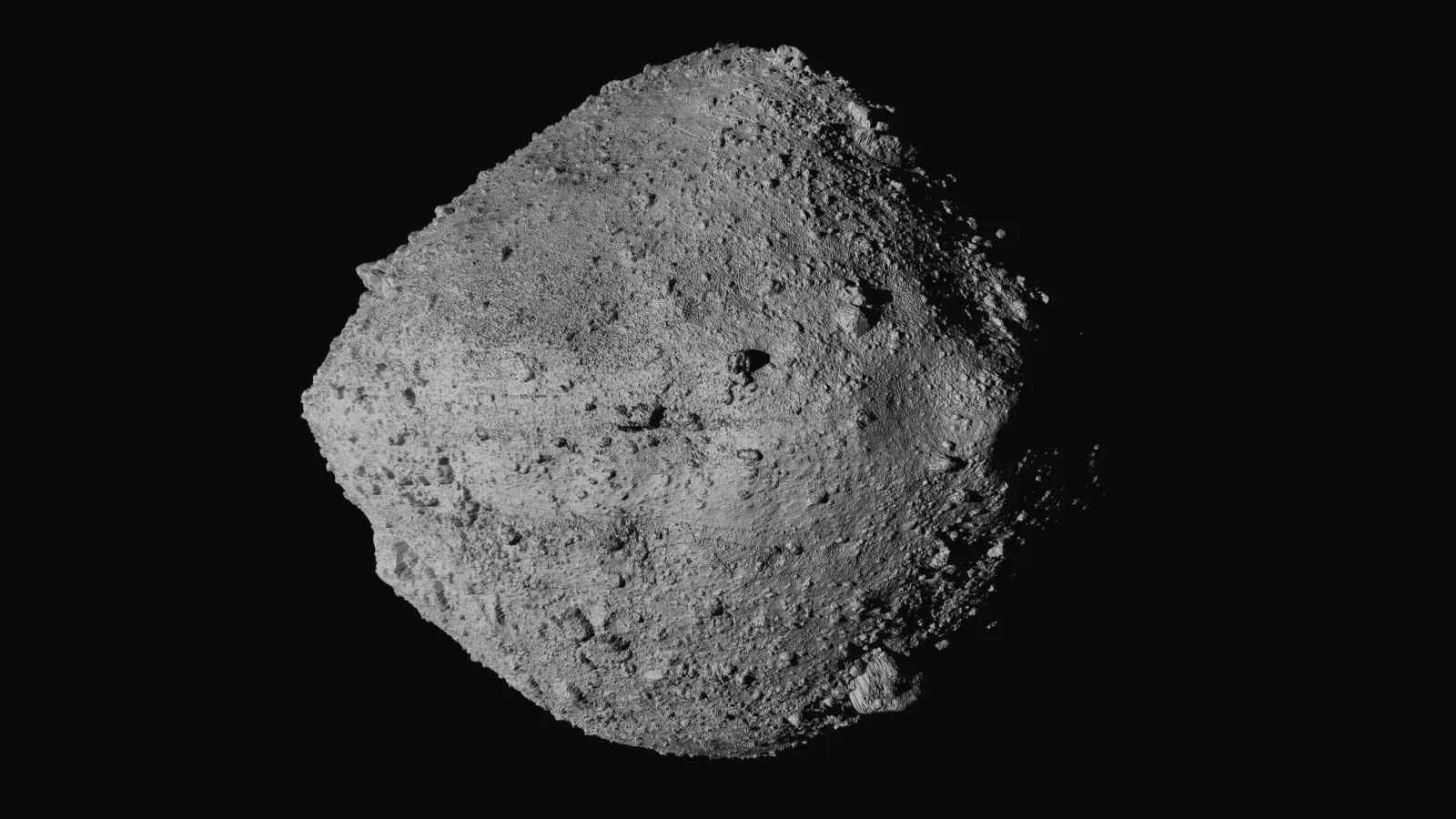
Bennu, a rocky object classified as a near-Earth asteroid, has a one-in-2,700 chance of colliding with the Earth in September 2182, new research has discovered.
The IBS Center for Climate Physics (ICCP) at Pusan National University in South Korea published its study in the journal Science Advances last week, reported on by Reuters.
Why It Matters
Although the chances of a collision are "quite small," according to one of the study's authors, the study lays bare the potential impact of an event like this.
Read More on News
What To Know
Researchers used computer simulations to study the impact of an asteroid with the diameter of Bennu (about 500 meters) to ascertain what the fallout of the collision would be.
They found that atmospheric chemistry and global photosynthesis would be disrupted for between three to four years—because the impact would inject 100-400 million tons of dust into the atmosphere.
In a worst-case scenario, the average surface temperature would decrease by around 7 degrees Fahrenheit, the average rainfall would fall by 15 percent, plant photosynthesis would decrease by between 20 and 30 percent and the planet's ozone layer would deplete by 32 percent.
...
The shock waves generated by the impact of the collision would cause earthquakes, wildfires and thermal radiation. It would also leave a large crater and eject debris upward.
Ecosystems would spend years reckoning with the impact of large quantities of aerosols and gases reaching the upper atmosphere.
Lead author of the study Lan Dai, a postdoctoral research fellow, said that while the asteroid collision would cause massive loss of human life, accurate death toll estimations were difficult to report because that "mainly depends on where the asteroid impact occurs."
What People Are Saying
Speaking about the consequences of a collision, Lai said: "The solar dimming due to dust would cause an abrupt global 'impact winter' characterized by reduced sunlight, cold temperature and decreased precipitation at the surface."
Senior author of the study Axel Timmermann said: "The likelihood that a Bennu-sized asteroid will strike Earth is quite small at 0.037 percent. Even though small, the potential impact would be very serious and would likely lead to massive longer-term food insecurity on our planet and climate conditions that are similar to those seen only for some of the largest volcanic eruptions in the last 100,000 years. So it is important to think about the risk."
What Is Bennu?
Bennu, a carbon-rich asteroid formed as part of a parent body approximately 4.5 billion years ago, has long intrigued researchers due to its potential to harbor traces of water and organic molecules.
NASA's OSIRIS-REx mission, launched in 2016, successfully collected 120 grams of samples from Bennu in 2020 and delivered them to Earth in September 2023.
Scientists have since been analyzing these samples to uncover their chemical composition.
Bennu is classed as a near-Earth asteroid, meaning that it makes its closest approach to Earth every six years at around 186,000 miles.
View 0 Comments
Submit Correction
View Editorial & AI Guidelines