...


By Jesus Mesa and Gabe Whisnant
0
Share
Newsweek is a Trust Project member
See more of our trusted coverage when you search.Prefer Newsweek on Googleto see more of our trusted coverage when you search.
Scientists have officially ruled out any threat from a newly discovered asteroid.
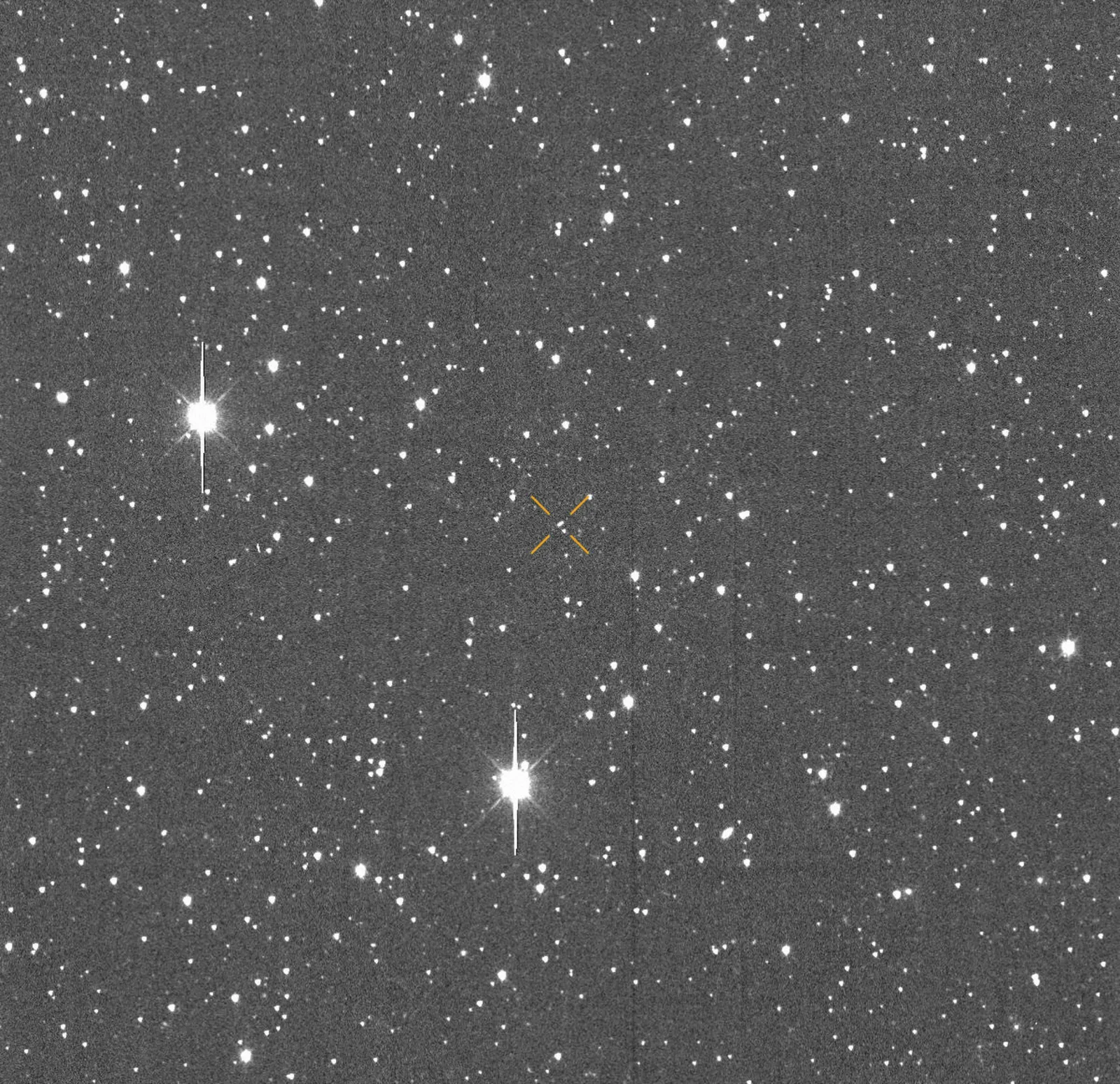
After months of speculation, NASA and the European Space Agency (ESA) confirmed Tuesday that asteroid 2024 YR4 poses no significant risk to Earth.
Initially feared to have a small but notable chance of impact in 2032, further observations have led experts to all but rule out any risk for at least the next century.
Read More on News
Why It Matters
The asteroid, which measures 130 feet to 300 feet in diameter, was first detected in December 2024, prompting early calculations that gave it a 3 percent chance of colliding with Earth in 2032. The alarming probability quickly put 2024 YR4 on NASA's Sentry list—a database tracking objects with potential Earth impact scenarios.
Recent advancements in trajectory analysis have significantly reduced the risk to negligible levels. The asteroid, which orbits the sun every four years, is expected to move out of view in the coming months as it follows its projected course.
What To Know
On Tuesday, NASA and the ESA confirmed that new calculations have reassessed the asteroid's path, greatly reducing its impact probability. According to NASA, the odds now stand at just 0.0027 percent, while ESA has lowered its estimate to 0.001 percent.
"This asteroid no longer poses a significant impact hazard to Earth," NASA said in a statement. "2024 YR4 provided an invaluable opportunity to refine our tracking systems and study how we monitor near-Earth objects."
...
Previously, the risk corridor for 2024 YR4—the potential area of Earth that could have been affected—spanned the eastern Pacific Ocean, the Atlantic Ocean, the Arabian Sea, Africa, South Asia and parts of South America.
This included some of the world's most populous cities, such as Bogotá, Colombia, Mumbai and Chennai in India, and Lagos, Nigeria.
Despite early concerns, scientists say the tracking of 2024 YR4 has provided a "valuable learning opportunity." The asteroid's initial placement on high-risk lists allowed researchers to refine predictive models and improve asteroid detection methods, underscoring the importance of continued investment in planetary defense initiatives.
While Earth is no longer in harm's way, NASA has noted a slight chance that the asteroid could impact the moon. The agency estimates a 1.7 percent probability of 2024 YR4 striking the moon on December 22, 2032.
What People Are Saying
Paul Chodas, who heads NASA's Center for Near Earth Objects Studies, told the Associated Press: "That's the outcome we expected all along, although we couldn't be 100% sure that it would happen."
NASA, in a statement: "While this asteroid no longer poses a significant impact hazard to Earth, 2024 YR4 provided an invaluable opportunity."
What Happens Next
NASA announced it will continue to monitor asteroid 2024 YR4 using observatories funded by its Planetary Defense Coordination Office. Additionally, NASA's James Webb Space Telescope is set to observe the asteroid in March to gather further insights into its size for scientific research.
This story contains reporting by the Associated Press.
Update 2/25/25, 1:34 p.m. ET: This article was updated with additional information.
View 0 Comments
Submit Correction
View Editorial & AI Guidelines