10
Loading video...

By Jordan King
Reporter
0
Share
Newsweek is a Trust Project member
See more of our trusted coverage when you search.Prefer Newsweek on Googleto see more of our trusted coverage when you search.
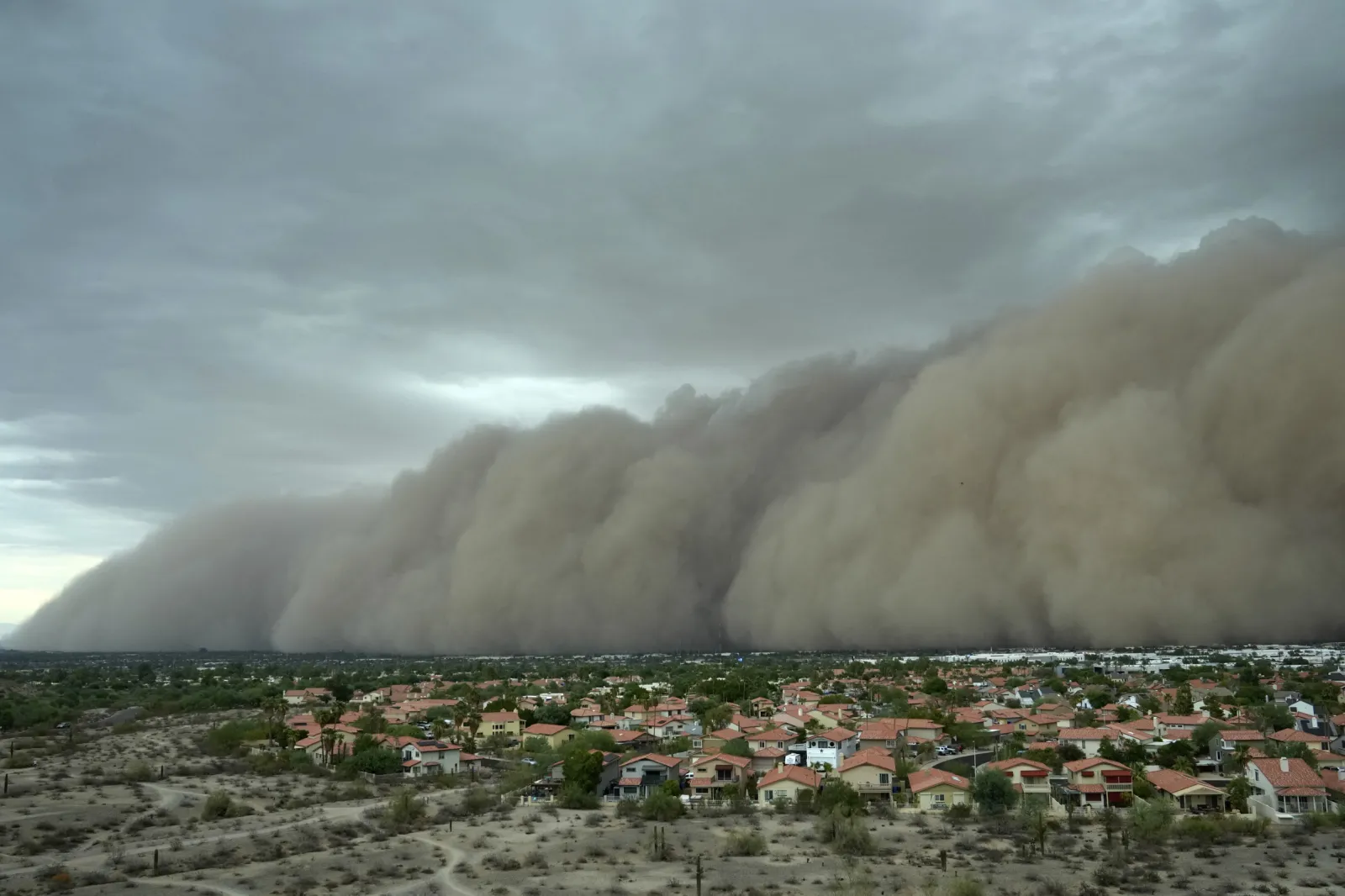
A huge dust storm rolled through Phoenix on Monday, leaving thousands without power and grounding flights.
The storm, known as a haboob, was driven by thunderstorm-generated winds that pushed a towering wall of dust across the city with little warning, plunging visibility to near zero.
Why It Matters
Dust storms are not uncommon in Arizona during the summer rainy season, but Monday's storm was especially intense.
Read More on News
The event underscores growing concerns about extreme weather events in the Southwest, a region already contending with prolonged drought, extreme heat, and expanding urban sprawl that increases vulnerability.
...
What To Know
The storm hit late Monday afternoon, triggered by the collapse of a thunderstorm that expelled winds outward, lifting desert dust into the air and forming a dense, rolling cloud. Such storms can rise thousands of feet and travel for miles.
At one point, the storm cut visibility to just a quarter-mile in metro Phoenix. Bernae Boykin Hitesman was driving her son and daughter home from school on Monday afternoon when she had to pull over.
"I couldn't see my hand in front of my face if I put my hand outside," she told The Associated Press. "It was that bad."
Visibility had cleared up by Monday evening, but more than 15,000 people were still without power by then, the AP reported.
This number went down significantly overnight, with just under 4,000 in Arizona still without power as of Tuesday morning, according to poweroutage.us.
What People Are Saying
Mark O'Malley, a meteorologist with the National Weather Service in Phoenix, told the AP: "The haboob cut visibility to a quarter-mile across metro Phoenix, but had cleared up by Monday evening. Phoenix has been drier than usual during the summer rainy season, while parts of southeast and north-central Arizona have had a fair amount of rain. But that's typical for a monsoon, very hit and miss."
Richard Filley, a retired university professor who lives in Gilbert, commented on the dramatic images and videos of the storm when he said: "You look at the photos of haboobs and they are a spectacular natural phenomenon. They are kind of beautiful in their own way."
What Happens Next
The National Weather Service is continuing to monitor monsoon activity across Arizona, with additional storms possible over the next 24 to 48 hours. Emergency crews are assessing infrastructure damage in Phoenix and surrounding communities, while utilities work to restore power to affected neighborhoods.
Arizona's Department of Transportation has warned drivers to remain alert for sudden visibility drops and localized flooding on roads. Meanwhile, city officials are also inspecting storm-related damage at key infrastructure sites, including the Phoenix airport.
View 0 Comments
Submit Correction
View Editorial & AI Guidelines