...

By Maria Azzurra Volpe
Reporter
0
Share
Newsweek is a Trust Project member
See more of our trusted coverage when you search.Prefer Newsweek on Googleto see more of our trusted coverage when you search.
A newly uncovered ancient temple in the Bolivian Andes is offering archaeologists rare new insights into the Tiwanaku civilization, a once-powerful society that existed over a thousand years ago and was a precursor to the Inca empire before it mysteriously disappeared.
The temple—dubbed Palaspata, after the native name for the area—is located on a hilltop in the municipality of Caracollo, near Tiwanaku's historical UNESCO site by Lake Titicaca.
The spot was known to local indigenous farmers, but was never explored in depth by researchers because of its unassuming location.
Read More on Science
However, the position of the site was actually very strategic, anthropology professor José Capriles of the Pennsylvania State University said in a statement.
"Their society collapsed sometime around 1000 CE and was a ruin by the time the Incas conquered the Andes in the 15th century", he said.
The anthropologist explained that, at its peak, the Tiwanaku civilization boasted a highly organized societal structure and it had left behind remnants of monuments like pyramids and temples.
Capriles added: "While we know Tiwanaku's control and influence extended much further, scholars debate how much actual control over distant places it had."
...
During the time of the Tiwanaku civilization, the spot in which the newly discovered ruins were found connected three main trade routes.
These included the highlands around Lake Titicaca to the north, the llama-herding plains of the Altiplano to the west and the agriculturally rich valleys of Cochabamba to the east.
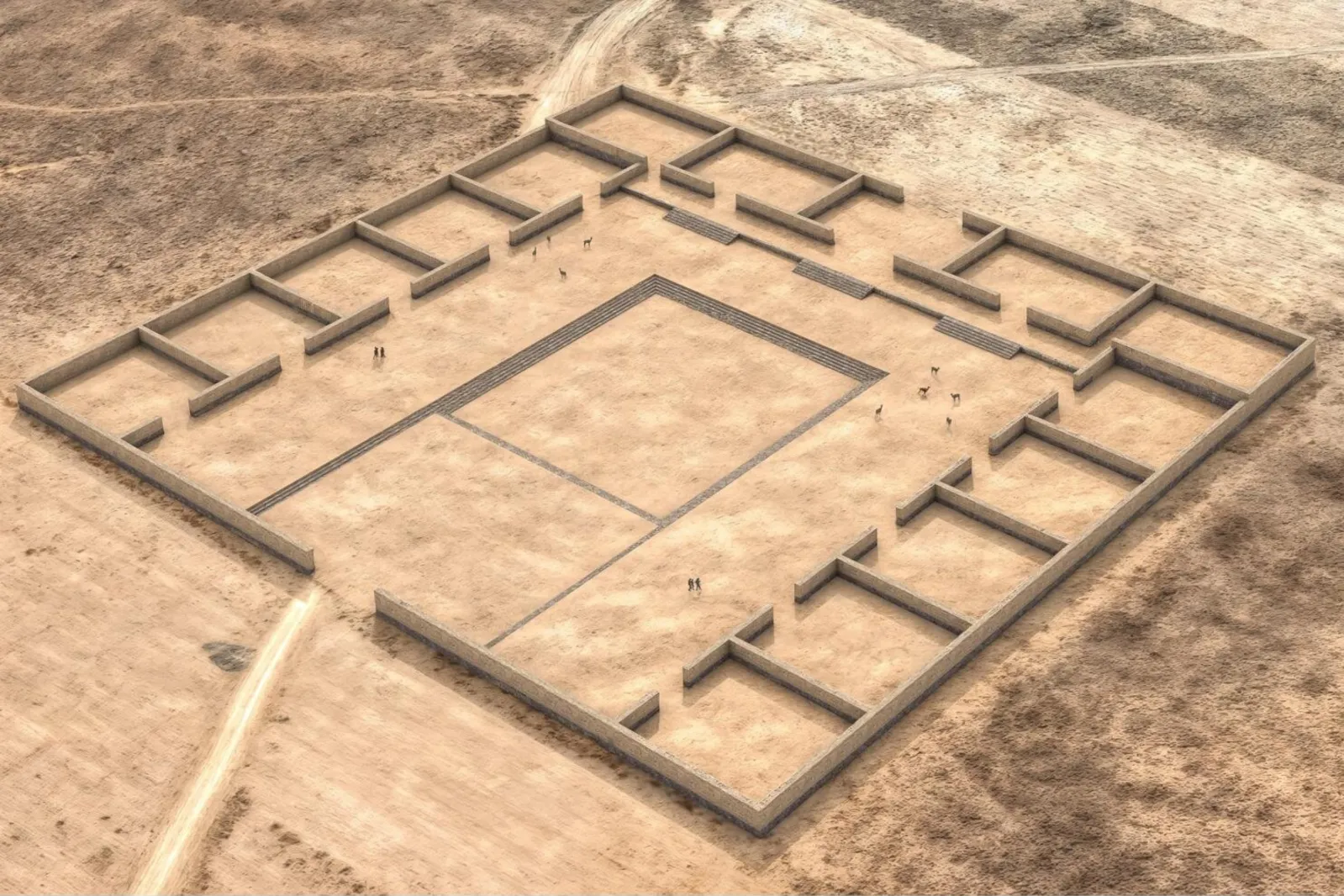
After noticing an unmapped plot of land in the area, researchers from Penn State University and Bolivian institutions used satellite images and 3D reconstruction techniques to create a detailed rendering of the structure and its topography.
They found that Palaspata was approximately the size of a city block, and its layout was aligned to perform rituals following the solar equinox.
"Most economic and political transactions had to be mediated through divinity, because that would be a common language that would facilitate various individuals cooperating," Capriles said in the study.
According to the mayor of the municipality of Caracollo, Ventura Guarayo, these archaeological findings are significant because they highlight a crucial aspect of the local heritage that had been completely overlooked.
"This discovery is vital for our community, and we believe its documentation will be invaluable for promoting tourism and showcasing our region's rich history" he said in a statement, adding that the city is working with state and national authorities to ensure proper protection and preservation of the site.
"With more insight into the past of this ancient site, we get a window into how people managed cooperation, and how we can materially see evidence of political and economic control," Capriles added.
"There's still so much to discover that we don't know about, and that could be hiding in plain sight. It just requires opening your eyes to see what's out there."
While the reason behind the collapse of the Tiwanaku civilization still remains a mystery, archaeologist Luis Miguel Callisaya told the BBC that the most widespread hypothesis is an environmental crisis that led to a prolonged drought.
To back this theory, scientists even found the bones of 19 women thought to have been sacrificed to the gods in exchange for rain. However, very little is still known about this ancient civilization, in fact, less than 10 percent of their ruins have to this day been excavated.
Do you have a science story to share with Newsweek? Do you have a question about the Tiwanaku civilization? Let us know via science@newsweek.com.
Reference
Capriles, J. M., Maldonado, S. C., Calero, J. P., & Delaere, C. (2025). Gateway to the east: The Palaspata temple and the south-eastern expansion of the Tiwanaku state. Antiquity, 99(405), 831–849. https://doi.org/10.15184/aqy.2025.59
View 0 Comments
Submit Correction
View Editorial & AI Guidelines