
10
Loading video...

By Andrew Stanton
Reporter
0
Share
Newsweek is a Trust Project member
See more of our trusted coverage when you search.Prefer Newsweek on Googleto see more of our trusted coverage when you search.
Calls for a data center moratorium have surged across the country amid concerns about their impact on local communities and the environment—but labor unions are embracing their construction.
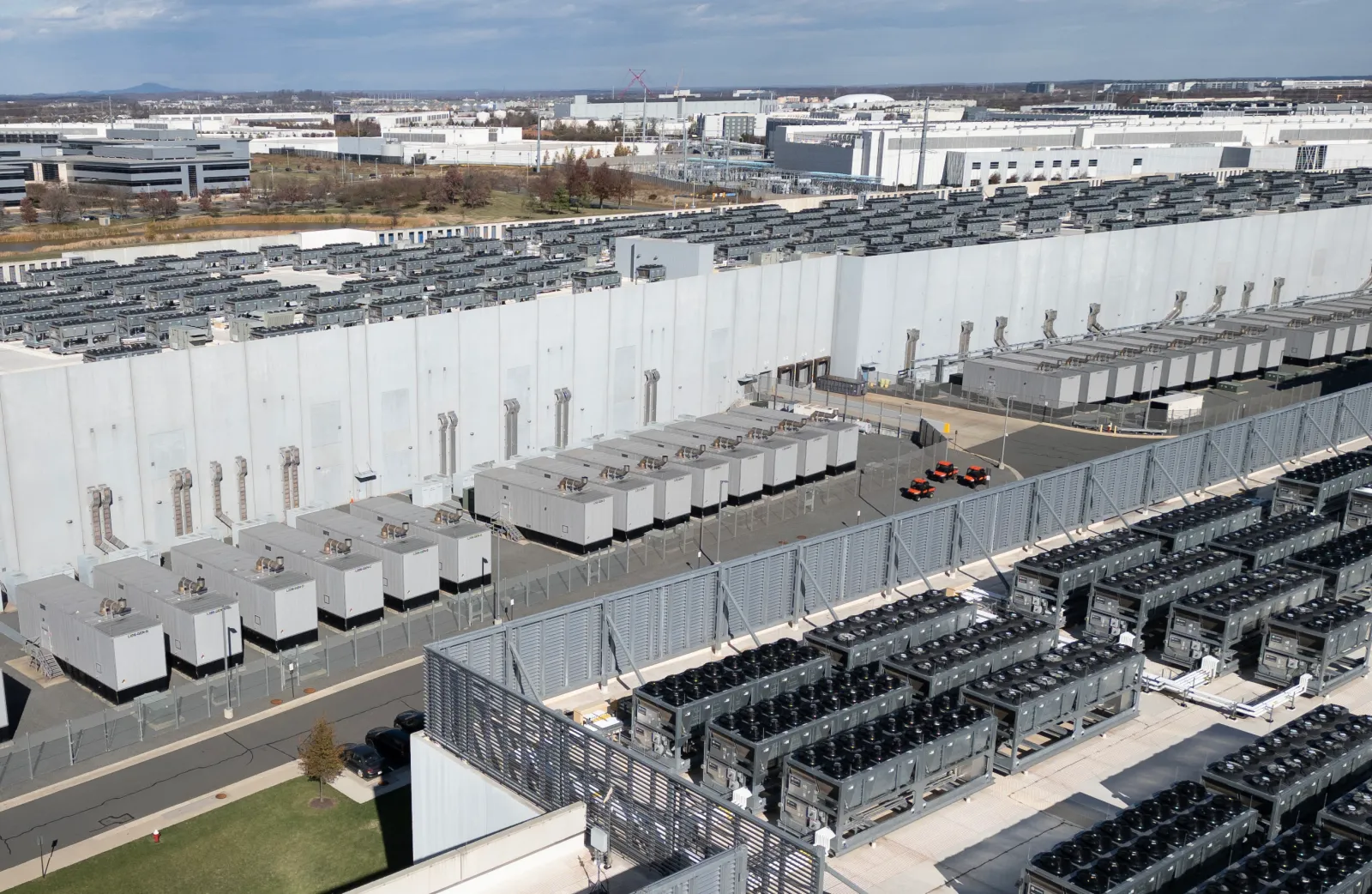
The growth of artificial intelligence-powered data centers, which require large amounts of electricity and water to cool servers, has sparked fierce debate amid the AI boom.
Critics have raised numerous concerns about the centers, including their impact on the environment, the amount of water they use, their potential to drive up electricity bills and the noise they generate in communities. Proponents, however, have said embracing AI is critical for states’ economic growth, and that communities opposing the rapidly developing technology could be left behind.
Read More on U.S.
Labor unions are supporting data center construction, viewing the AI boom as an opportunity to boost the number of well-paying union jobs despite a grassroots push for governments to oppose their construction.
It’s a source of political tension for Democrats, as both labor unions and environmental groups, advocating against data centers, are key parts of its coalition. The construction of data centers could become a divisive political topic ahead of the midterms.
Patrick Crowley, the president of the Rhode Island AFL-CIO, told Newsweek that data centers are going to be necessary in the growing digital economy and that labor unions having a seat at the table can ensure opportunity to “build them right.”
“We'd rather see a data center built in a state like Rhode Island that has strong labor standards as well as strong environmental standards instead of in a state that's a right to work state with weak environmental standards because we know the harm that these could potentially cause if they're not regulated and built the right way,” he said.

...
Labor Unions Are Throwing Support Behind Data Centers
Unions in numerous states are supporting the construction of data centers. In states like California, Illinois, Minnesota and Pennsylvania, organized labor has advocated for policies that would incentivize their construction while opposing data center moratoriums.
For instance, Climate Jobs Illinois, a group affiliated with the state’s AFL-CIO, wrote a letter to Democratic Governor JB Pritzker raising concerns about a proposed tax credit to incentivize data centers in his budget address.
“Data center development is increasingly part of that economic and energy future. These facilities represent billions of dollars in private investment, thousands of union construction jobs, and long-term opportunities for Illinois workers across the building trades, electrical sector, and energy infrastructure workforce,” the letter, provided to Newsweek, reads.
They urged Pritzker to preserve competitiveness for data centers, ensure projects create union jobs, support the building of infrastructure, while protecting the privacy and rights of Illinois residents, according to the letter.
In June, however, Pritzker directed his administration to “pause the processing of data center agreements while we continue working with the General Assembly and stakeholders on a comprehensive framework that protects affordability, safeguards our natural resources, and ensures responsible growth across Illinois,” he said in a statement.
“Illinois has an opportunity to continue leading in technological innovation and economic growth, but we also have a responsibility to protect working families and local communities as the data center industry rapidly expands,” he said.
Kristine Kavanagh, communications director for the International Union of Operating Engineers Local 150, which represents operating engineers in Illinois, Indiana and Iowa, told Newsweek that the union supports building data centers, but that must come with responsibility.
“These projects should be built with local union labor, strong labor standards, and real commitments to the communities where they are located. Local 150 is not saying concerns about energy, water, or community impact should be ignored. We are saying those concerns can and should be addressed through thoughtful planning, not blanket moratoriums that drive jobs and investment to other states,” she said.
She said lawmakers have been “receptive” to their concerns about data centers.
Rejecting data centers doesn’t eliminate demand for AI, she said, and a better approach includes “responsible siting, energy planning, water protections, local hiring commitments, and union labor standards.”
...
Data Center Regulations Stall in Minnesota
In Minnesota, lawmakers failed to pass new regulations on data centers despite a push from some lawmakers and activists amid labor pushback, reported MPR News.
Dan McConnell, president of the Minnesota State Building and Construction Trades Council, told Newsweek that data center projects create “substantial work” for skilled workers such as electricians, pipe fitters, plumbers, laborers, operating engineers, ironworkers, carpenters and sheet metal workers.
He said he is concerned the “hysteria” around data centers could lead to an environment where elected officials are afraid to even engage in a conversation with stakeholders, including unions, about how to build data centers in a safe, responsible way. When done correctly, he said he believes workers can be protected while states like Minnesota can also increase their tax base.
“If we just say, ‘No we don’t want these things,’ you can’t have a conversation about how to make the project better,” he said.
He said it is “frustrating” when policymakers treat data centers as an “all-or-nothing proposition.”
His union’s goal is to make sure the jobs created by the data center boom are not “temporary” or “low-road.” Governments, he said, should adopt “predictable” rules instead of blanket bans, and they should be expected to pay their fair share of energy, water, infrastructure and tax costs.
“They should be union careers with strong wages, benefits, training, and safety standards,” he said.
In Colorado, Environmental Groups and Unions Clash
Colorado is one state where environmental groups and unions have disagreed over data center legislation.
Nate Bernstein, executive director of Climate Jobs Colorado, told Newsweek that governments should encourage “responsible data center development with strong rate payer protections, environmental standards, labor standards, and respect for the communities in which these facilities are built.”
"Our members cherish the outdoors, the scenic views, and care deeply about the resources in our state and want these things to be there for the many generations that will follow. Our members are also the ones that make everyday living possible by delivering electricity and other key resources and by constructing our buildings and major industries and infrastructure projects," he said.
His organization has worked to influence legislation in Colorado, including a bill that would require data center operators to invest in climate-friendly energy and grid updates, reported Colorado Public Radio. Unions opposed the bill over concerns the state would lose union jobs to neighboring states if it were enacted.
Unions supported another bill in the state, HB26-1030, to give data center developers tax breaks for following certain environmental regulations. That bill sparked pushback from environmentalists and other groups, with a statement by the group Earthjustice describing it as a “Data Center handout.”
The clash is emblematic of a wider tension between environmental groups and labor, both of which are key pillars of Democrats’ coalition that have often found themselves on opposing ends of legislation. Democrats face a question as calls for stronger regulation grow—whether to side with labor unions to promote their construction, or block their construction as environmental groups have pushed for.
Related Story

We Asked AI Where Data Centers Should Go—The Answers May Surprise You
Rhode Island as ‘Model’ for Data Centers, Crowley Says
The union supported legislation in the Ocean State that would have created tax incentives for data center construction, as well as companion legislation to require data center operators to pay for any extra utility use that would come as a result of the center, Crowley said.
Crowley said that in Rhode Island, construction could create hundreds of union jobs for electricians, ironworkers and laborers, as it takes “highly skilled workers” to build these facilities.
“We also know that they're going to need to be maintained and operated and as they expand or evolve that it's going to take workers to do that,” he said. “That's why we see this as an opportunity, not just for growth within the labor movement, but to make sure that this market that's evolving is built with union labor.”
He said Rhode Island could be a model for data center construction due to its environment and worker protections, including ensuring workers are paid prevailing wage and have a labor peace agreement.
Lawmakers need to balance environmental concerns with the economy, he said, saying that Rhode Island has taken the “right step” by introducing legislation that would require data centers to be responsible for their own energy supplies. He said it is also critical that lawmakers ensure water supplies are not disrupted.
“I think the way that we're trying to approach it here in Rhode Island could be a model for other places around the country,” he said.
Americans Deeply Concerned About Data Centers
While labor unions embrace a pro-data center approach, that is not necessarily shared by most Americans, according to polling, which suggests most people do not want to see data centers built in their communities.
A Gallup poll, taken March 2-18, found that 27 percent of Americans would favor the local construction of data centers, compared to 71 percent who would oppose it.
Opposition isn’t falling along partisan lines—75 percent of Democrats, 74 percent of independents and 63 percent of Republicans said they would oppose the construction of data centers in their area.
A recently updated Data Center Opposition Report documented the rapid rise in grassroots opposition to AI data centers across the United States, identifying 430 local data center opposition groups organizing through Facebook, compared with 268 in April. It found that more than 525,000 Americans have joined groups to resist the construction of the facilities in at least 40 states.
Total opposition membership has increased almost sevenfold since December 2025, according to the findings.
Data Centers Become Political Flash Point
President Donald Trump has been supportive of data centers. In remarks last week, he said they will be built “at a level nobody has ever seen before,” while also saying they should be paying for the electricity they use.
Representative Alexandria Ocasio-Cortez, a New York progressive, spoke out against data centers in remarks before the House Energy and Commerce committee, condemning “Silicon Valley billionaires” who are “imposing these data centers on communities that are overwhelmingly rural, disenfranchised, poor.”
“Because I would reckon you look around, ask Peter Thiel, ask Elon Musk, ask Mark Zuckerberg if they want one of these data centers in their own backyard,” she said. “Ask any one of us here on this committee. If anyone wants to live right next to one of these data centers here on this committee, please raise your hand.”

...
Data centers are also becoming a political fight for the midterms, with gubernatorial candidates across the country saying they would support implementing data center moratoriums if elected.
David Jolly, a Democrat running for governor in Florida, announced his support for a moratorium this week, raising concerns that data centers are “rushing in” to the state before it has the appropriate regulations in place to protect the environment, in a video statement.
He also raised concerns about the impact of data centers on the economy.
“We’re not prepared for the labor disruption that this brings,” he said. “Sure, there’s development around construction, but there’s not the long-term impact for communities. If anything, it hurts housing values, and the long-term jobs aren’t there.”
Contact Newsweek editors on this story: Jenni Fink and Sam Wilson.
View 0 Comments
Submit Correction
View Editorial & AI Guidelines