- U.S.
- World
- Science
- Health
- Life
- Rankings
- Opinion
- Entertainment
- Fact Check
- My Turn
- Education
- EventsSportsPodcastsBetter PlanetBetter WorkplacesMightierAutosNewslettersUnconventionalVantageExpertsLeadershipDev Pragad
- Subscribe

- Login
×
Subscribe Login
- U.S.
- World
- Science
- Health
- Life
- Rankings
- Opinion
- Entertainment
- Fact Check
- My Turn
- Education
- Events
- Sports
- Podcasts
- Better Planet
- Better Workplaces
- Mightier
- Autos
- Newsletters
- Unconventional
- Vantage
- Experts
- Leadership
- Dev Pragad
Anjali Kataria
Home > Rankings Portal
Share
Share on Facebook Share on Twitter Share on LinkedInShare on RedditShare on Flipboard Share via Email Comments
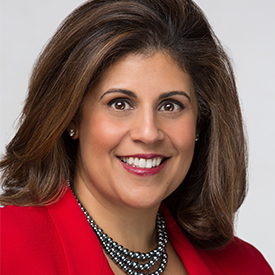
Anjali Kataria
Mytonomy
CEO and Co-founder

Company Info
Mytonomy
4550 Montgomery Ave Suite 200N
Bethesda MD 20814
About
Anjali Kataria is the co-founder and CEO of Mytonomy, an enterprise software company focused on patient engagement through digital education. She has spent more than two decades building and scaling venture-backed companies across healthcare and technology. Under her leadership, Mytonomy has been named to the Inc. 5000 list and recognized for innovation in healthcare education. Earlier, she founded a company acquired by Oracle, where she served as VP of product strategy, and held senior technology roles within the Obama Administration, including at the FDA and the Executive Office of the President. Recently Elsevier announced their intention to acquire Mytonomy.
Education
- Bachelor of Arts
Duke University - Master of Public Policy
Harvard Kennedy School
Awards & Certifications
-
Awards
EY Entrepreneur of the Year Finalist (Washington, DC area)
Fierce Top 8 Most Influential Women in Healthcare IT
FDA Commissioner's Award for Innovation
-
FWEE Silicon Valley Trailblazer Award
Top 40 Under 40, Greater Washington, DC Area
B.N. Duke Merit Scholar
-
Certifications
MIT AI CEO Bootcamp
-
Affiliations
Member, Young Presidents' Organization
Washington, D.C.
Baltimore Gold Chapter

Anjali Kataria is the CEO and co-founder of Mytonomy, a video-based patient engagement company based in Bethesda, Maryland.
What problem did Mytonomy set out to solve?
Mytonomy exists because healthcare actually starts and ends at home. Traditionally, patients go into the clinic or the hospital, and they come out with handouts. We solve that problem. We give them patient education that's clinical and evidence-based, with high-quality, short-form video that's streamed to them, all delivered in an engaging platform integrated with their electronic health record. So, at the end of the day, they know what to do to care for themselves.
Patients are so stressed when they receive a diagnosis or need a procedure. Think about the last time you got your lab tests back and wondered what they meant; or imagine going to the clinic and learning you have diabetes or hypertension—that's stressful. At Mytonomy, we are in the business of changing behavior under stress.
You've invested heavily in broadcast-quality storytelling. Why do you think storytelling, and not just software, is so critical to changing patient behavior?
The emotional connection that happens in storytelling is so powerful that it can move a nation, it can move a world and it can certainly move an individual who's trying to learn about their health. Patients get so stressed addressing their health condition and behavior change is really hard because people in general can't absorb new information easily under stress. In thinking about the power of streaming platforms and entertainment content, bringing that into health care has been a real secret sauce because none of our writers, producers or directors are from healthcare, by design. We really wanted people outside of healthcare bringing their knowledge of how to tell stories and how to captivate those moments where you have that emotional connection and get hooked or drawn in because that's when you are able to learn and catch the information. Patients using Mytonomy report reduced anxiety and feel more relaxed watching Mytonomy. And we've seen that watching begets more watching.
What signals were you paying attention to that told you video-based education would become essential in health care?
In 2016, we were thinking that people love to watch their shows on Netflix, Prime, etc. and that streaming was going to become very popular. We made a bet that consumer streaming was where the hockey puck was going. And it was consumer behavior that we thought was missing in healthcare. In January 2020, I went to my fourth or fifth Consumer Electronics Show (CES) where, over the years, there's been more and more healthcare presence.
Back in the day, healthcare was a fledgling area at CES, and as a health tech CEO, people around me were always asking, "Why are you going to Las Vegas for CES?" I think it's really important, as a CEO, to look outside of your industry and see what's happening across the world. What are the mega trends? Where is technology shifting? CES is a fantastic place to very quickly pick up all the insights and trends of what's coming—often three or four years before it actually lands. At the end of the day, yes, we're in healthcare, but we're also technologists in the delivery and management of care. So, it was great to roam the floor with a healthcare delegation of CEO's and leaders from top health systems. There, it was evident that consumer streaming and much more was definitely coming to healthcare, and we were riding the right wave. It was there in 2020 that we started thinking of AI and robots, and it was so clear that AI and robotics could massively transform patient care. Imagine a robot who can attend to your frail mother at 3 am when she has to go to the bathroom! We could see education delivered in new ways. So we stayed the course.
Some of your employees say you have an uncanny ability to see what's coming. How do you do that?
Well, that's a first. I think there is some merit to that more around my being curious and seeing trends. Sometimes acting on those before others. Going back to CES even, in January 2020, I noticed a lot of the East Asians wearing masks, but none of the Americans. I thought that was curious. I took a mental snapshot. When I came back from CES, I was talking to people who had come from Europe and China, where COVID was already taking shape. I was listening, asking questions. It hadn't become a thing in America yet; that didn't happen until March. But talking to others outside of the U.S., seeing the news in Europe on BBC, I took all that in and had my front office team (legal, finance and admin) start meeting in late January. By early February, we had a plan to move our entire company into remote work, and we did. We thought we might be hit pretty hard. So we were all moved home by early March. Settled. We got people set up to work from home. By doing so early, even by a few weeks, our people had stability and could continue achieving their goals while the whole world was going through all these shifts and changes. We were just a few weeks ahead, but that made all the difference. Winning usually happens at the margin, and just being a few weeks ahead gave us a big advantage. I take in a lot of inputs. I'm curious and start to see trends, and then sometimes that just leads to taking action a little bit earlier than others.
As you look ahead, how do you see patient education evolving over the next decade, and what do people still underestimate about that shift?
Patient education is rapidly going to become more personalized. It's going to be multimodal. People are going to want to know if they are watching AI or humans and the humans will be more valued, even though the AI may answer your question better!! Today, you typically get patient education from your hospital; You visit and they hand you some papers. With Mytonomy, you're now getting a video streaming platform where you can watch that content 24/7. But we're moving into a world, at lightspeed, where we're going to ask a medical information agent for all that education and she/he/it are going to tell us exactly what we need to know and keep us on track in ways we haven't before. We are going to see a healthier population because of AI.
You're going to see access to healthcare information in a way that we've never seen before. Doctors spend 18 minutes on average during a clinical visit, yet hours of education are necessary. With AI, you're going to close that gap. We're going to be able to have a much higher-quality patient experience that's highly personalized and draws you in and keeps you coming back. This will help a lot with adherence, and our work at Mytonomy has put us right at the center.
You've moved between public service and large private sector enterprise environments. What leadership insights have you gained from such varied work experience?
One of my biggest takeaways from working in government is that if you don't earn the trust of the people you work with, you cannot get adoption. You can't get anyone to do anything. In private-sector tech, in my Silicon Valley days, people move really fast because they care deeply and they believe they have something important to achieve. If you have to spend extra time meeting, that's not always a good thing. But in government, if you move that fast and don't meet with people and take time to build relationships, nothing will happen. Healthcare is a hybrid of what we see in our public sector and private tech enterprises.
People are in healthcare because they're mission oriented. They have that same calling I felt when I was 15 working as a candy striper at our local Pitt County Memorial Hospital in Greenville, North Carolina. That is the connection that we can make with each other, and that's where the trust comes from in healthcare. People in healthcare are motivated by achieving better patient care and delivery.
How do you balance being a long-range visionary with the day-to-day reality of a fast-growing enterprise?
As a leader, I operate in two systems. Long range is about strategy, trust, rigor and making sure that we are all aligned on where we're headed. And execution is around hitting those short-term priorities that lead to long-term vision. We can and should keep iterating to get to that long-term vision.
It's like climbing a mountain. I love to hike. There's no wrong way to get to the top of the mountain, but you can't go straight up. You've got to figure out where you place your bets and what your strategy is, and then all of you have to start taking one step after another. And it's really important to measure how you're doing along the way so that if you need to change course, you can.
What is a hard-earned leadership lesson that you've learned while at Mytonomy that fundamentally changed how you show up for your team?
It's really important to have connection across the team. I've learned that people really want to know what good looks like because they want to do a good job. Being direct and candid about that is really important.
Another lesson that I've learned from having been a serial entrepreneur is to protect people's personal time. At an early-stage company, people work really hard. If people are going on vacation, they should be on vacation. If people are sick, they should really just get well. I try really hard to show up for them as a leader who is not going to ask them for something when they're taking personal time unless it's absolutely necessary. I'm a different story and love my work so much that taking me away from my laptop is not easy, but I, too, need a long weekend every few months and I take it.
How would you describe your leadership style?
I'm a very direct person. I'm candid and I think that clarity is kindness. I'm very comfortable making a decision with the information that I have, knowing that if we don't get it right the first time, we'll iterate and we'll keep figuring it out. I have a lot of really bad ideas and every now and then a good one pops out and becomes a real winner. So, I believe most of life is spent not winning, not succeeding, not achieving and trying to solve the problems. I have a lot of respect for resilience, transparency and candor. We really do not have a lot of politics in our company. We meet up and down the leadership chains. We aren't very hierarchical. Being a little more flat allows for information to reach everyone who needs it. Information is like water – it floweth freely. My job is to hire the best talent and make sure they get access to all the information and resources they need so they can figure out how to solve the biggest, hairiest problems and keep us moving forward.
 Visit our rankings portal
Back To Top


U.S.WorldScienceHealthRankingsOpinionEntertainmentFact CheckMy TurnEducationEventsSportsPodcastsBetter PlanetBetter WorkplacesMightierAutosNewslettersUnconventionalVantageExpertsLeadershipDev Pragad
Trending
Israel at War Vladimir Putin Russia-Ukraine War Donald Trump
Subscriptions
Membership Monthly $4.99 Membership Yearly $49.00 Membership+Print Monthly $9.99 Membership+Print Yearly $99
Newsletters in your inbox See all
The Bulletin (Daily)See Sample
The Gist of It (Daily)
Geoscape (Twice a Week)
The 1600 (Daily)
Inside Trump Policy (Weekly)
Newsweek AI (Weekly)
Sports Daily (Daily)
The Josh Hammer Report (Weekly)See Sample
For The Culture (Three Times a Week)See Sample
Discoveries (3 Times a Week)
Like & Subscribe (Daily)
Breaking News (As it Breaks)
The Debate (Twice a Week)
Pawsitively (Daily)
Better Planet (Weekly)
The Good Life (Weekly)
Newsweek Pulse (2x3 Times a Month)
Sign up now
You can unsubscribe at any time. By signing up you are agreeing to our Terms of Service and Privacy Policy
In The Magazine  September 19
2025 Issue
Company
About UsMastheadDiversityAnnouncementsArchivePolicies and StandardsMission StatementLeadershipNewslettersPress Center
Editions:
Contact
AdvertiseCareersContact UsCorrections
Terms of Use
Cookie PolicyCopyrightPrivacy PolicyTerms & ConditionsTerms of Sale Privacy Settings
© 2026 NEWSWEEK DIGITAL LLC