...

By Conor Gaffey
Staff Writer
Share
Newsweek is a Trust Project member
See more of our trusted coverage when you search.Prefer Newsweek on Googleto see more of our trusted coverage when you search.
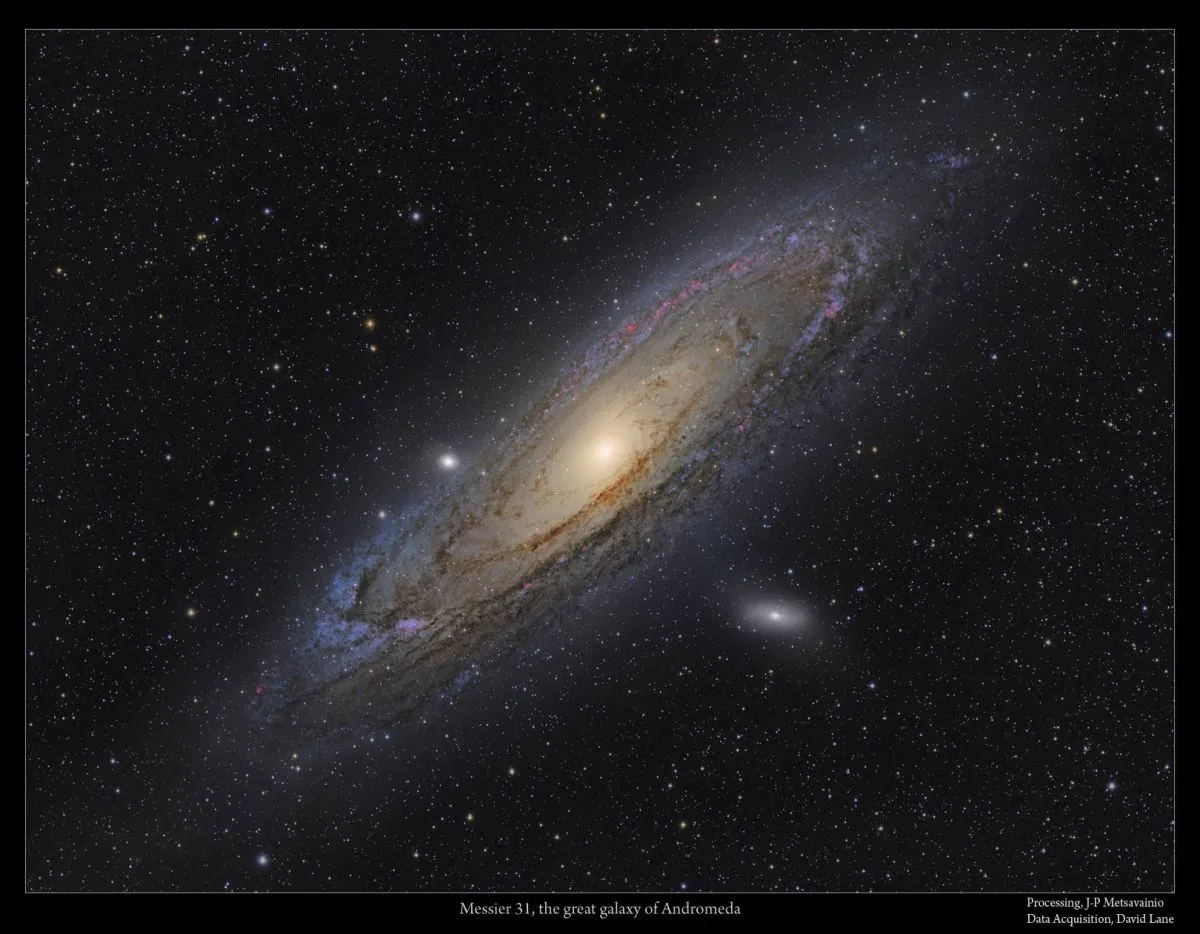
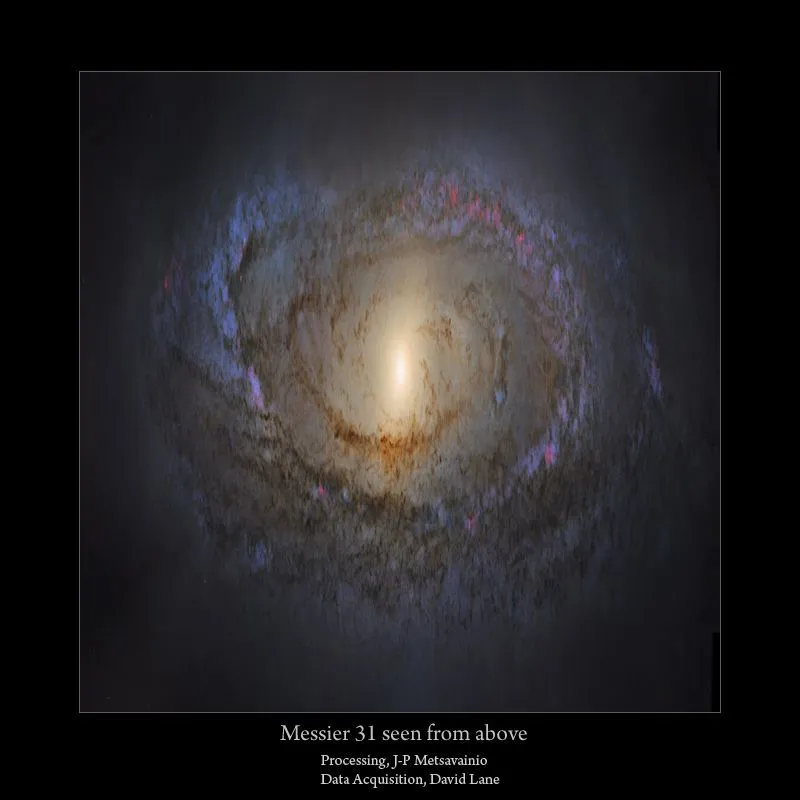
Astrophotographers have produced stunning images of the Andromeda galaxy by combining 37 hours worth of photographic exposures. The images, produced by astrophotographers David Lane and J-P Metsavainio, show the trillion-star galaxy—the closest galactic neighbor to the Milky Way—as it appears in visible light.
Andromeda, whose technical name of Messier 31 (or M31), is around 2.5 billion light years away from Earth and can be seen with the naked eye on clear nights. The galaxy is moving through space towards the Milky Way at a speed of approximately 62 to 87 miles per second and is expected to collide with the Milky Way in around 4.5 billion years time, forming a giant elliptical galaxy.
Read More on Science
Lane collected the data using an 11-megapixel camera coupled with an ultra high-precision telescope, according to CNET. He shot 18 hours of visible light exposure, then used a red, green and blue filter for six hours each, and one hour through a hydrogen alpha filter. The raw data was then processed by Metsavainio to produce the spectacular results.

...
Andromeda has a diameter of around 260,000 light years, meaning that a light beam would take 260,000 years to travel from one end of the galaxy to the other. The Milky Way is 100,000 light years across and consists of between 200 and 400 billion stars.
...
Skywatchers have photographed the spiral-shaped galaxy before. In January, NASA released a 1.5 billion pixel image of Andromeda, which would require some 600 high-definition television screen to be displayed in its entirety.
Submit Correction
View Editorial & AI Guidelines