...

By Aristos Georgiou
Science and Health Reporter
0
Share
Newsweek is a Trust Project member
See more of our trusted coverage when you search.Prefer Newsweek on Googleto see more of our trusted coverage when you search.
A large Roman venue that hosted horse-drawn chariot races in antiquity has been discovered in northern Spain.
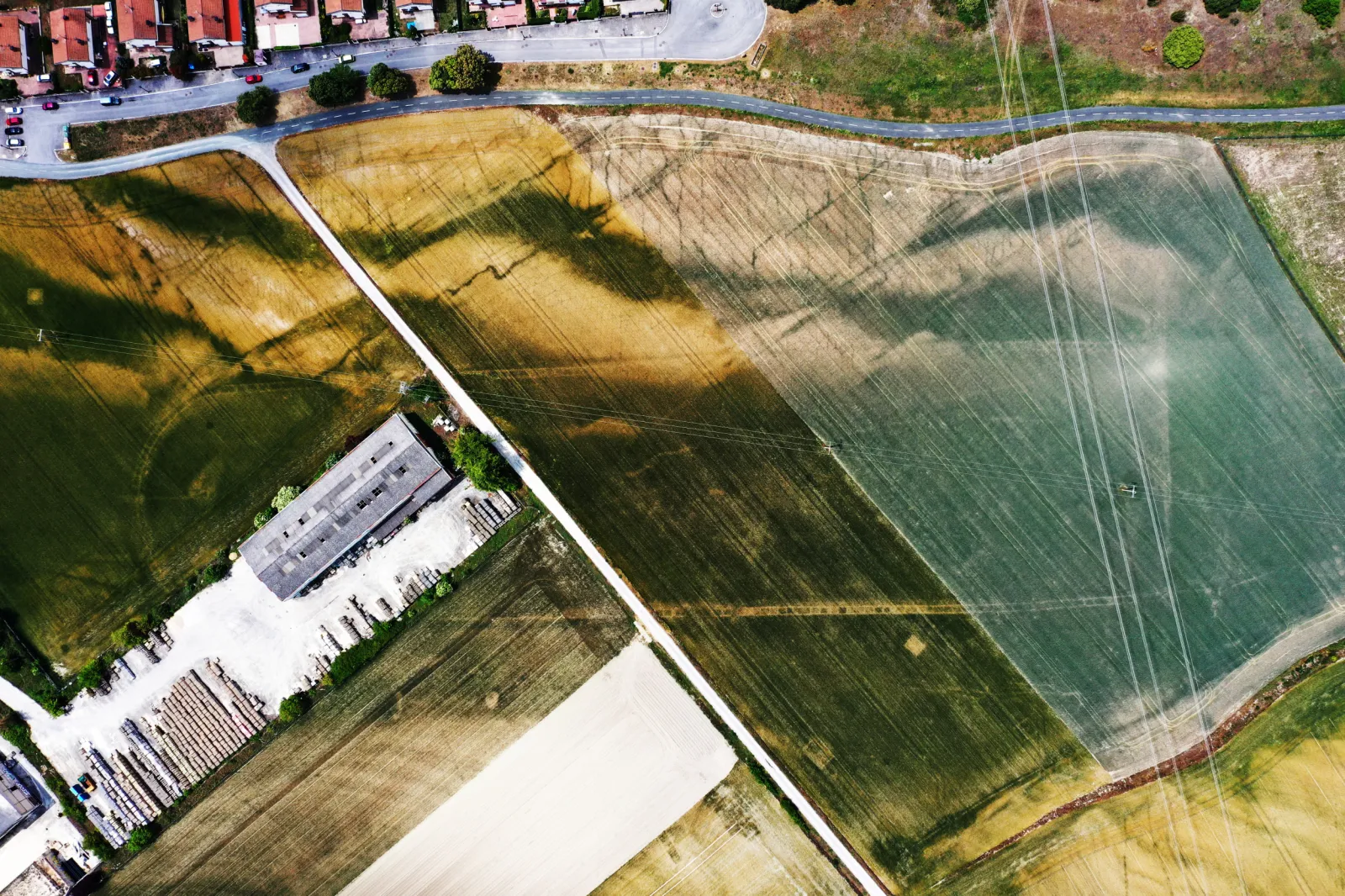
The outline of the venue, known as a circus, was identified during aerial investigations at the site of Iruña-Veleia, an ancient Roman city now located in the Álava province of the Basque Autonomous Community.
The circus measures approximately 920 feet long by 235 feet wide, and its dimensions and form clearly reveal its identity despite the fact that it has not yet been excavated, Spanish heritage startup Arkikus announced in a press release. Preliminary estimates indicate that the venue could have accommodated around 5,000 spectators.
Read More on Science
In a project supported by the Provincial Council of Álava and the Basque regional government, Arkikus documented the Roman circus during a systematic review of the surface of the site, covering an area of 251 hectares. This project involved an examination of historical and modern aerial photography, the collection of images obtained by drones, and the mapping of the area using LiDAR technology.
...
LiDAR is a remote sensing method that involves the use of laser pulses fired at the ground to generate 3D models of a given landscape. This method can map the topography of the land while also revealing hidden man-made features that may not usually be visible.
"The circus had not been noticed [before] because the area had not been reviewed with the proper eyes, aerial techniques, timing, weather and landscape conditions until our study," archaeologist and Arkikus co-founder Javier Ordoño told Newsweek. "It is only visible from above but, moreover, it can only be seen in very specific days and conditions, particularly at the beginning of the summer season, when the cereal crops have grown and are just about to be collected, and the combination of rainy and sunny days offers more contrast between wet and dry soils.
"Finally, it is essential that you have experienced eyes to differentiate between crop marks that are compatible with archaeological features and others that are not."
The circus would be the third discovered in the northern half of the Iberian Peninsula, which was known to the Romans as Hispania. The two other examples were found in the ancient settlements of Tarraco (capital of Roman Hispania's Citerior province, present-day Tarragona) and Calagurris (present-day Calahorra).
In addition to the circus, the investigations at Iruña-Veleia detected the presence of several other buildings and urban infrastructure beneath the surface of the site, which shed new light on the ancient city.
The project identified streets, public squares, residential neighborhoods, possible religious buildings, and infrastructure related to water supply or sanitation, among others.
"Not only the circus stands out among the findings," Ordoño said. "We have also found hundreds of linear crop marks that are coherent with the presence of big neighborhoods...over a surface of more than 100 hectares. This highlights the organized urban planning that this Roman city had in imperial times."
According to Arkikus, these finds highlight the significance of Iruña-Veleia in antiquity as a stopping point for people traveling along the Roman road that connected the important ancient settlement of Asturica Augusta (present-day Astorga in northwestern Spain) with Burdigala (present-day Bordeaux, in western France).
"The findings reveal that Iruña-Veleia was more important than previously suspected, and that not only capitals of Roman imperial provinces (such as Tarraco) and other important cities (such as Calagurris) could afford big leisure buildings," Ordoño said. "It is possible that many less important Roman towns also hosted ephemeral circuses that left no vestiges, but Iruña-Veleia had a stable one whose foundations are seen from the sky."
The Basque Autonomous Community is home to the Basque people, whose language, known locally as Euskara, is considered by linguists to be a language isolate—meaning it has no direct links to any other known language family.
In fact, Basque is thought to be the last surviving descendant of the "Paleo-European" languages. These predate the Indo-European languages brought to the continent by migrants from the Eurasian Steppe during the Bronze Age, which are now dominant in the region today.
Do you have a tip on a science story that Newsweek should be covering? Do you have a question about archaeology? Let us know via science@newsweek.com.
Update 07/30/24, 13:42 a.m. ET: This article was updated with comment from Javier Ordoño.
View 0 Comments
Submit Correction
View Editorial & AI Guidelines