...

By Hugh Cameron
Reporter
0
Share
Newsweek is a Trust Project member
See more of our trusted coverage when you search.Prefer Newsweek on Googleto see more of our trusted coverage when you search.
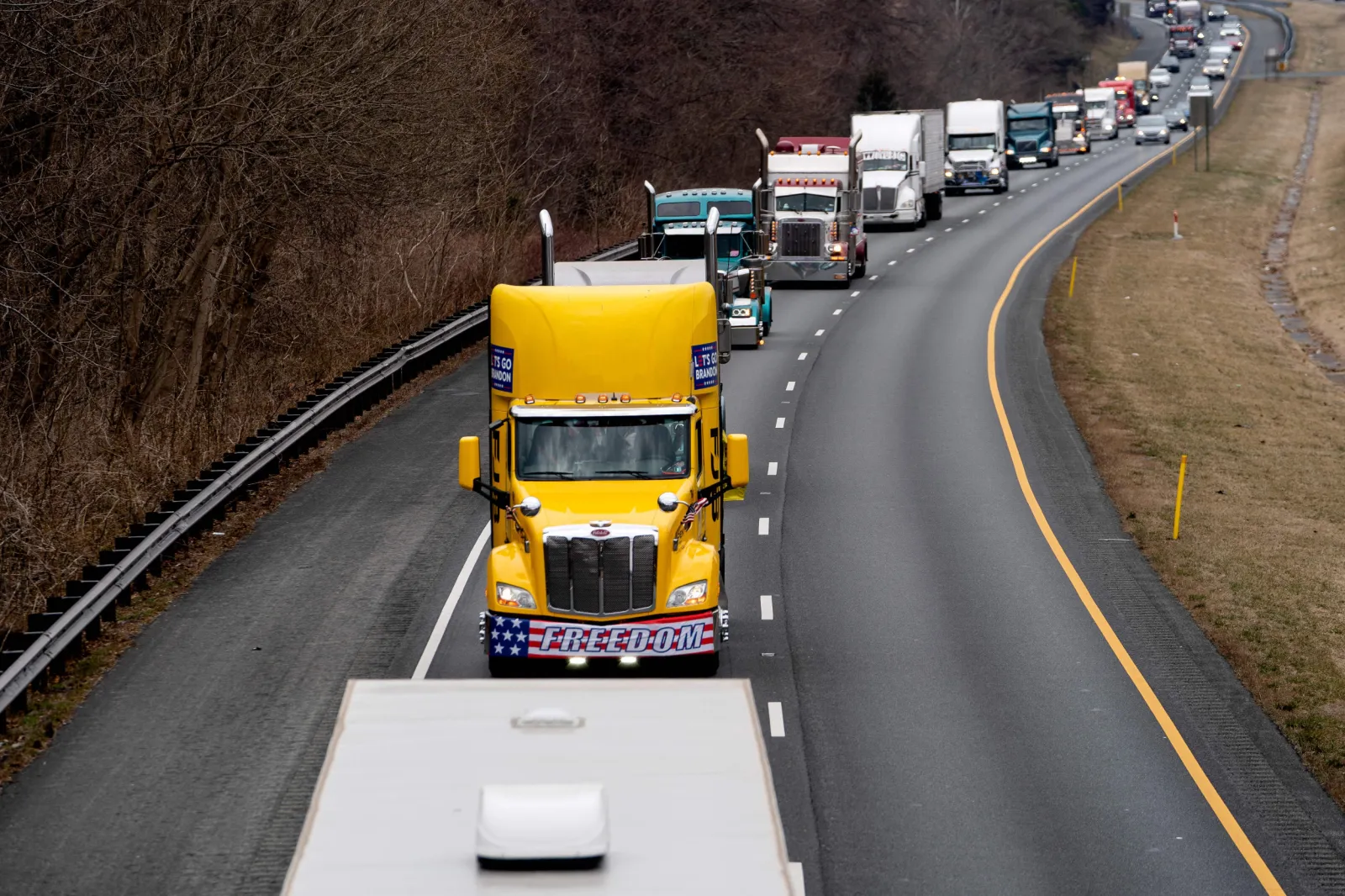
America is experiencing a nationwide shortage of truckers, prompting the logistics industry to place more emphasis on employee retention satisfaction as the driver shortfall threatens to upend the nation's supply chains.
According to a report published last week by business research firm Tech.co, 56 percent of U.S. freight businesses concerned about staffing retention plan to increase driver compensation, with the same number also planning to place greater emphasis on work-life balance to "combat the perception of long and inflexible hours in the industry."
This is against the backdrop of what Tech.co called a "persistent trucker shortage," which it warned threatens the stability of America's supply chains and dubbed a "ticking time bomb" for the logistics sector.
Read More on News
A spokesperson for the Department of Transportation told Newsweek: "Secretary [Sean] Duffy is working tirelessly to address the concerns of American truckers who have been vocal about the issues facing their industry."
...
Why It Matters
A nationwide shortage of this magnitude poses risks not only to the logistics industry itself, but also send ripples through most parts of the economy. With fewer drivers hauling freight, supply chains are severely disrupted, leading to longer delivery times, inventory shortages and production delays as critical materials fail to reach their destinations on time. As businesses compete for this lean workforce, freight costs rise—costs that will ultimately be passed to consumers.
In the longer term, the persistent disparity between the drivers America needs and those it has will accelerate the push toward automation in the industry, though this development faces numerous hurdles, both technological and political.
What To Know
Tech.co's report was based on a May survey of 521 professionals in the transport and shipping sector. Respondents clearly highlighted the extent and the risks of the nationwide trucker shortage: 85 percent saying that their business is operating at full capacity; 63 percent saying the ability to recruit and retain drivers has either stalled or worsened over the past year; and 69 percent saying that driver shortages have limited their ability to meet demand.
Additionally, 91 percent agreed with the statement that America's economy relies on "fast, affordable, reliable freight movement."
As evidence of how vital this industry is, there are an estimated 3.6 million truck drivers in the U.S.—equivalent to just over one out of every hundred people. However, according to Statista, the industry has faced a persistent shortage that is expected to grow to 162,000 drivers by 2030.
As Tech.co noted, the issue is a "hiring problem, not a demand problem," given 84 percent said there was sufficient or surplus freight to haul, and 63 percent reporting increased demand compared to 2024. As a result, companies are now assessing ways to improve recruitment and retention.
As noted, 56 percent of business who chose "staffing retention" as a priority plan to improve salaries and work-life balances to this end, with an additional 43 percent putting more emphasis on recruitment efforts and 44 percent providing better training and development opportunities.
However, rather than addressing these shortages through a focus on employee satisfaction, other businesses are already exploring a different solution: Automation.
The first fully self-driving trucks are currently being tested in Texas, with plans to expand the study later this year. While this may inaugurate a gradual integration of automated freight-hauling in the future, those in the sector remain skeptical of the technology and its long-term implications.
Only 19 percent of those surveyed by Tech.co said they would use a self-driving vehicle, with 11 percent expressing uncertainty and 70 percent saying that, if given the choice, they would still opt for a human driver.
However, despite their reservations, 42 percent said they expect the widespread employment of self-driving trucks on America's roads within the next 15 years.
What People Are Saying
A spokesperson for the Department of Transportation told Newsweek: "Secretary [Sean] Duffy is working tirelessly to address the concerns of American truckers who have been vocal about the issues facing their industry, including burdensome regulations that make it harder for truckers to do their jobs while failing to go after bad actors that spoil the industry.
"In addition to regulatory relief and expanding truck parking, we are also enhancing access to [Commercial Driver's License] training by making more than $90 million available through the Commercial Motor Vehicle Operator Safety Training and Commercial Driver's License Program Implementation grant programs."
Tech.co editor Jack Turner: "Tech.co's research has found that companies are struggling to attract new drivers to the industry, creating a ticking time bomb for the sector, which is built on the workers in the cabs. It's reassuring to see that some companies are responding proactively to these issues, choosing to increase pay and the work-life balance of these essential workers."
Natasha Willett, head of insights at Tech.co: "It's clear that there is profound transformation underway in the U.S. logistics sector, and one that is defined not just by growing demand, but by fundamental shifts in capacity, labor and technology that are reshaping the entire landscape of freight movement."
What Happens Next
Tech.co forecast that the U.S. logistics industry will be valued at $23.14 trillion by 2034.
Update 07/11/25 3:55 a.m. ET: This article was updated with comment from the Department of Transportation.
View 0 Comments
Submit Correction
View Editorial & AI Guidelines