...

By Jordan King
Reporter
0
Share
Newsweek is a Trust Project member
See more of our trusted coverage when you search.Prefer Newsweek on Googleto see more of our trusted coverage when you search.
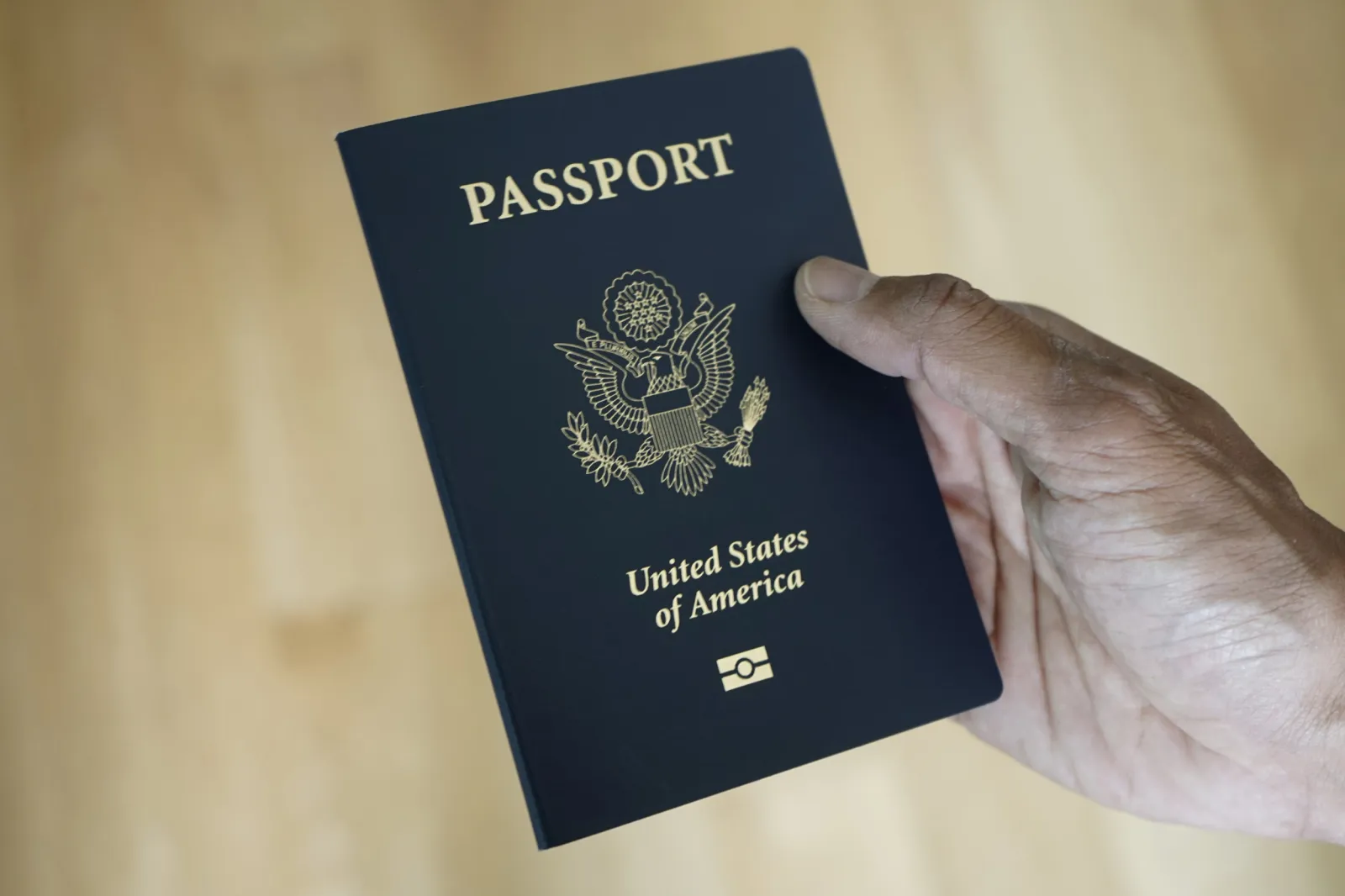
The American passport, once ranked the most powerful in the world, has now slipped to 10th place for global mobility—its lowest ever position.
The 2025 Henley Passport Index has dropped America's rating three spots from last year, after a decade of decline.
Despite this, the State Deparment told Newsweek that is still confident about the strength and global reach of the U.S. passport.
Read More on News
...
Why It Matters
The fall in the ranking highlights shifting global mobility trends and reflects concerns about the U.S.'s approach to international relations and border policies—impacting both American travelers and the nation's global influence.
The index, produced by London-based Henley & Partners, draws on exclusive International Air Transport Association data to rank passports by the number of countries granting their holders visa-free or visa-on-arrival access, making it a significant barometer of diplomatic ties and "soft power" worldwide.
What To Know
For 2025, the United States tied with Iceland and Lithuania for 10th place, marking its lowest position since the creation of the index 20 years ago, and continuing a decade-long slide from the No.1 spot it shared in 2014.
Americans can travel visa-free to 182 destinations—four fewer than last year and 11 fewer than holders of the top-ranked passport, Singapore.
Singapore retained its lead at the top of the list, with visa-free access to 193 out of 227 possible destinations. Japan and South Korea followed in joint second place, each offering access to 190 destinations.
The decline in U.S. passport power seems to be attributable to a lack of reciprocation in visa-free travel, according to how Henley & Partners' calculates its rankings, which also looks at imbalances. America allows 46 nationalities to enter without a visa, the index showed.
"The top of the ranking is very competitive, and countries need to work to maintain it," a spokesperson for Henley & Partners told Newsweek. "The US was number one on the ranking in 2014 but by only gaining access to 8 destinations since then, the US has fallen by nine spots as other top ranking countries outpaced them."
"Japan for example has added 19 destinations to its score since 2014 and gained one spot in the ranking," they added.
The State Department stressed that its focus is on safe, efficient and reciprocal travel for people. It told Newsweek that its Visa Waiver Program, which allows 41 countries to enter the U.S. without a visa, is based on reciprocity and robust security standards.
What Is the Criteria?
Each passport earns one point for every country it can enter without needing a visa in advance. This includes destinations where travelers can enter visa-free, get a visa on arrival, or use an electronic travel permit without needing government approval before the trip.
If a visa is required before departure, including needing government approval for an e-visa or visa on arrival, the passport gets 0 points. The total score reflects how many countries a passport allows entry to without needing prior visa approval.
Top 10 Most Powerful Passports
1. Singapore: 195 visa‑free destinations
2. Japan and South Korea: 190 visa‑free destinations
3. Denmark, Finland, France, Germany, Ireland, Italy, Spain: 189 visa‑free destinations
4. Austria, Belgium, Luxembourg, Netherlands, Norway, Portugal, Sweden: 188 visa‑free destinations
5. Greece, New Zealand, Switzerland: 187 visa‑free destinations
6. United Kingdom: 186 visa‑free destinations
7. Australia, Czechia, Hungary, Malta, Poland: 185 visa‑free destinations
8. Canada, Estonia, United Arab Emirates: 184 visa‑free destinations
9. Croatia, Latvia, Slovakia, Slovenia: 183 visa‑free destinations
10. Iceland, Lithuania, United States: 182 visa‑free destinations
What People Are Saying
Juerg Steffen, CEO of Henley & Partners, said in a statement: "Your passport is no longer just a travel document—it's a reflection of your country's diplomatic influence and international relationships. In an era of growing inequality and mounting geopolitical uncertainty, strategic mobility and citizenship planning are more critical than ever."
Christian H. Kaelin, chair of Henley & Partners, said: "The consolidation we're seeing at the top underscores that access is earned—and must be maintained—through active and strategic diplomacy. Nations that proactively negotiate visa waivers and nurture reciprocal agreements continue to rise, while the opposite applies to those that are less engaged in such efforts."
What Happens Next
The United States' declining passport power could impact American travelers' global mobility, business opportunities and perceptions abroad.
Experts say future rankings will likely hinge on either renewed diplomatic efforts to increase reciprocal visa agreements or the continuation of recent trends toward tighter border controls.
Update 7/24/25, 8:30 a.m. ET: This story has been updated with comment from the State Department and Henley & Partners.
View 0 Comments
Submit Correction
View Editorial & AI Guidelines