...

By Jordan King
Reporter
0
Share
Newsweek is a Trust Project member
See more of our trusted coverage when you search.Prefer Newsweek on Googleto see more of our trusted coverage when you search.
The chances of Alberta voting for independence in 2026 edged higher on prediction markets after the oil-rich province confirmed it would hold a referendum this year on whether to remain part of Canada or begin the legal process toward holding a binding separation vote.
On Thursday, Alberta Premier Danielle Smith said in a televised address that a referendum would take place on October 19, adding a 10th question to an already scheduled ballot covering immigration and constitutional issues. The new question, which would not immediately determine whether Alberta separates from Canada, has received criticism from separatists—with one group describing the premier's decision to "have a referendum to have a referendum" as "cynical and dishonest."
Although the October vote stops short of triggering secession, it represents a concrete step toward a separation process that carries political, legal and economic implications for the province and for Canada. The announcement follows months of pressure from separatist groups, a high‑profile legal clash with First Nations and growing national concern over Canada's unity.
Read More on News
Smith, the leader of the United Conservative Party, repeated her long-standing position that she is in favor of Alberta remaining in Canada. "That is how I would vote on separation in a provincial referendum," she said, adding, "It is also the position of my government and my caucus."
Newsweek has contacted Smith's office for comment via email outside normal working hours.
...
How Prediction Markets Reacted
The prediction platform Polymarket has the odds of Alberta voting "yes" for independence this year at 17 percent as of Friday, up from 9 percent on Thursday. This would mean a referendum on Alberta's independence from Canada is passed by December 31.
"Any referendum that establishes Alberta's desire for independence, sets a framework for independence, or establishes independence from Canada will qualify," the platform said.
Prediction markets allow traders to buy and sell contracts tied to political outcomes and current events, aggregating real‑money wagers into probability estimates. Prices fluctuate as traders react to polling and broader political trends. They measure trader sentiment at a given moment but do not always accurately predict the future.
Challenge to Separatists' Referendum
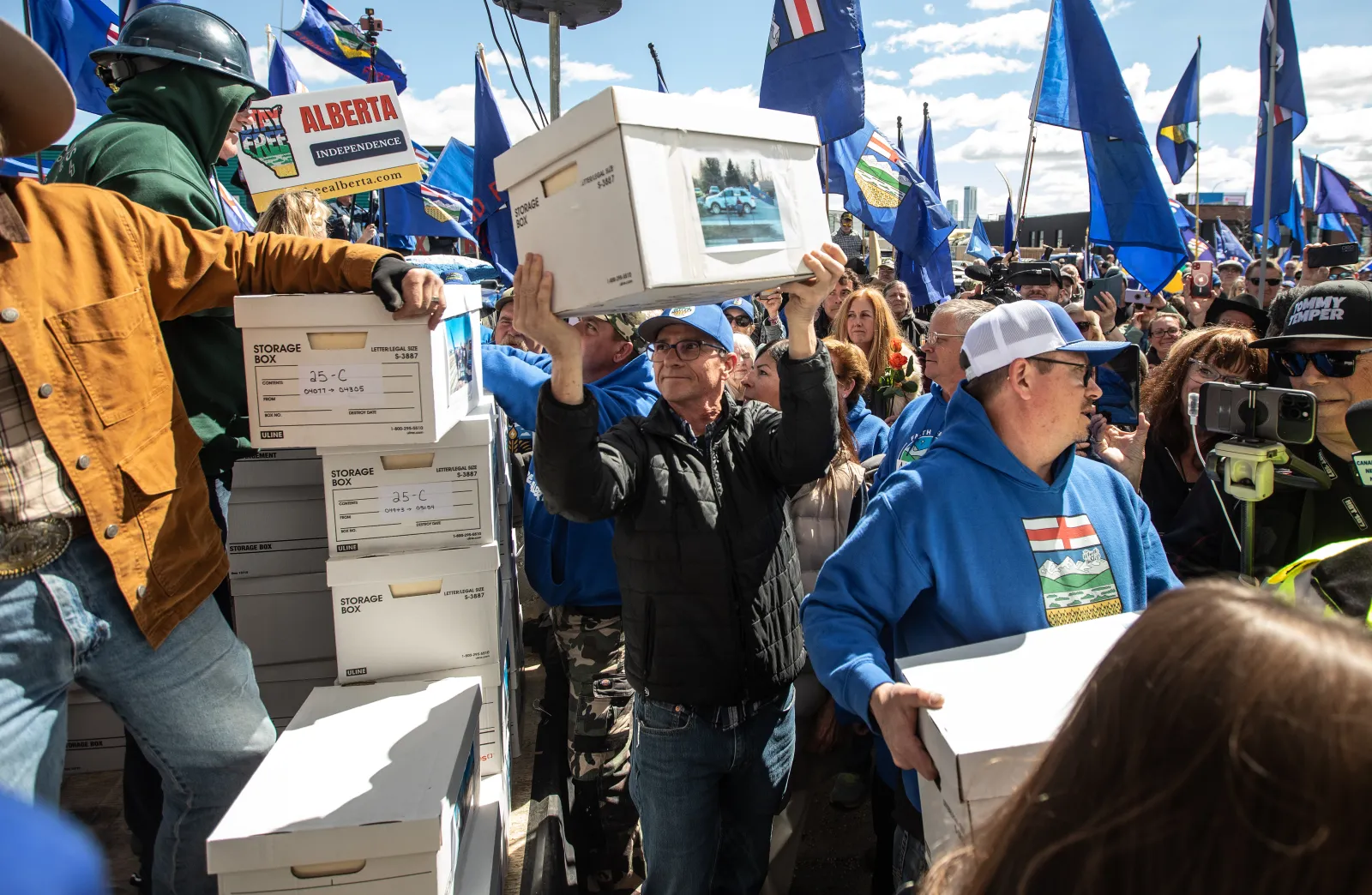
The separatist group Stay Free Alberta has said it submitted more than 300,000 signatures—well above the 178,000-signature threshold—to trigger a citizen-led referendum on whether the province should leave Canada.
This petition is still undergoing verification, the group said, as it has been held up by legal challenges. Last week, a judge ruled to toss out the referendum after First Nations groups argued it infringed on their rights.
On Thursday, Smith spoke out against this decision, saying she was "deeply troubled" by the delay.
"As premier, I will not have a legal mistake by a single judge silence the voices of hundreds of thousands of Albertans," she said. "Alberta's future will be decided by Albertans, not the courts."
"Kicking the can down the road only prolongs a very emotional and important debate, and muzzling the voices of hundreds of thousands of Albertans wanting to be heard is unjustifiable in a free and democratic society," Smith added.
Separatists Criticize Alberta Referendum
Prominent separatist figures have criticized Smith's announcement, accusing her of using the referendum as a political tactic.
"I think it is literally one of the most cynical and dishonest things that has ever been attempted to be pulled on the population of Alberta," said Stay Free Alberta lawyer Jeff Rath.
Speaking with local journalist Sean Amato, Rath said Smith was stretching timelines for her political benefit.
"Think about it, we're going to have a referendum to have a referendum," he said. "That means if we win the so-called referendum vote in October, that kicks it over into 2027."
As Alberta's next fixed provincial election is set for next year, Smith's announcement "forces everybody on the independence side to campaign for Danielle Smith for premier in 2027," Rath said.
Cameron Davies, the leader of the independence-supporting Republican Party of Alberta, shared a social media post from law professor Bruce Pardy that said, "Smith is trying to play Albertans like [Canadian Prime Minister Mark] Carney is playing Smith."
"Smith can hold an independence referendum if she wants to," Pardy added. "She doesn't want to. She's dangling the possibility of one in the future instead."
Why Some Albertans Want to Leave Canada
The province, along with several others in the west, has long seen itself as unfairly treated by Ottawa. Its oil and gas resources make it a significant economic contributor, but many feel underrepresented in the capital, especially over the environmental policies that regulate its resource industry.
Davies, a veteran and former oil patch worker, previously told Newsweek: "This isn't about anger, it's about forging our own path and seeking our own future. Alberta contributes more than we get back, year after year. We're rich in resources, rich in talent and rich in potential, yet we're held back by a system that doesn't serve us."
Smith has been working with Prime Minister Mark Carney's federal Liberal government to build an oil pipeline to the Pacific coast in a move likely intended to appease dissatisfied Albertans.
"Canada's government strongly believes that the interests of Albertans and all Canadians are best served when we work together," Dominic LeBlanc, the federal minister of intergovernmental affairs, wrote on social media on Thursday.
But some separatists are not convinced by these talks either. In the same post criticizing Smith's announcement, Pardy wrote: "Carney could approve a pipeline if he wants to. He doesn't want to. He's dangling the possibility of one in the future instead.
"On the present path, neither seems likely. The question is whether Alberta independence supporters will refuse to be fooled by Smith as Smith has been fooled by Carney."
View 0 Comments
Submit Correction
View Editorial & AI Guidelines