...

By Soo Kim
Reporter
0
Share
Newsweek is a Trust Project member
See more of our trusted coverage when you search.Prefer Newsweek on Googleto see more of our trusted coverage when you search.
WestJet, a major Canadian airline, is pausing its further rollout of non-reclining seats across 43 of its Boeing 737 aircraft following backlash from employees.
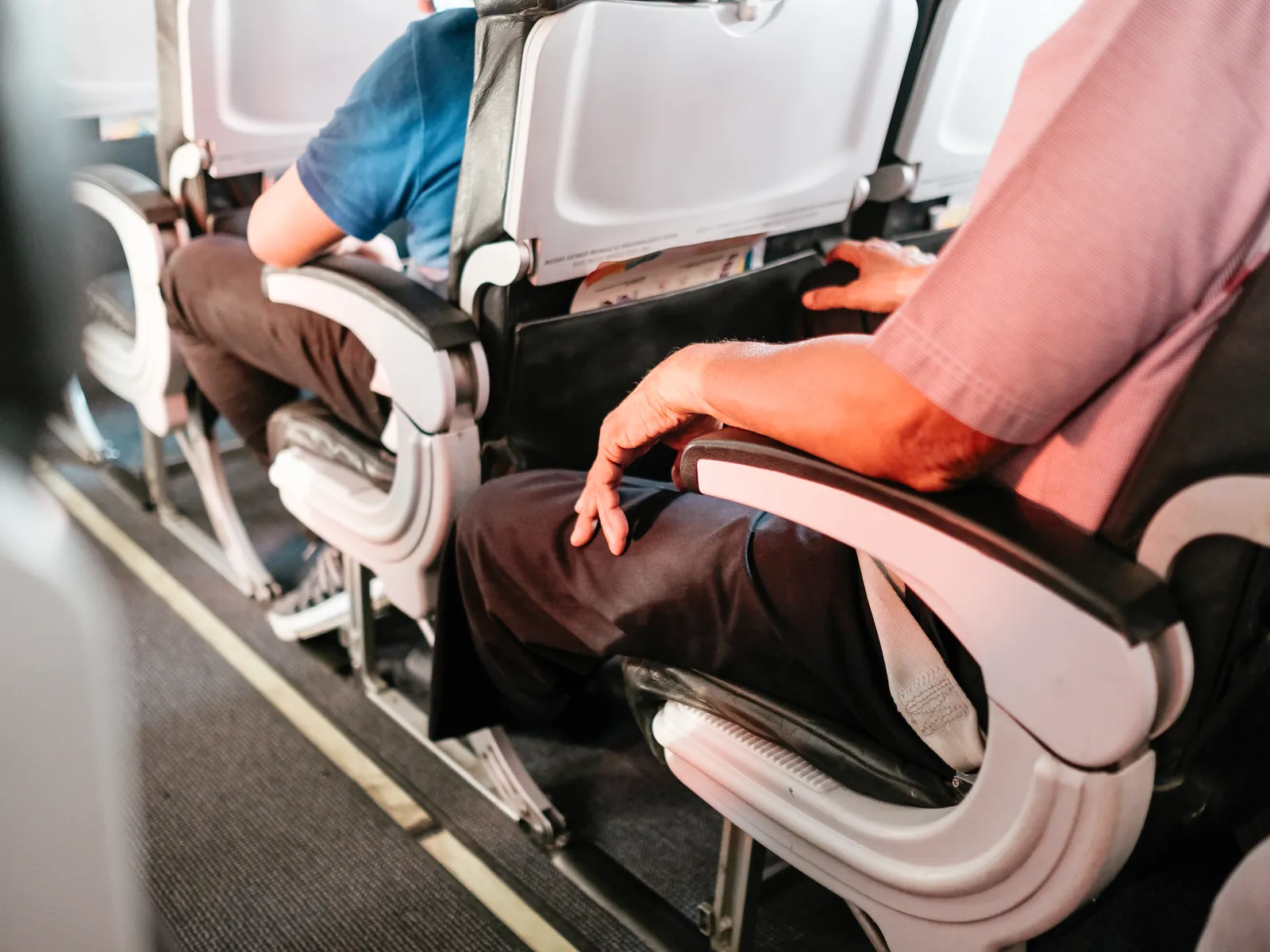
Back in October, the carrier began operating some of its newly configured planes fitted with standard economy seats that come in a non-adjustable, fixed position. Reclining seats are available, but passengers must pay an extra fee for such seats.
In a statement, WestJet told Newsweek that around half of its all-economy fleet will be reconfigured by Monday and "the reconfiguration does include the fixed recline seat design, which is inclusive of a slight recline, in its standard economy."
Read More on Travel
The statement added: "Due to some supply chain delays, as of December 15, we will pause the reconfiguration work to ensure our aircraft are available to support our operations during the peak winter travel season."
According to Reuters, WestJet said in October that half of the passengers who tested the new seats preferred the fixed design to avoid others encroaching on their space. However, the fixed seat design sparked criticism and concerns over health and safety from airline workers.
Why It Matters
WestJet’s latest seat design comes amid ongoing discussion over the lack of legroom and the reclining of seats on planes, which has often sparked heated debate on social media.
A January 2019 study in the International Journal of Industrial Ergonomics notes that “the increase in size (body mass and stature) and changing proportions of the human body over the past few decades should be considered in the ergonomic design of economy class airline seats.”
“Seat pitch, leg room and seat width should be increased in many economy class airline seats,” the study noted, advising that “an international law should regulate a minimum seat pitch, leg room and seat width.”
What To Know
WestJet’s plan for a new seat configuration featuring a “fixed recline design” on 43 Boeing jets was announced back in September.
The airline said it was planning to create multiple seating tiers on the planes, installing a dozen premium seats and 36 more extended comfort seats that would come with extra space and a higher price tag, as well as over 100 seats with less leg room, according to The Canadian Press.
“The layout for our refreshed cabin caters to our guests’ diverse preferences. Whether they opt for premium seating with extra amenities and legroom or for more affordable ticket prices with less space, we’re excited to introduce this range of products for our guests to enjoy,” chief experience officer Samantha Taylor noted in a news release at the time.
The new design has faced pushback from workers, including pilots. In a bulletin to members, the WestJet contingent of the Canadian Union of Public Employees described the reduced leg room as being “comparable to ultra-low-cost carriers like Spirit, Wizz Air and Frontier.”
It said the more cramped conditions made it harder for guests with “varying mobility,” car seats and pets, on top of limited overhead bin space, “despite an increase in guest capacity,” according to The Canadian Press.
The change would raise the risk of “guest frustration” and impact staff members who may find it harder to sleep while commuting to an upcoming shift, the union said, such as deadheading pilots, those who travel as passengers on a flight to be repositioned for another work schedule.
Pilots are said to be considering filing a grievance over the matter, but WestJet has said any deadhead travel for pilots will be managed in accordance with their collective agreement, Reuters reported in October.
What People Are Saying
John Gradek, who teaches aviation management at McGill University, told The Canadian Press: “If you’re anything over five-foot-ten, your knees are under your chin.”
Air passenger rights advocate Gábor Lukács told CBC: “The right passengers have is to be provided a seat that they can actually fit into.”
Bernie Lewall, chair of the WestJet ALPA Master Executive Council, the union local representing WestJet pilots, told Reuters: "If they think that there's a market out there, I'm okay with that. What I'm not okay with is being forced to deadhead in a seat like that where it could potentially lead to health and safety issues, or fatigue issues."
What Happens Next
According to an internal memo obtained by The Canadian Press, WestJet Vice President Robert Antoniuk told staff that the new configuration will be rolled out on 22 planes “for the time being,” with 21 of those having already been fitted with the tighter design.
The airline will “continue to gather feedback from guests and employees,” Antoniuk said in the message.
WestJet told Newsweek that the carrier plans to resume reconfiguring its all-economy aircraft in the spring.
"Throughout this winter, we will also be monitoring guest feedback and assessing the operational performance of the reconfigured aircraft to learn more about how this product is performing in the market," the airline told Newsweek.
...
Do you have a travel-related story to share? Let us know via life@newsweek.com, and your story could be featured on Newsweek.
Update 12/15/25, 11:16 a.m. ET: This article was updated with comment from WestJet.
View 0 Comments
Submit Correction
View Editorial & AI Guidelines