10
Loading video...

By Jesus Mesa
Reporter
0
Share
Newsweek is a Trust Project member
See more of our trusted coverage when you search.Prefer Newsweek on Googleto see more of our trusted coverage when you search.
Michigan's open seat is shaping up to be one of the most-expensive Senate races in history.
The contest between Democrat Abdul El-Sayed and Republican Mike Rogers has seen PACs and super PACs pour millions of dollars into a race that has become a major battleground for both parties.
A review of federal records by Bridge Michigan, a nonprofit news organization, found more than $205 million in disclosed spending in the race.
Read More on Politics
The spending has drawn national attention as Democrats see the seat as key to regaining control of the chamber, while Republicans are looking to flip a seat they have not won in more than 30 years. More recently, the focus has turned to where the money is coming from, with both candidates pointing to two names in particular: the American Israel Public Affairs Committee (AIPAC) and George Soros.
But the federal filings tell a more-complicated story.
A Record Bet That Lost
United Democracy Project, AIPAC's super PAC, spent about $30.6 million in the Democratic primary, according to Federal Election Commission data reviewed by Newsweek. Roughly $10.5 million supported Haley Stevens, a pro-Israel Democratic representative from Michigan. About $20.1 million paid for ads opposing El-Sayed.
It was the most the group had ever spent on a single race. Its previous high was about $14.5 million, spent in 2024 to unseat Jamaal Bowman, then a Democratic representative from New York. The effort succeeded.
But Michigan went the other way. El-Sayed, a critic of Israel's actions in Gaza who has described them as genocide, won the primary anyway. He defeated Stevens on August 4 by about one point, 48.5 percent to 47.5 percent, a margin of roughly 15,000 votes out of nearly 1.5 million cast.
"Our members remain determined to ensure that voters reject Dr. El-Sayed and his radical anti-Israel agenda in November," Deryn Sousa, a spokeswoman for AIPAC, said in a statement after Stevens' defeat. In an email to members after the vote, AIPAC President Bernie Kaminetsky wrote that the group remained committed to defeating El-Sayed in November.
But AIPAC's involvement in the race may have backfired, according to analysts consulted by Newsweek. Stevens rarely engaged with the issue and appeared uncomfortable when asked about support from the pro-Israel lobby. Doug Gordon, a Democratic strategist at UpShift Strategies, said the outcome was unambiguous.
"There is no question that the El-Sayed victory was a huge defeat for AIPAC and another sign of how toxic their brand has become within Democratic politics," Gordon said.
Jim Kessler, executive vice president for policy at the centrist organization Third Way, told Newsweek that Israel hurt Stevens ad it became a litmus test for national politics.
"Israel will continue to be a dividing line," he said. "That will be the case no matter who wins."
AIPAC's involvement also appeared to concern Rogers. He urged the group's leadership to keep a lower profile in the race, apparently wary of being hurt by its involvement, according to Axios.

...
"Rogers’ allies urged AIPAC to get involved without putting the group’s name front and center," people familiar with talks between Rogers and AIPAC Chairman Michael Tuchin told Axios.
A spokesperson for the super PAC said at the time that it had made no commitment to spending in the general election. United Democracy Project has reported no spending in the general election.
Newsweek reached out to Rogers and AIPAC for comment on Tuesday and is awaiting responses.
Where the Soros Money Goes
The Soros link runs mainly through Democracy PAC, a super PAC funded by billionaire George Soros and entities he created. By the end of June, it had given more than $40 million to Democratic-aligned groups.
One of those gifts was $9 million to Senate Majority PAC, the super PAC aligned with New York Senator Chuck Schumer, the Senate Democratic leader. Senate Majority PAC has committed $30 million to Michigan, Axios reported in September.
Federal filings do not show the Soros contribution earmarked for Michigan. Senate Majority PAC and its nonprofit arm, Majority Forward, reported raising $326 million this cycle through June. The Soros gift amounts to less than 3 percent of that.
The most-direct tie between El-Sayed and the Soros name is personal. On September 28, Jeffrey Soros, a nephew of George Soros, hosted a fundraiser for El-Sayed in West Hollywood, California, with his wife, Catharine. Guests could give up to $57,800 to the Abdul for Michigan Victory Fund, a joint fundraising committee.
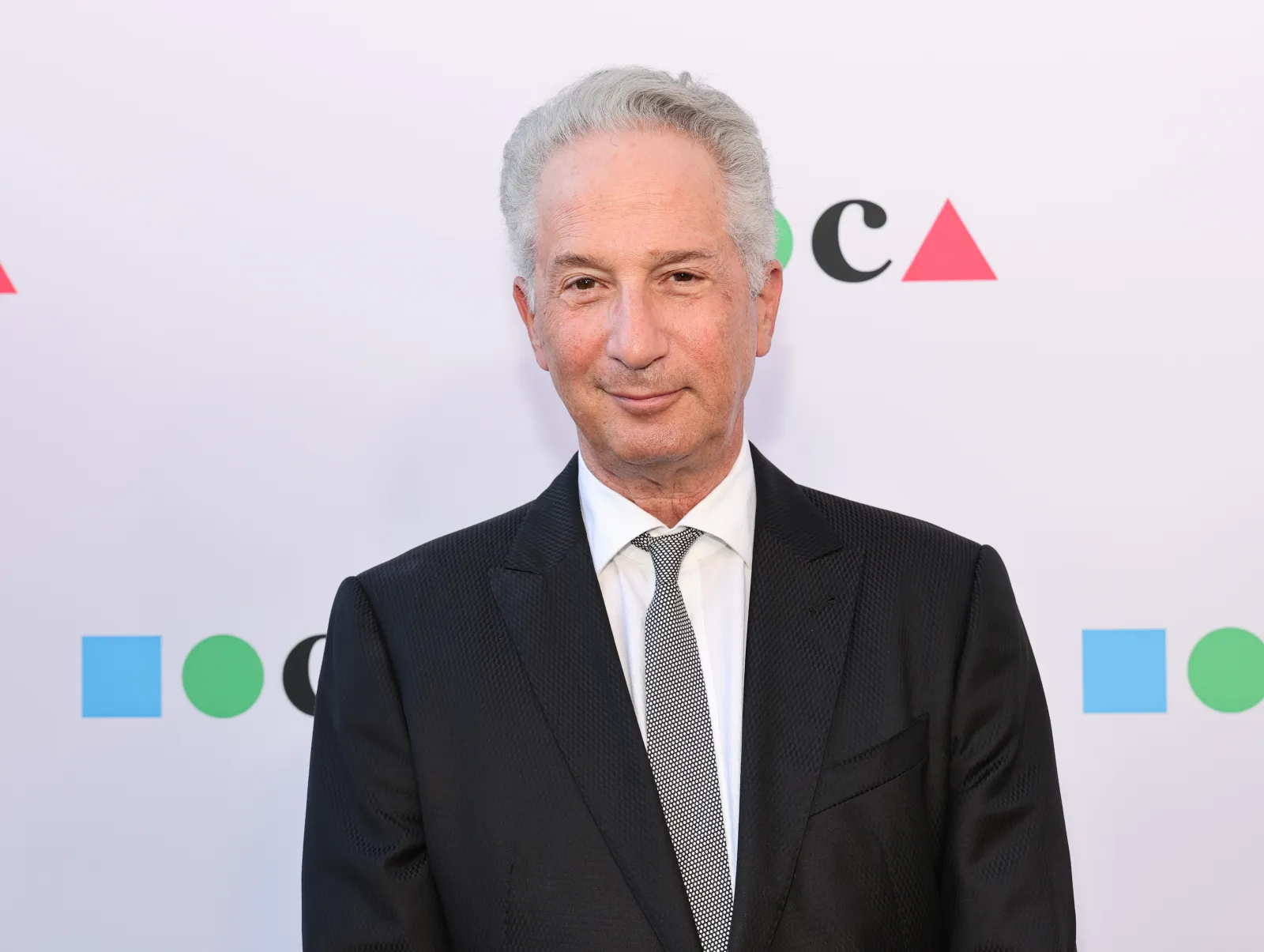
...
Jeffrey Soros is the son of the late Paul Soros, George's brother. His parents founded the Paul and Daisy Soros Fellowships for New Americans, which El-Sayed received in 2012.
"I've had the pleasure of knowing Abdul since 2012," Jeffrey Soros said at the event, according to Fox News Digital.
Alyssa Brouillet, Rogers' communications director, called the fundraiser "the least surprising thing he's done all cycle." She accused El-Sayed of "raising dark Soros money in California after begging Chuck Schumer for money in D.C."
El-Sayed has made opposition to billionaire influence and corporate PAC money central to his campaign. Asked by Fox News how the fundraiser fit that message, he said: "When individuals want to give to my campaign, I welcome their support."
Donations to joint fundraising committees are capped by federal law and disclosed to the FEC. Super PACs can accept unlimited sums.
Republican Groups Take the Lead
Since the primary, the imbalance has run the other way. Republican-aligned groups had spent about $59.3 million in independent expenditures reported to the FEC. This is compared with $23 million from groups backing El-Sayed, Bridge Michigan reported. Those totals leave out some spending by nonprofits that do not disclose their donors.
AdImpact, an ad-tracking firm, found Republicans had aired $15 million more in Michigan Senate ads than Democrats through September 30.
Senate Leadership Fund, the super PAC aligned with Senate Republican leadership, aired $16.1 million in Michigan in September alone. No Going Back PAC, a new group linked to President Donald Trump's MAGA Inc., aired $10.7 million that month. America PAC, the super PAC funded by Elon Musk, has spent about $3.9 million, mostly on digital ads and mail, according to Bridge Michigan.
For October and November, Senate Leadership Fund has reserved $17.5 million in Michigan airtime and No Going Back PAC has reserved $9.9 million, its biggest booking in any state, according to AdImpact. WinSenate, a group affiliated with Senate Majority PAC, has the largest Democratic reservation at $16.2 million.

...
El-Sayed's own campaign has aired about $18 million in ads, AdImpact found, and its dollars stretch further. Federal law entitles candidates to stations' lowest ad rates in the last 60 days before a general election. Super PACs pay more for the same slots.
Across the Senate battlegrounds, Republicans led broadcast spending by 26 percent through September but ran only 7 percent more ads, according to the firm.
Republicans accounted for 60 percent of ad spending in the nine most competitive Senate races through September, AdImpact reported. This ends a three-cycle stretch in which Democrats held the bigger share. Ohio and Texas have seen the heaviest traffic, together taking in nearly half of the $935 million aired.
The Voters Behind the Money
"The primary is one set of voters and the general is another," Jim Kessler, executive vice president for policy at the centrist think tank Third Way, told Newsweek after the August vote.
Even with what he described as a likely "blue wave for Democrats in November," Kessler said El-Sayed "still has work to do to win the decisive middle in a swing state like Michigan."
Michigan has the highest share of Arab American residents of any state, about 2.2 percent, according to Census Bureau ancestry data. Jewish residents make up about 1.3 percent of the state, according to the American Jewish Year Book.
Sympathies have also shifted inside the Democratic Party. A Gallup survey in February found 34 percent of Democrats viewed Israel favorably.
Michigan's August 4 primary left the nominee roughly three months to pull a split party together before the November 3 election. Gordon had little patience for the schedule.
"Whoever thought scheduling a primary in August was a good idea should lose their job," he said.
Polls show a close race. El-Sayed leads Rogers by 3.5 points in the RealClearPolling average, though a Glengariff Group survey in early September had Rogers narrowly ahead. The Cook Political Report rates the contest a toss-up, while Sabato's Crystal Ball rates it as leaning Democratic.
Both campaigns must report their latest fundraising to the FEC by October 15, the first full accounting of how much money each has raised since the primary.
Newsweek’s reporters and editors used Martyn, our AI assistant, to produce this story. Learn more about Martyn here.
Contact Newsweek editors on this story: Jason Lemon and James Debens
View 0 Comments
Submit Correction
View Editorial & AI Guidelines